Commercial staircases in retail buildings, education facilities, corporate offices, hospitality spaces, and civic buildings don't just create a safe passage between multiple floors. They've become one of the most significant architectural moments in modern commercial design. What used to be pure circulation is now increasingly a design statement that captures the mission and character of the space.
The best commercial stair designs balance three things that don't always feel like they belong together: the safety and code compliance the space legally requires, the aesthetic ambition the design brief calls for, and the durability the building needs to hold up under multi-decade traffic. Get all three right and the staircase reads as intentional architecture. Get any one of them wrong and it reads as an afterthought.
Here are 17 commercial staircase design ideas from real VIVA projects. Each one shows how different combinations of glass, metal, cable, and custom fabrication can turn a functional building element into a genuinely memorable space.
What Makes a Great Commercial Stair Design?
A great commercial stair does three things: it moves people safely between floors, it meets the applicable code requirements (typically International Building Code Section 1011 for stairways plus ADA Section 505 for handrails), and it contributes something meaningful to the design language of the space.
For safety and code, that means IBC-required handrail heights of 34 to 38 inches, guard heights of 42 inches on commercial applications where the walking surface is more than 30 inches above the floor below, ADA-compliant handrail cross sections between 1¼ and 2 inches for circular handrails, and infill that does not allow a 4-inch sphere to pass through.
For design, the possibilities are broad. Glass railings preserve sightlines and read as premium. Cable railings deliver near-transparent views at a lower cost. Perforated and laser-cut metal panels bring pattern and brand expression into the railing itself. Custom-fabricated systems handle unique geometries. Wood handrails add warmth. Integrated LED lighting creates ambiance and improves safety at once.
17 Commercial Stair Design Ideas to Consider
The 17 ideas below show what's possible when specifiers push in that direction.
1. Create an Unexpected Configuration
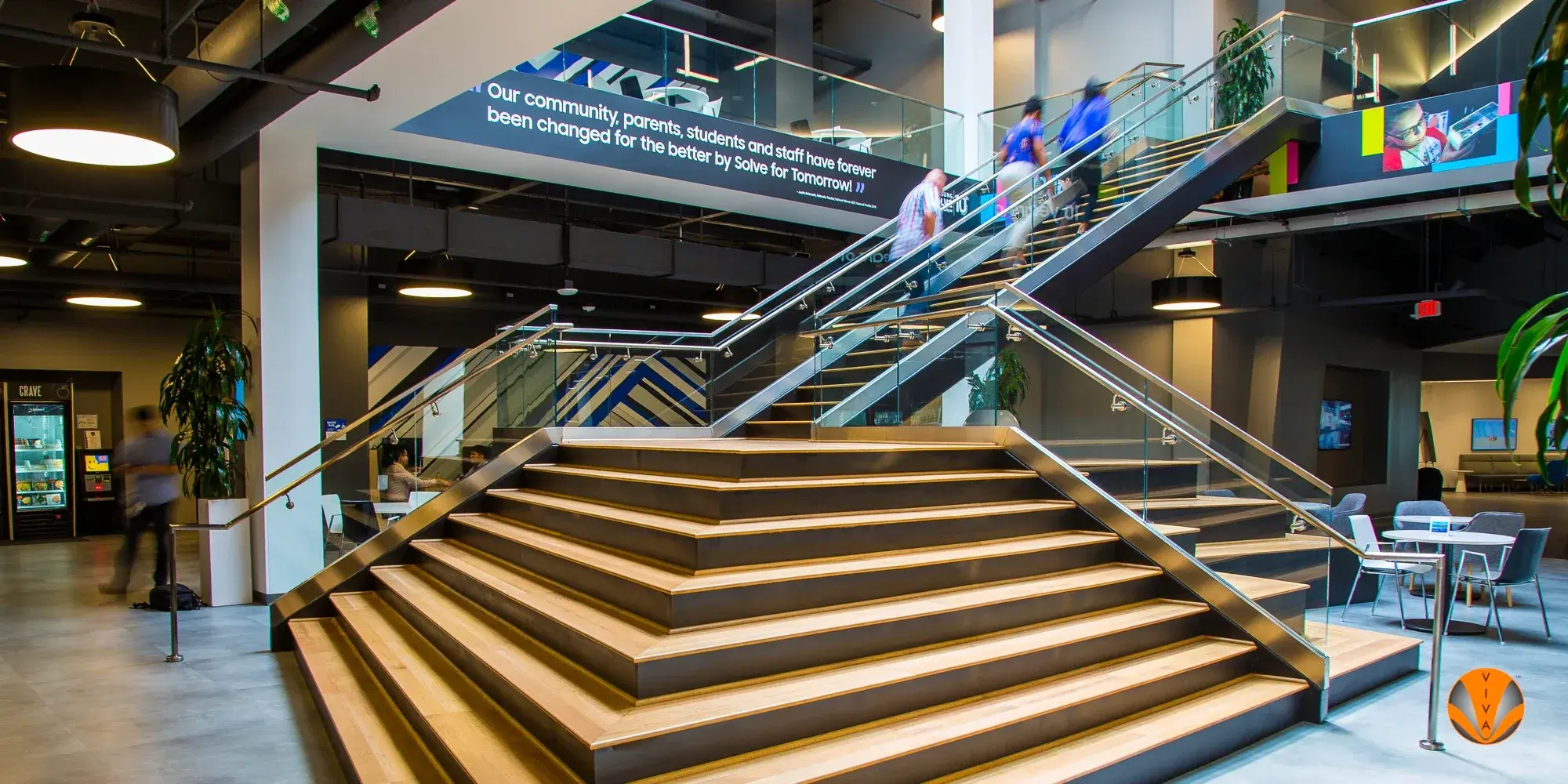
The Legacy Central II building in Plano, Texas offers a mixed-use campus and technology-oriented offices. To accommodate the volume of people using the space, the design team incorporated a non-traditional staircase that opens up to multiple sides, making movement between floors easier and creating a natural gathering point.
2. Create Seamless Separation
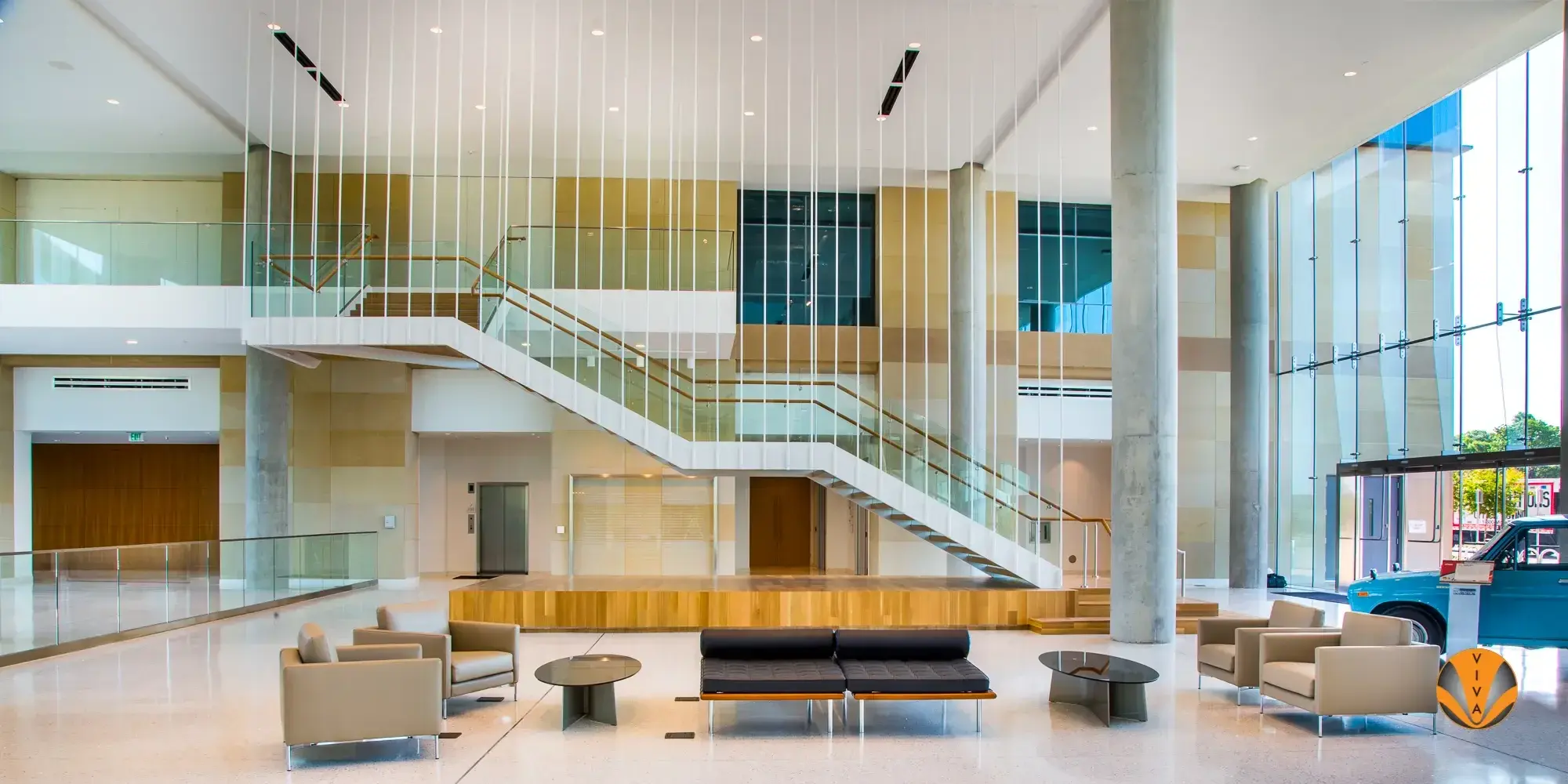
At Toyota's Plano, TX Headquarters, the SOLO Glass Railing System is integrated with a vertical installation that creates a sense of separation for the staircase without disconnecting it from the larger space. The result reads as a thoughtful architectural boundary rather than a wall.
3. Use Color to Your Advantage
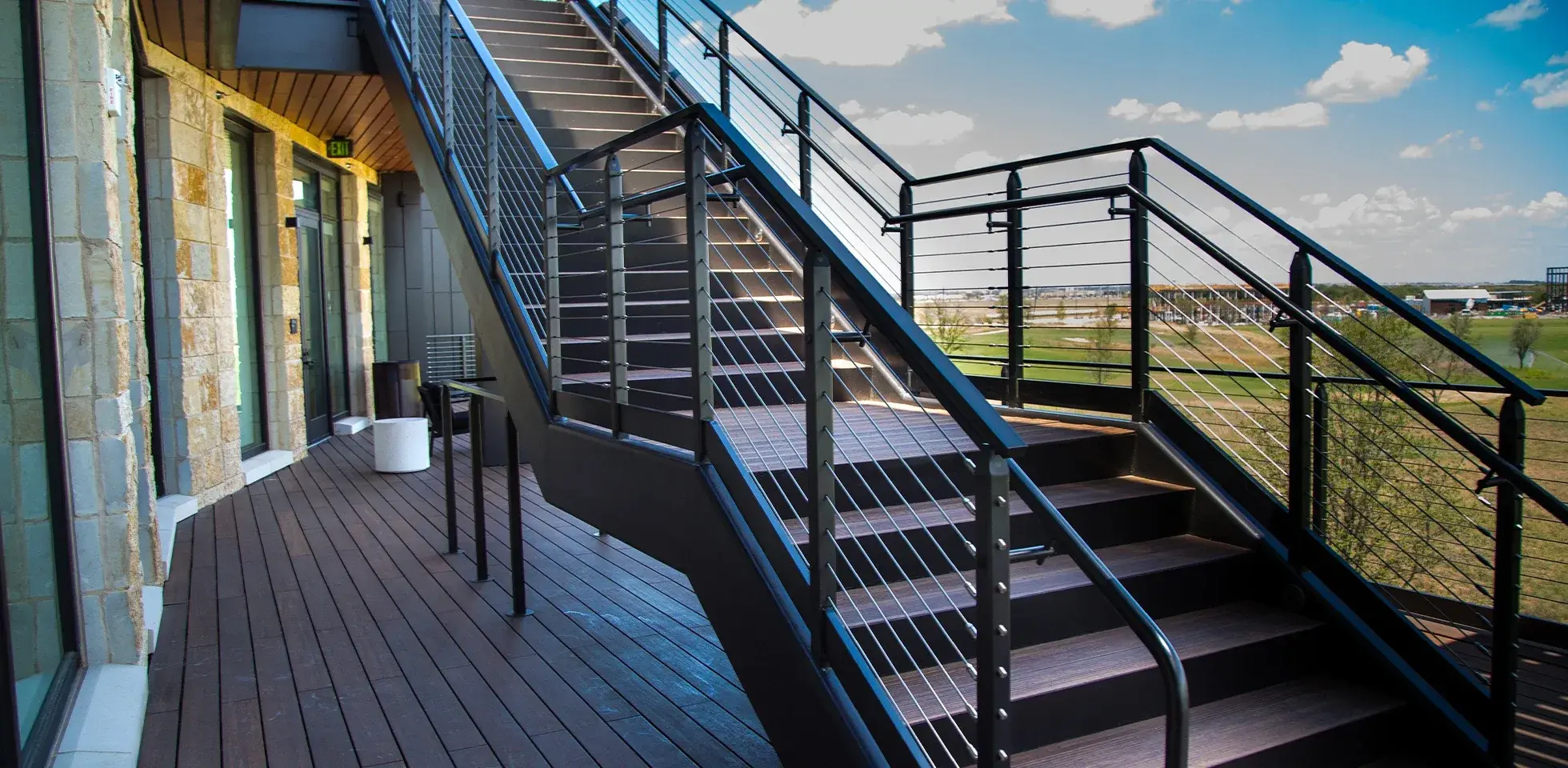
At the PGA of America Headquarters in Frisco, Texas, the CUBE Cable Metal Railing System uses black powder-coated posts, handrails, and top rails to contrast the stainless steel cables. The dark powder coat also provides a sophisticated contrast to the dark stairs and decking, tying the railing directly into the material palette of the space.
4. Get Social
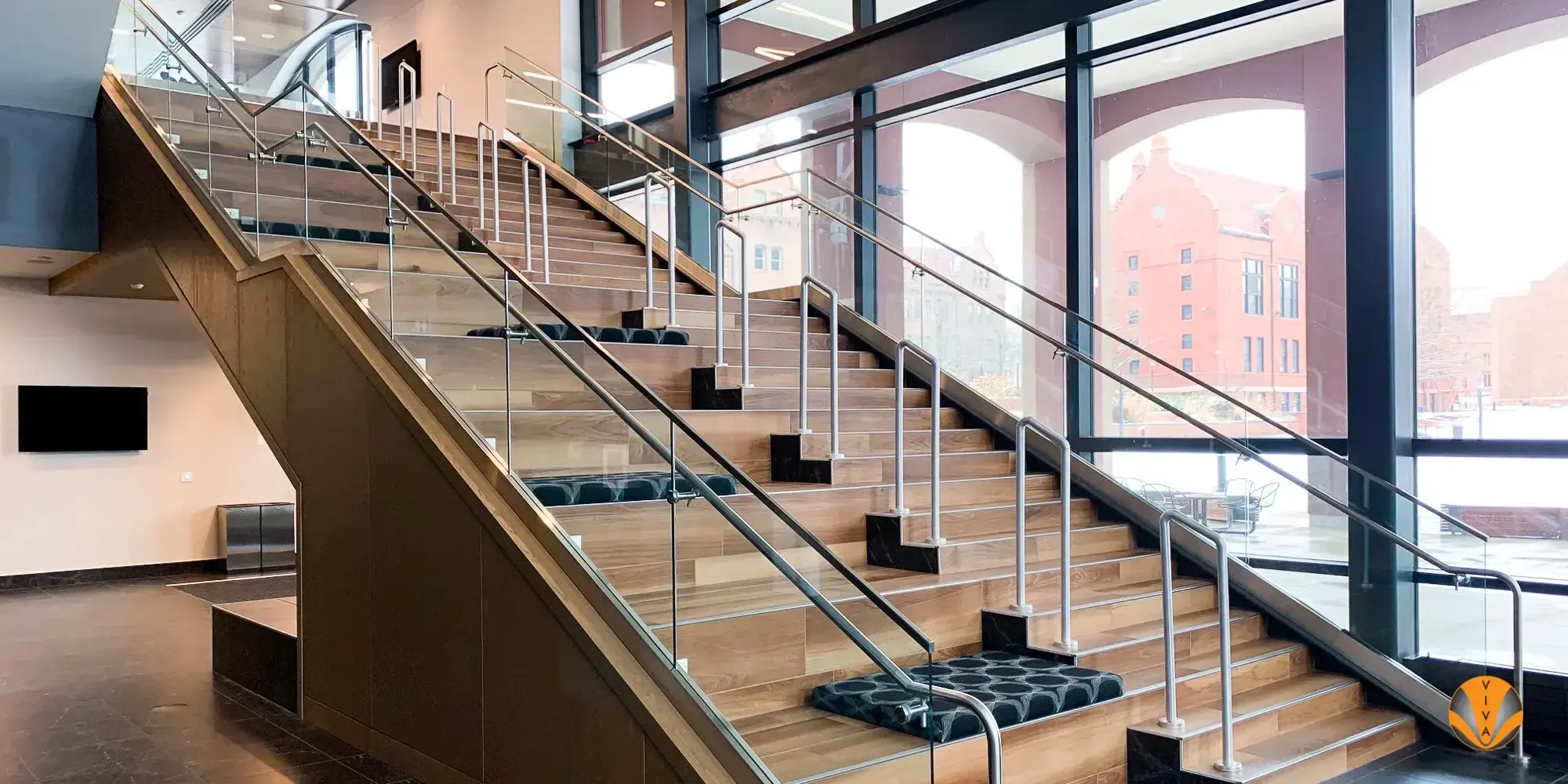
Social stairs provide an area for companies to hold meetings or for staff to gather and collaborate. To achieve this design, small freestanding railings line the center of the stair. On one side, traditional stairs allow people to travel up and down; on the other, wider treads accept cushions and support informal gathering. The learning-stair concept has spread from K-12 into corporate and hospitality environments as an intentional way to encourage collaboration.
5. Provide Options
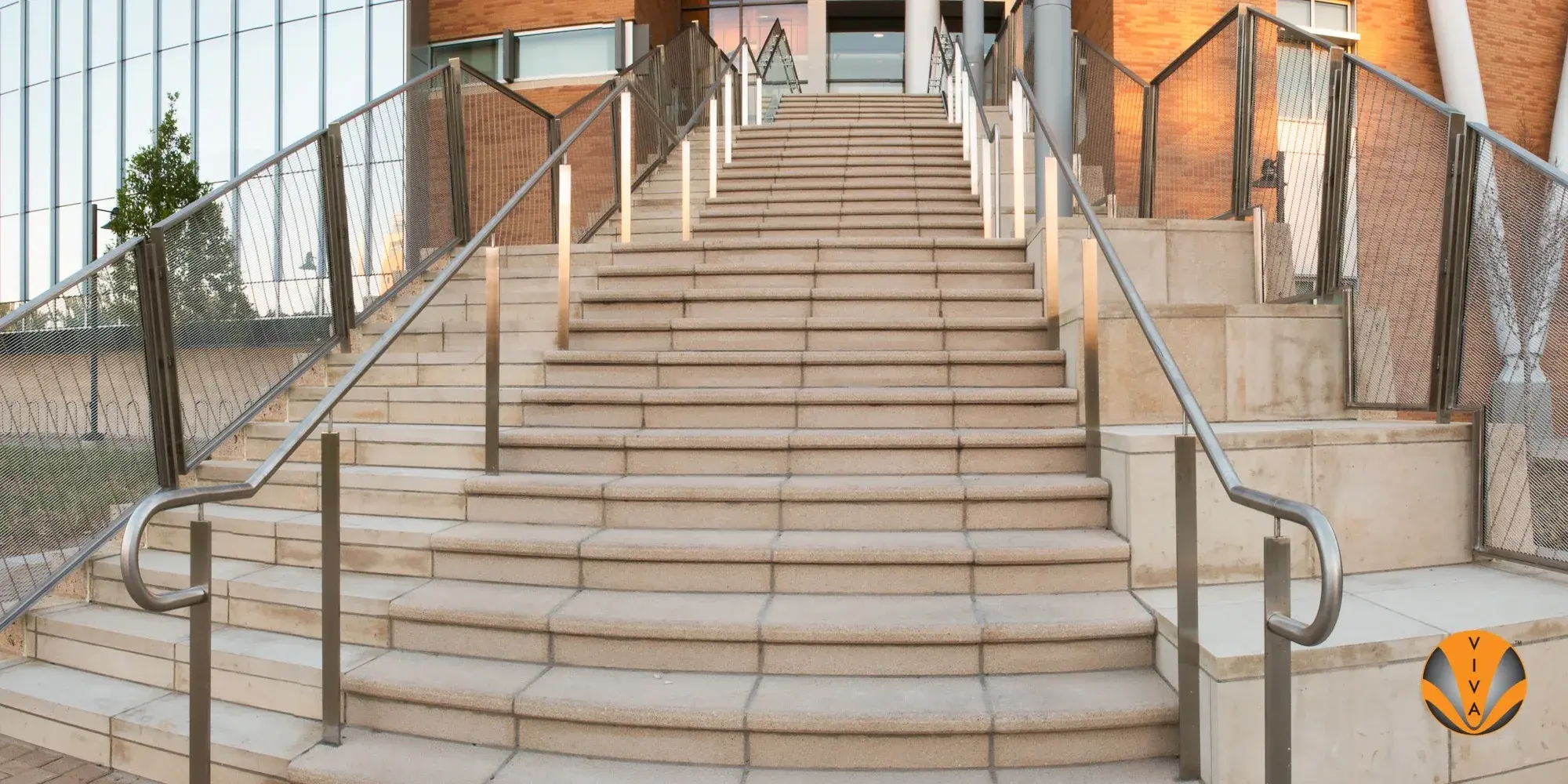
The wide staircase at the University of North Texas Business Leadership Building uses two stair designs and two railing designs to provide options for students, staff, and visitors. On the far right side, deeper treads work well for people with mobility considerations because the wider tread increases stability. The same design also works for people in a hurry who prefer fewer, larger steps. Two custom railing systems bring the design together.
6. Use Natural Accents
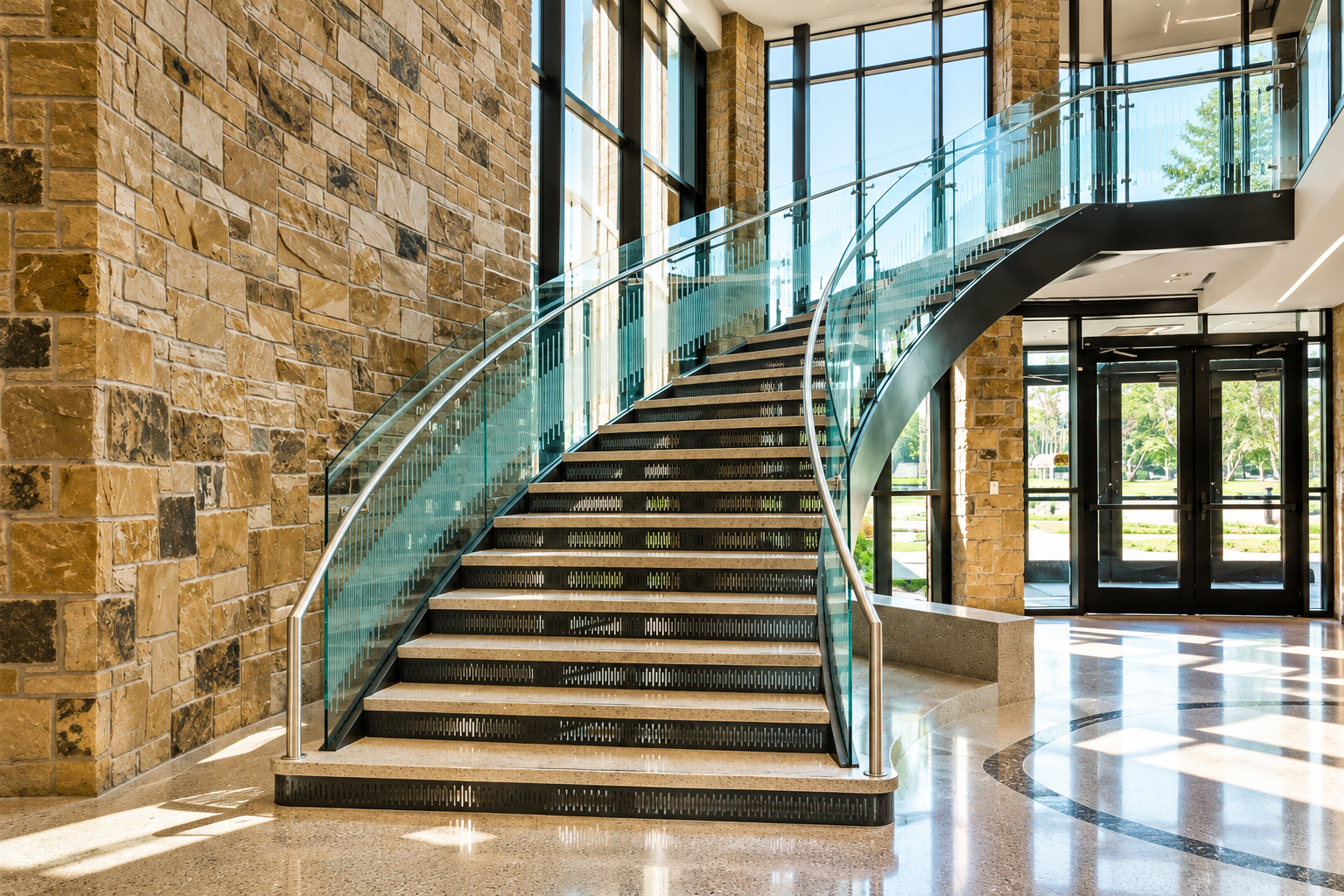
At the Southwest Adventist University Nursing and Admin building, the SHOE Structural Glass Railing System follows the gentle curve of the staircase to create visual interest and a form that complements the natural rock walls surrounding it. The frameless glass keeps the natural materials as the focal point while providing code-compliant fall protection.
7. Create a Memorable Climb
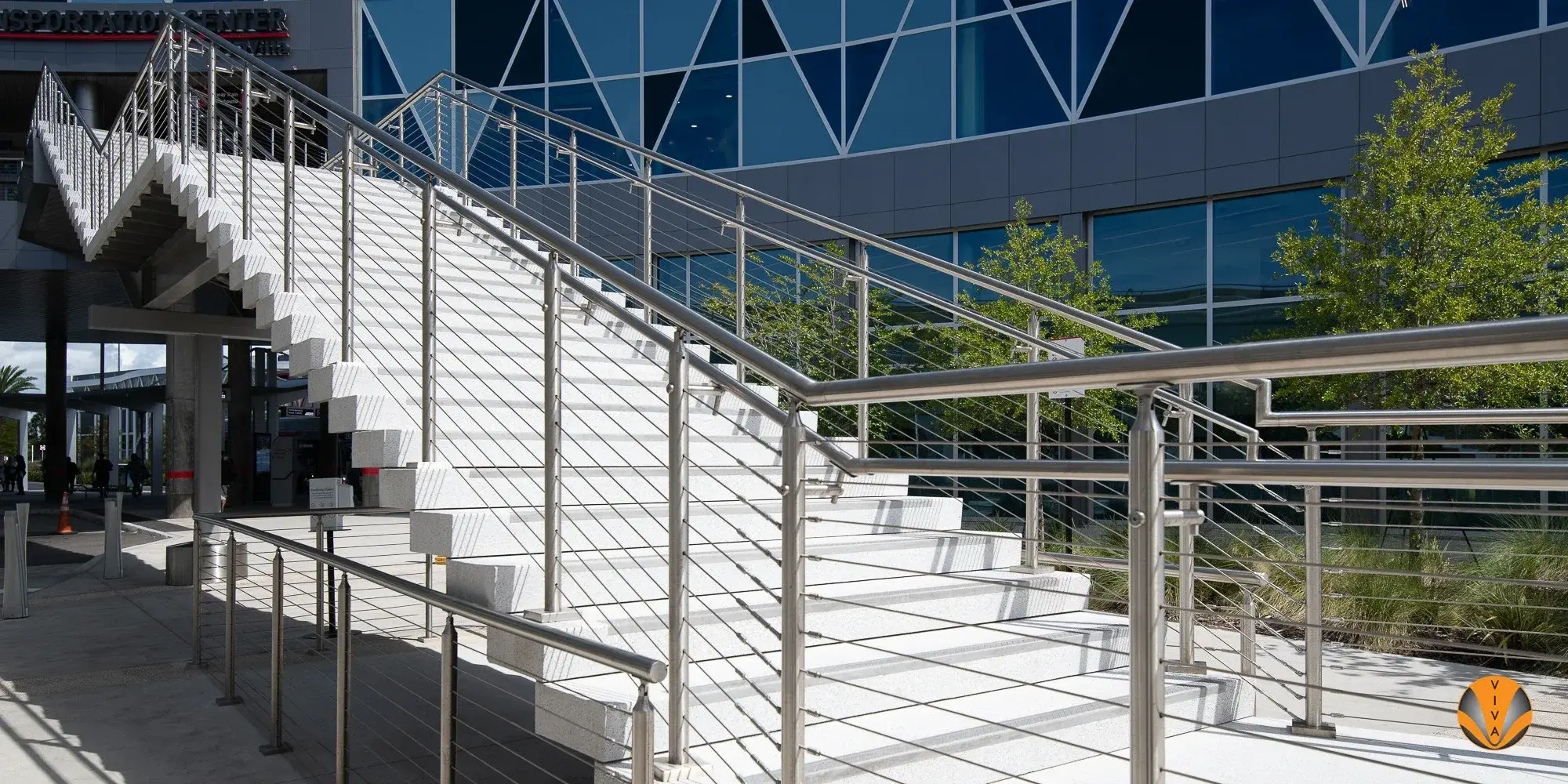
Commercial staircase design matters as much outside as it does inside. This exterior floating staircase at JTA climbs upward with the modern CIRCA Cable Railing System, delivering safe passage while preserving the sculptural feel of the floating tread configuration.
8. Switch up the Switch Back
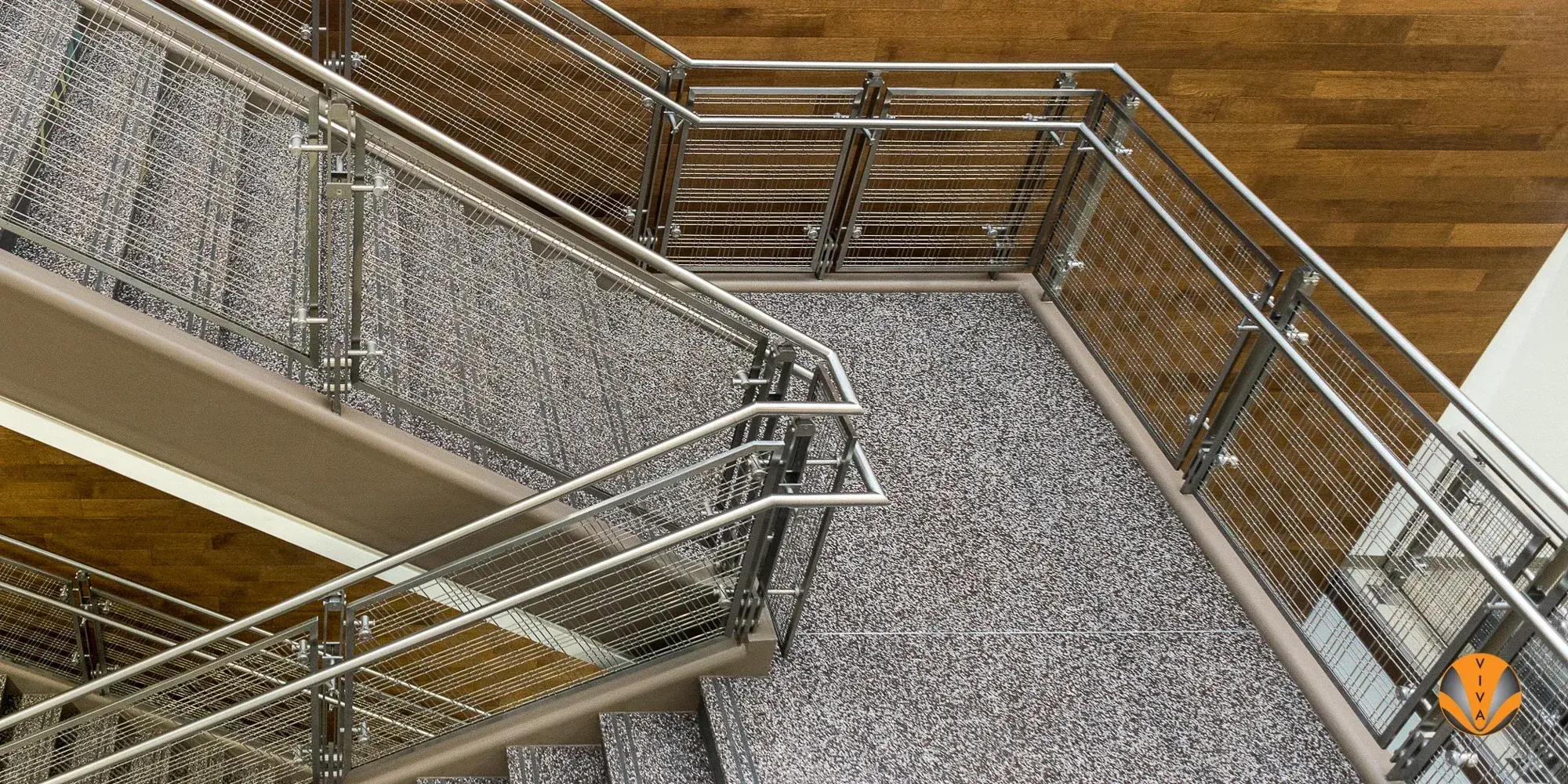
The switchback staircase at Austin Community College - Elgin Campus uses a wire mesh infill that creates added security while keeping the stair visually open. The BLADE Wire Mesh Railing System also features handrails and top rails to meet building code requirements and provide safety and stability for students moving between classes.
9. Mix Wood and Metal
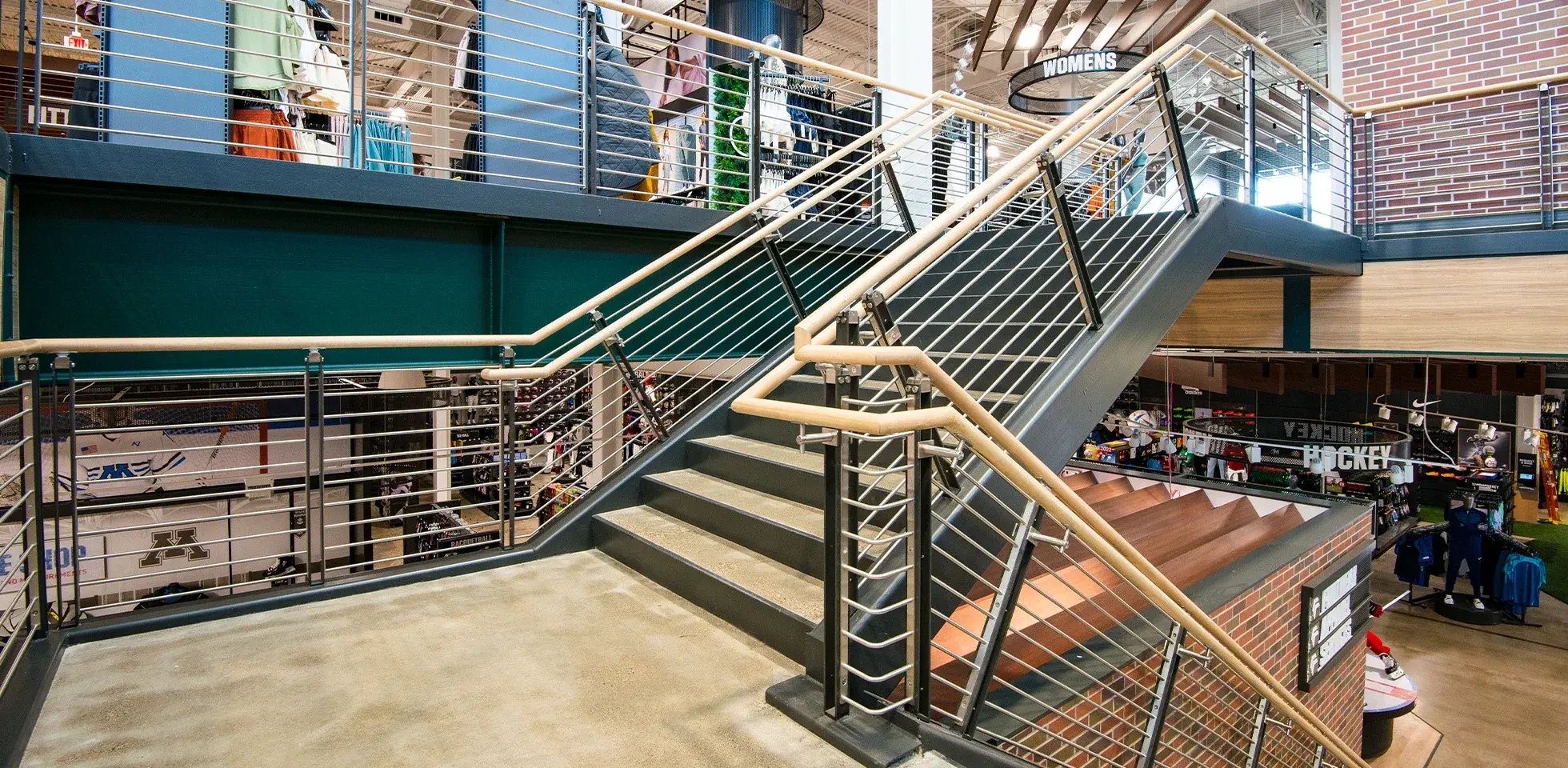
The BLADE Multiline Railing System at Dick's Sporting Goods blends black powder-coated posts with unfinished maple wood top rails and handrails. The combination creates a commercial stair design that makes a modern statement with a touch of tradition, reading as intentional material curation rather than default hardware.
10. Make an Impact
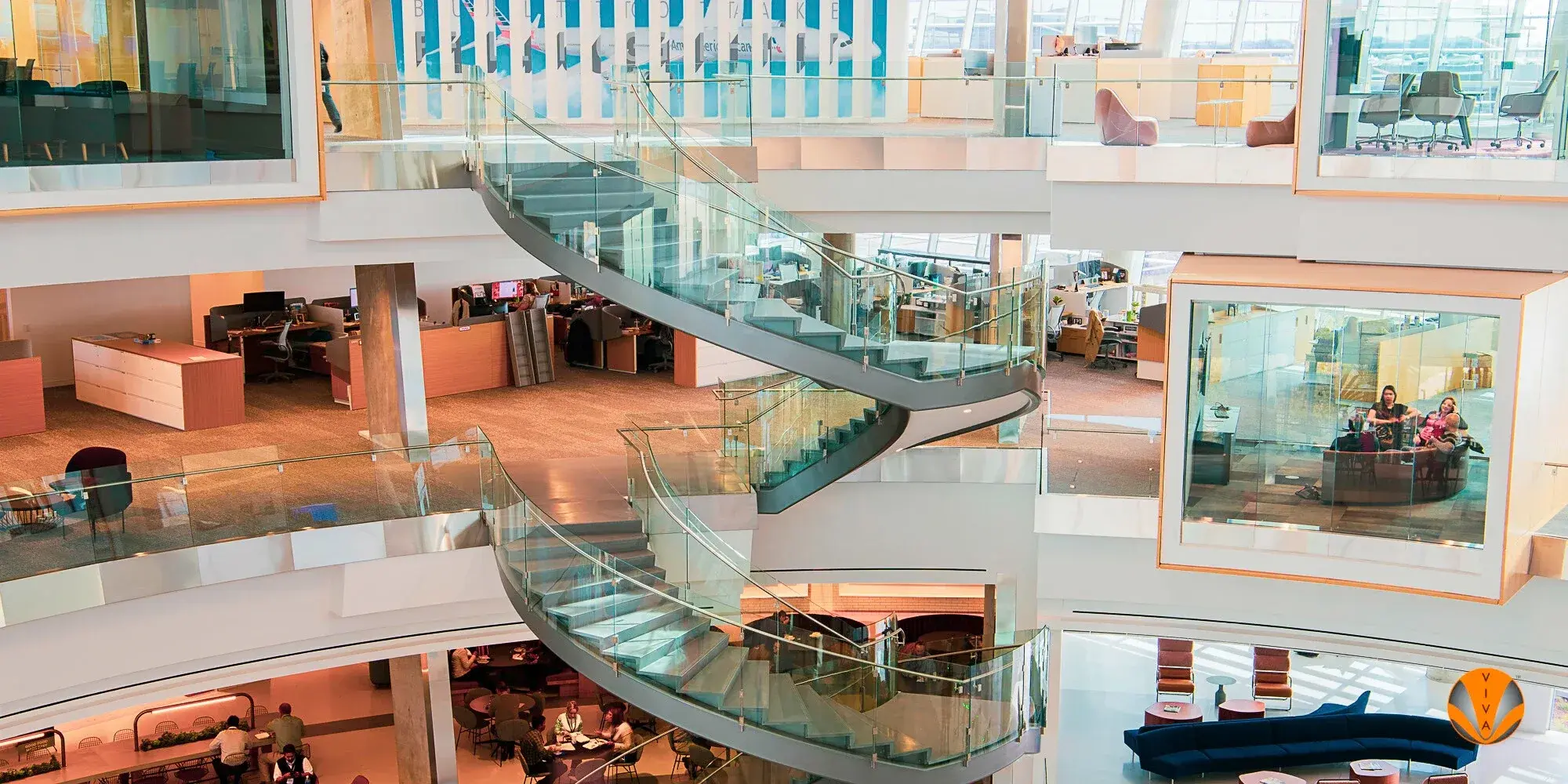
The stairway at American Airlines Headquarters spirals upward through a stunning three-story atrium. The curved SOLO Glass Railing System features glass infill and a stainless steel handrail as it winds up and appears to float in the air. The design calls to mind innovation in aviation and makes a lasting impression on everyone who enters the space.
11. Opt for Clean Lines
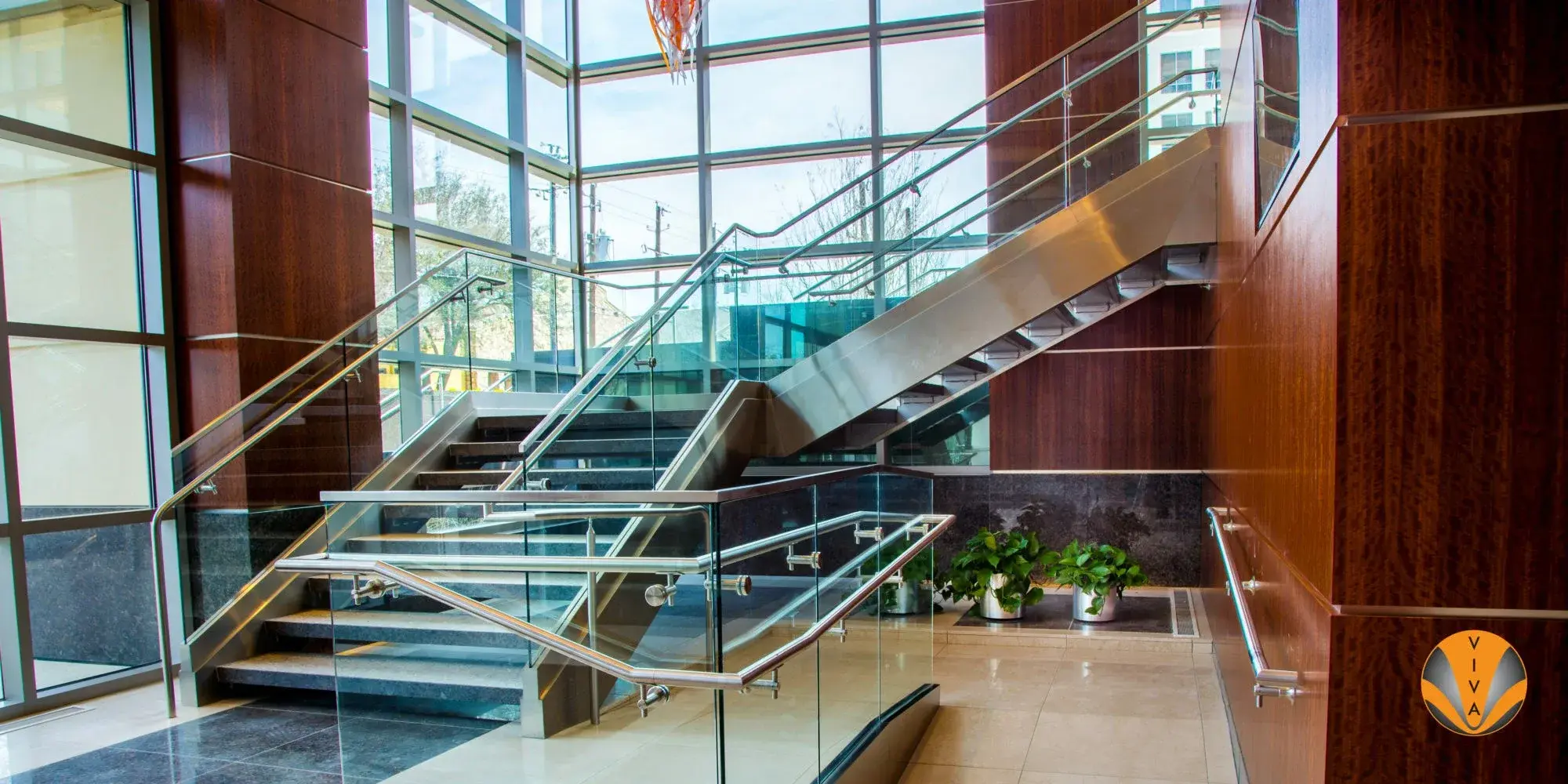
Clean lines reveal a modern aesthetic, and the SHOE Glass Railing System at The Terraces at Douglas is a perfect example. The glass infill, metal staircase, and stainless steel railing combine to provide safety and security while matching the aesthetic of this multi-use facility housing creative studios and representing state-of-the-art architecture.
12. Get Creative with the Treads
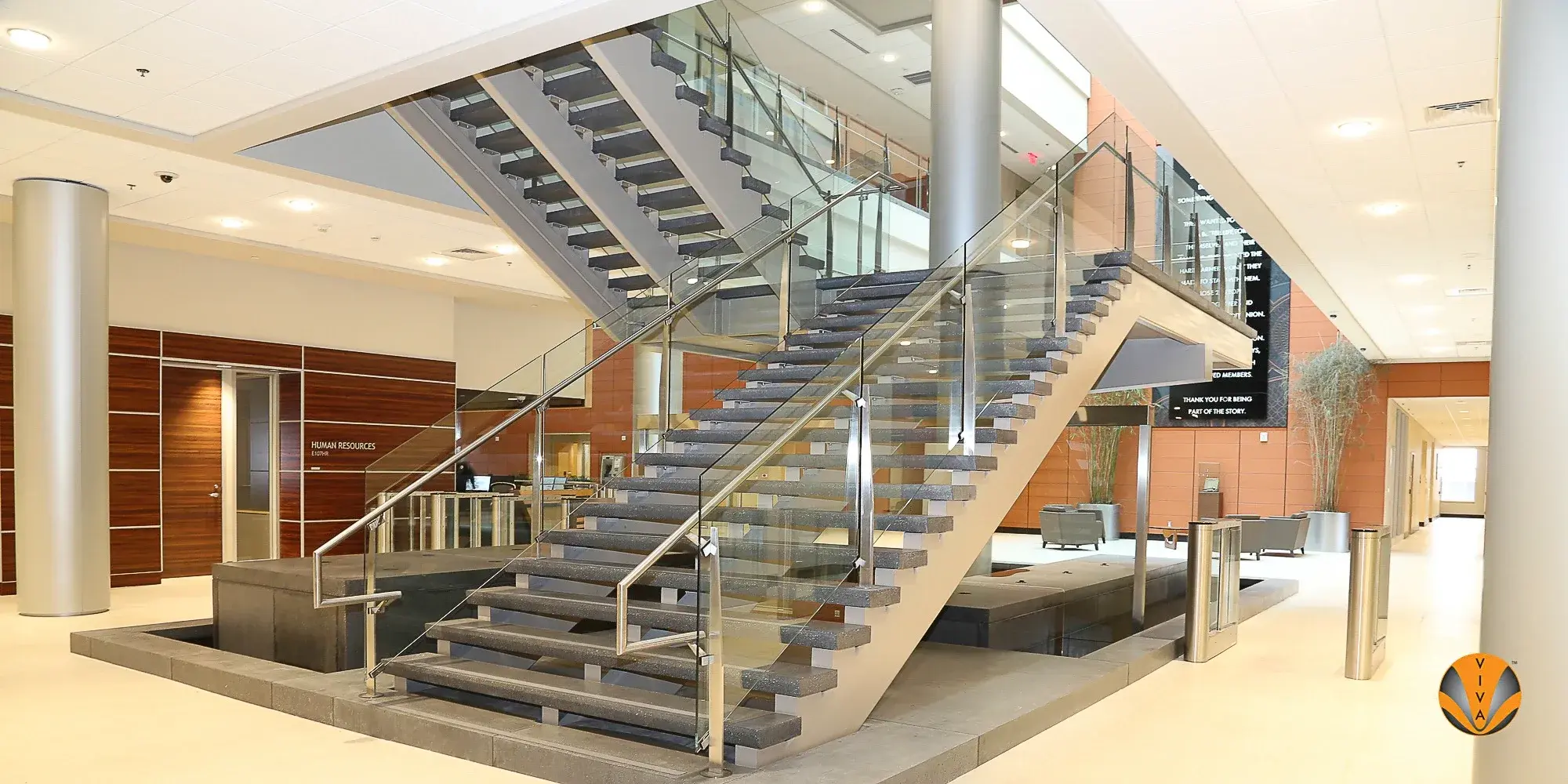
Rather than adhere to conventional tread design, the stairway at the Pennsylvania State Employees Credit Union forgoes risers entirely and uses an ultra-minimalistic SOLO railing to create an open feel for the central staircase. The glass infill allows for unobstructed views, and the large landing doubles as a balcony overlooking the space.
13. Integrate Lighting for Safety and Style
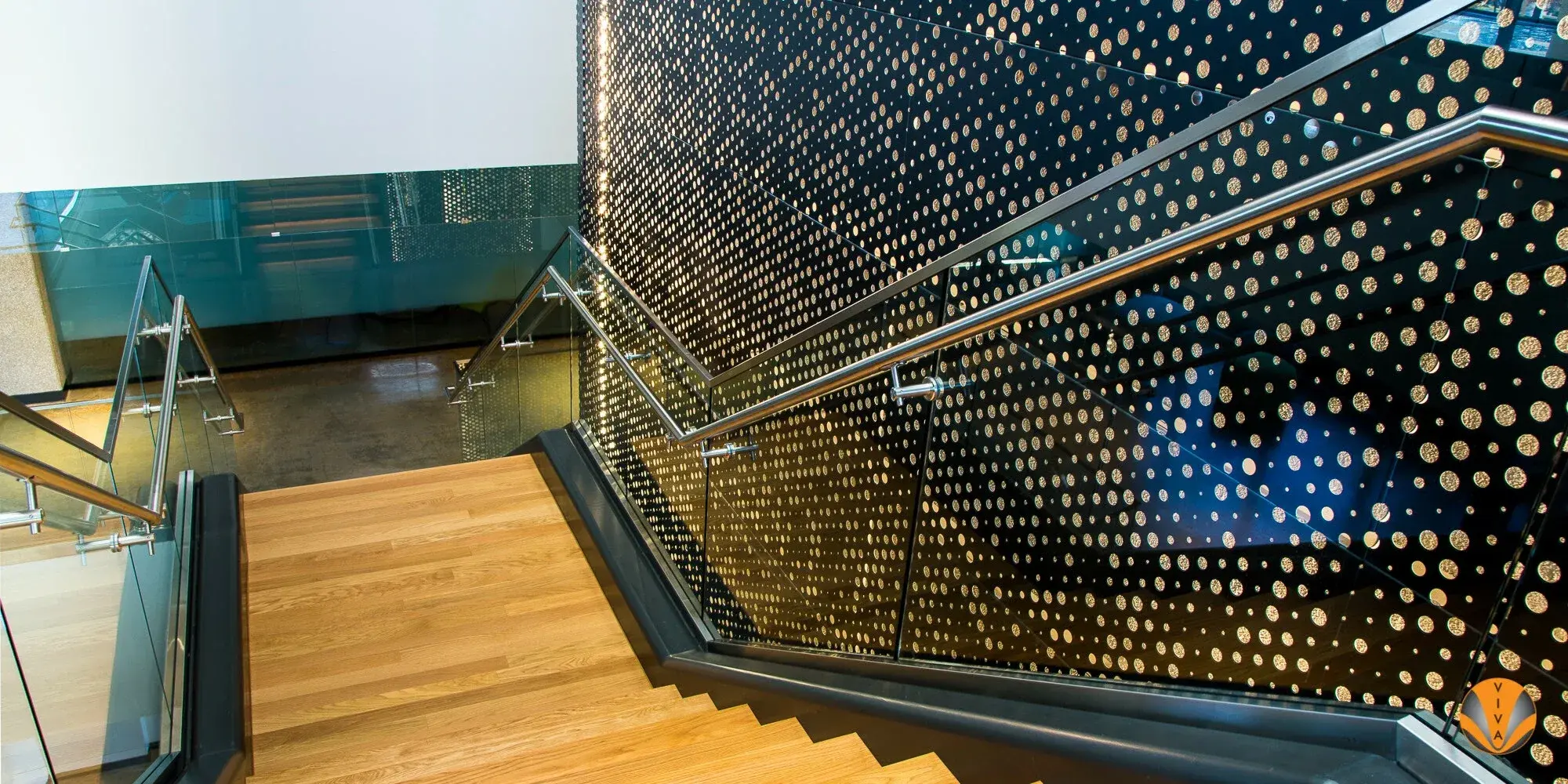
The stairway at the Varispace Headquarters integrates lighting into the risers and treads to provide safety and visibility while adding a stylistic touch. The SHOE Glass Railing System complements the modern stair treads with glass infill and a stainless steel railing, tying the illumination and railing together as a single design moment.
14. Bring in Bold Colors
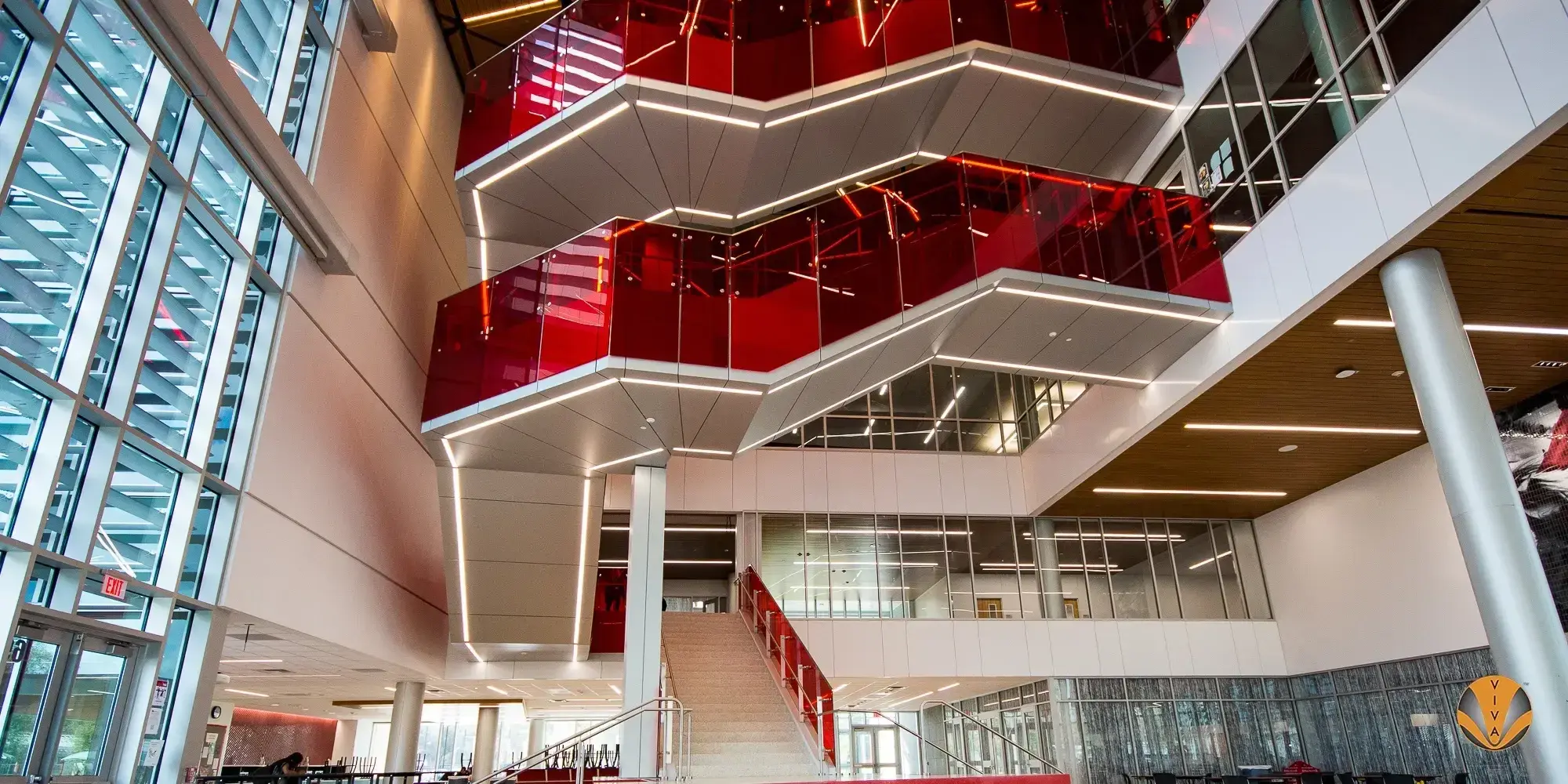
While much of modern design leans toward neutral colors and natural textures, some spaces benefit from bold color that makes a statement. In this custom design at SBISD near Houston, Texas, the towering staircase uses three different shades of red glass (DESIRE R23, SWEETHEART R25, and LOVE R18) to create a dynamic flow to the top of the space. Underlighting adds ambient illumination and reinforces the visual impact.
15. Create a Sense of Movement
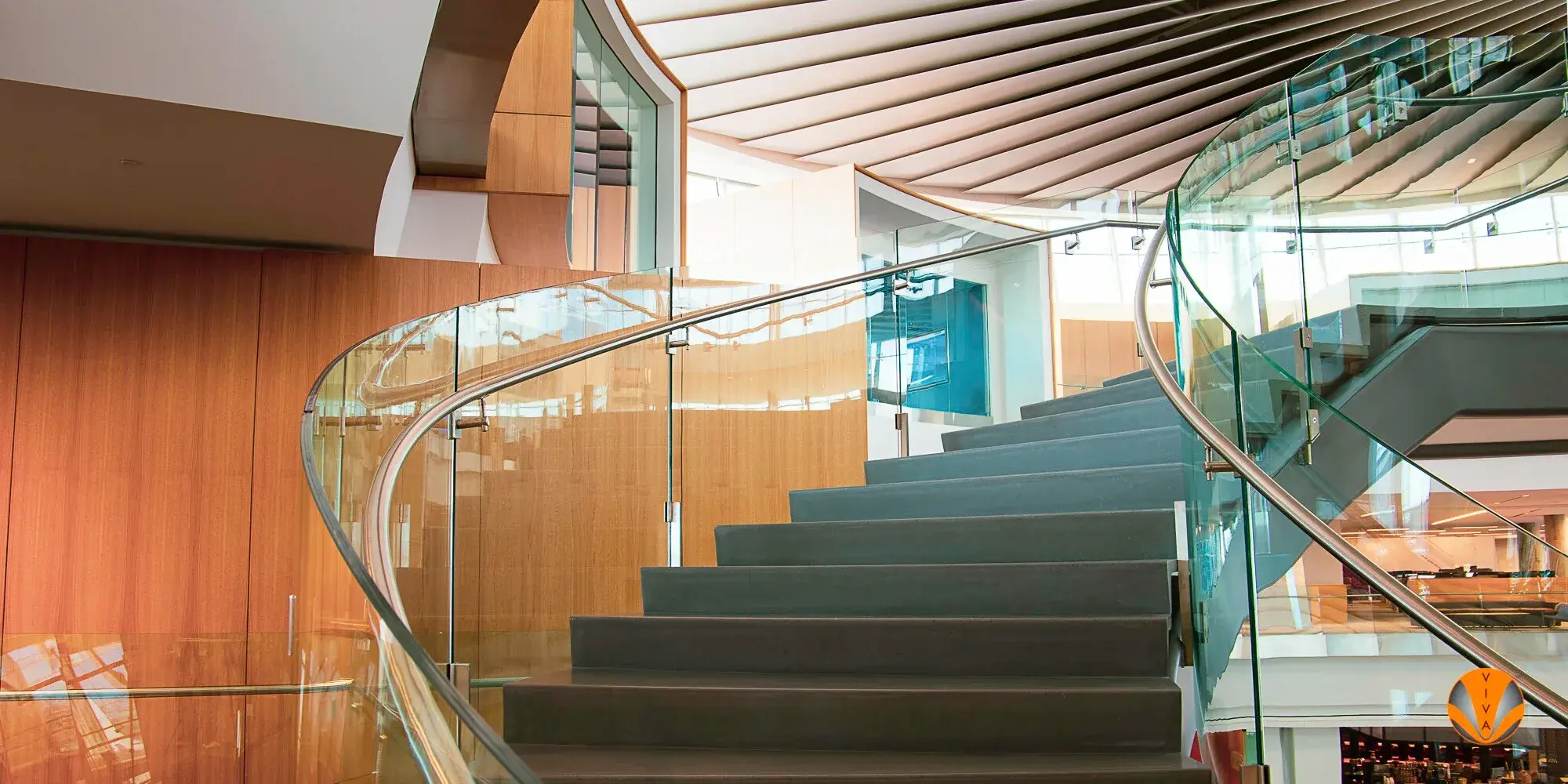
At American Airlines Headquarters, the sweeping curved staircase forgoes a top rail in favor of a streamlined look. The curved ceiling design, constructed of faceted radial stretch fabric, is reminiscent of a jet engine turbine and contributes to the sense of upward movement that anchors the entire atrium.
16. Combine Textures
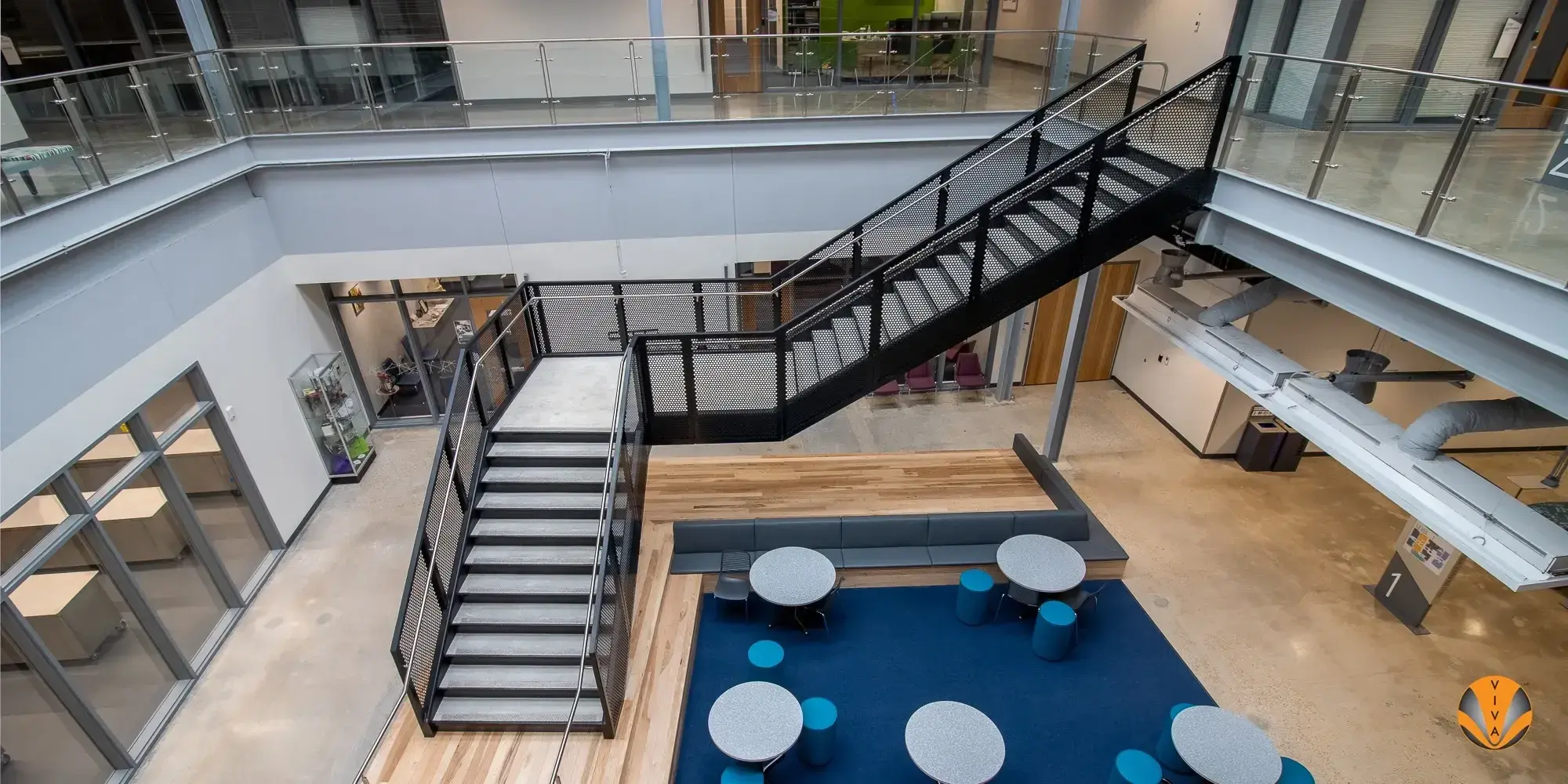
Combining metal and wood elements in a modern design is common practice, but the FRAME Metal Panel Railing System's perforated metal infill takes the texture contrast between wood and metal to a new level. Paired with the BLADE Glass Railing System, the elements form a balcony at Austin Community College Highland Campus that encourages connection between floors while showcasing multiple material treatments in a single design.
17. Be Unique
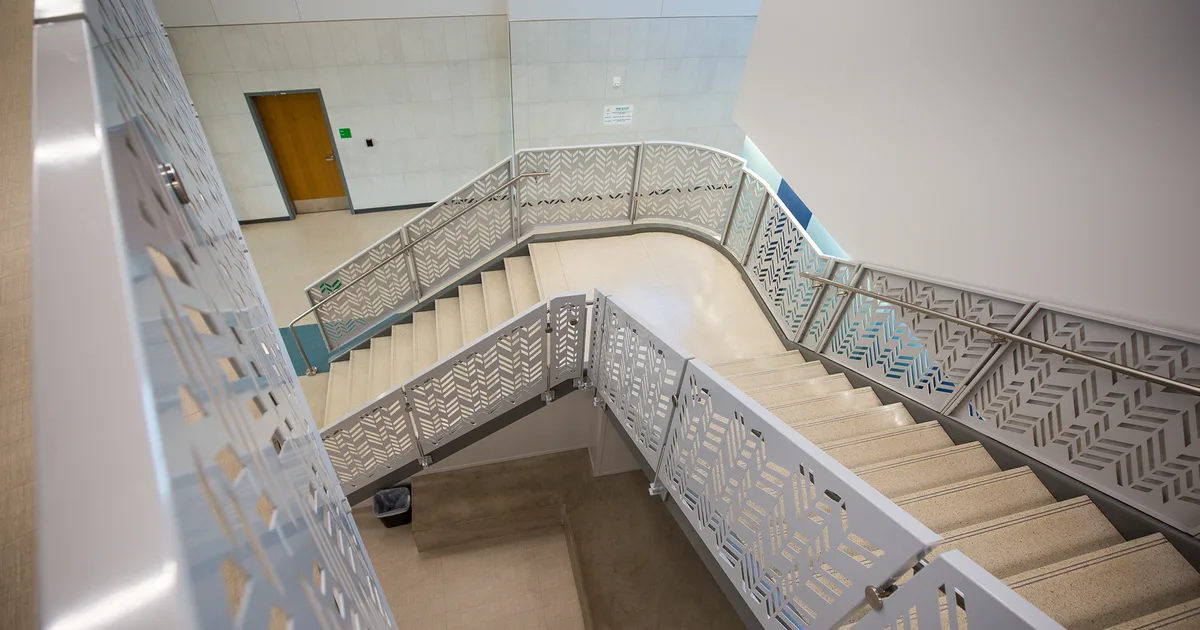
Featuring CNC laser-cut patterns, the FOLD Metal Panel Railing System creates a striking and unique commercial staircase. The metal panels can be powder-coated in nearly any color, and the Arlington ISD Webb Elementary design uses clean white to give the space an open feel while providing safety for the students who use it every day.
Where Stairs Become Architecture
Commercial staircases are one of the most visible architectural moments in a building. When they're specified thoughtfully, they read as intentional design that supports the mission of the space. When they're not, they become the visible sign of a project that didn't push far enough on the details.
VIVA has delivered railing systems on hundreds of commercial staircase projects across corporate headquarters, education, retail, civic, and hospitality environments. Every engagement includes design collaboration, engineering, fabrication, and coordinated installation to ensure the finished stair meets both the design intent and the code requirements. The Design Assist Services page covers what early-stage manufacturer engagement looks like on stair projects.
Request a Quote or Talk to our Sales Team to work through your commercial staircase project.
Frequently Asked Questions About Commercial Stair Design
What makes a commercial staircase different from a residential one?
Commercial staircases have to meet International Building Code (IBC) requirements, including handrails on both sides, 34 to 38 inch handrail heights, ADA compliance for path-of-travel, 42-inch guard heights on elevated surfaces more than 30 inches above the floor below, and infill that does not allow a 4-inch sphere to pass through. Commercial stairs also see much higher traffic and require durability engineering that most residential stairs don't need.
What railing systems work best for signature commercial staircases?
For signature architectural moments, structural glass railings (like VIVA's SHOE system) and post-supported glass systems (like SOLO and CIRCA Glass) are the dominant specifications because they preserve sightlines and read as premium. Custom fabricated systems handle unique geometries like curved atrium stairs. For pattern and brand expression, perforated and CNC laser-cut panels (like FRAME and FOLD) turn the railing itself into a design element.
Can commercial stair railings integrate lighting?
Yes. VIVA's iRAIL LED handrail systems (Linear, Pods, and Sconce) provide continuous or point-source illumination through the handrail itself. Integrated lighting can also be built into stair treads and risers for signature installations like Varispace Headquarters. LED integration improves safety at low-light hours while contributing to the design language of the space.
Do social stairs and learning stairs have different code requirements?
Not fundamentally. Social stairs and learning stairs still fall under IBC guard and handrail requirements plus ADA compliance. What's different is design intent: they're built to encourage gathering rather than just circulation, which means wider treads, integrated seating, and often more prominent railing systems. The railing has to accommodate people sitting near the edge of the elevated seating without compromising safety.