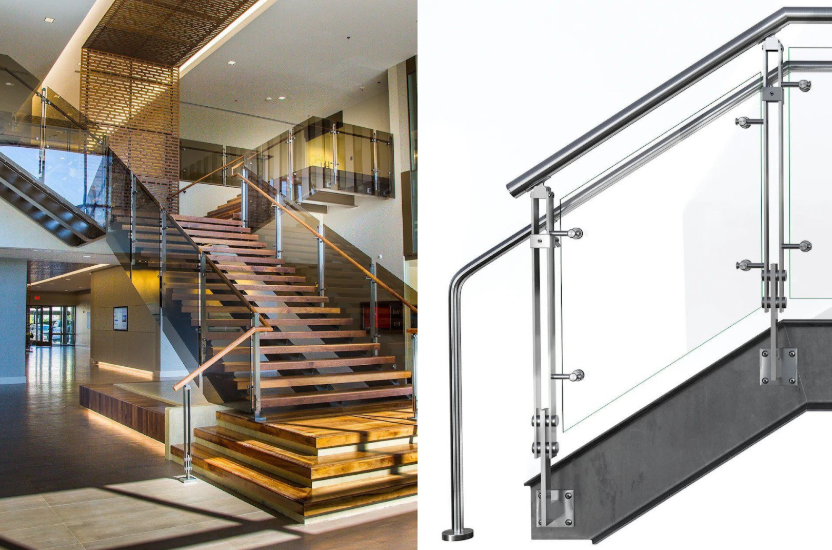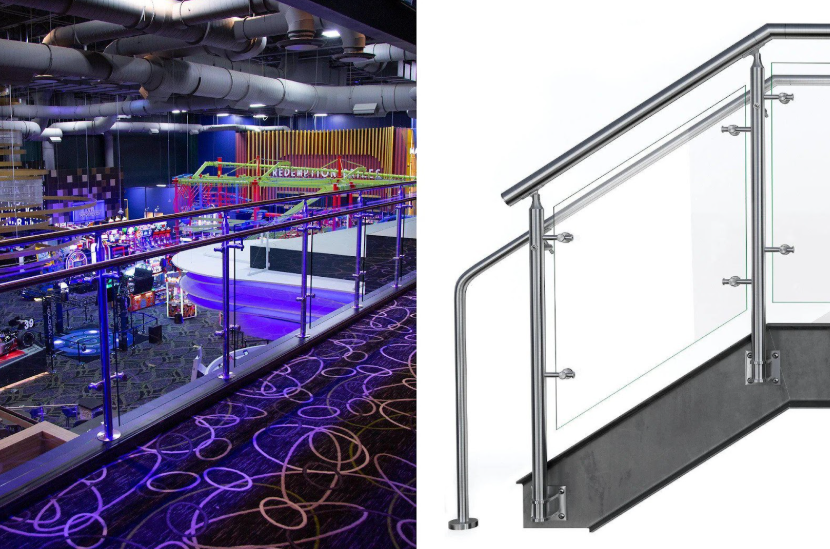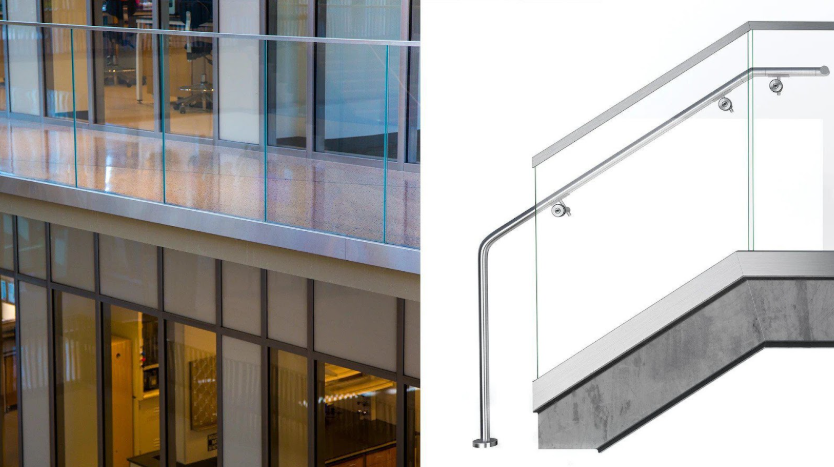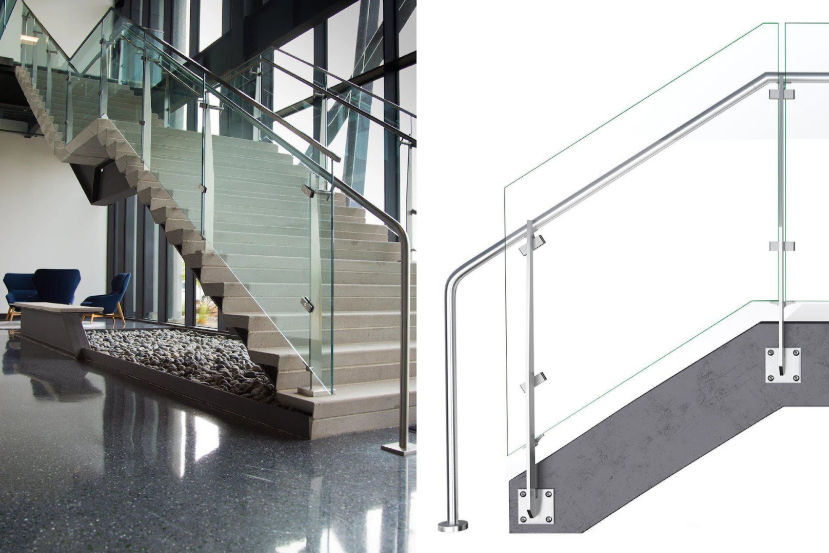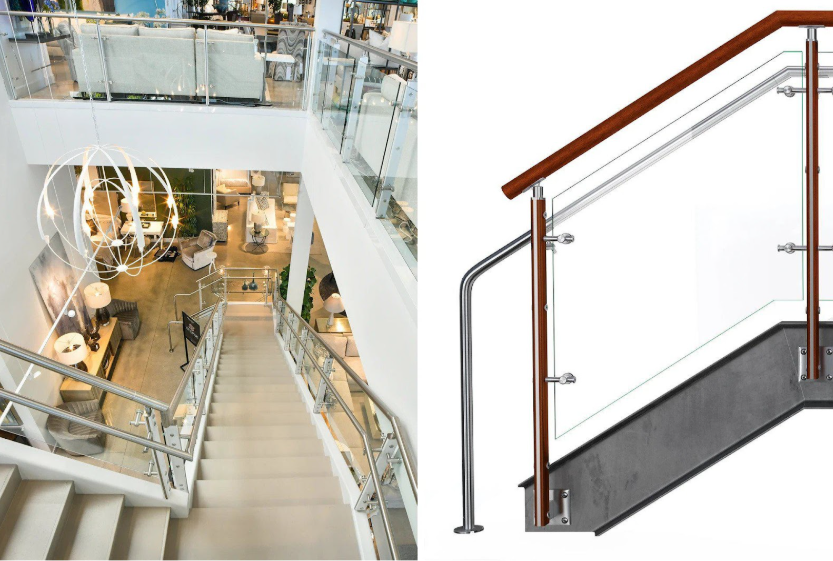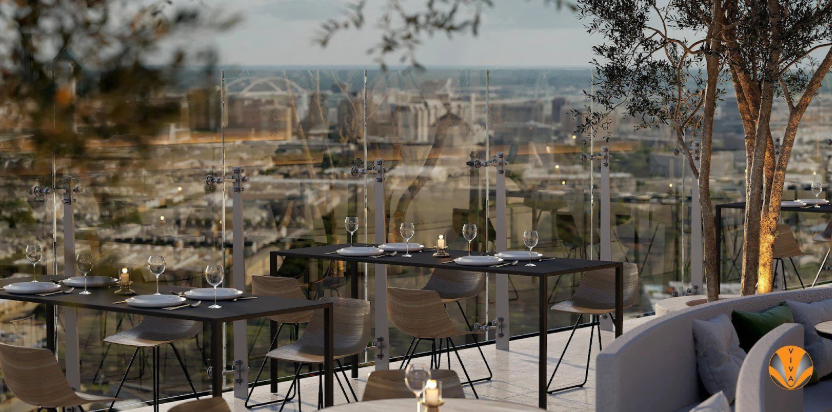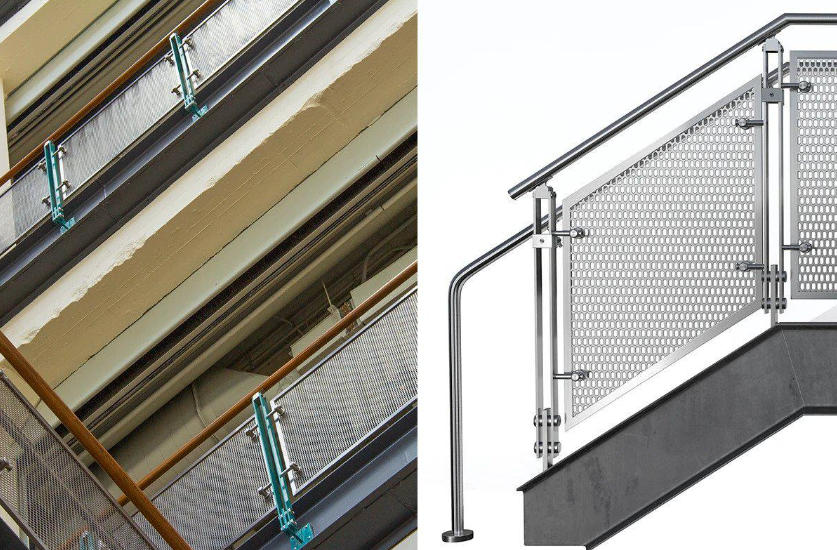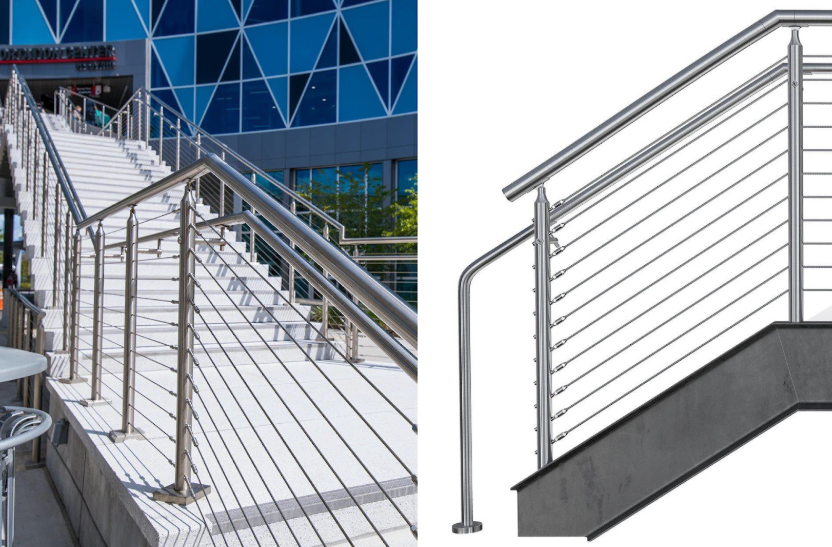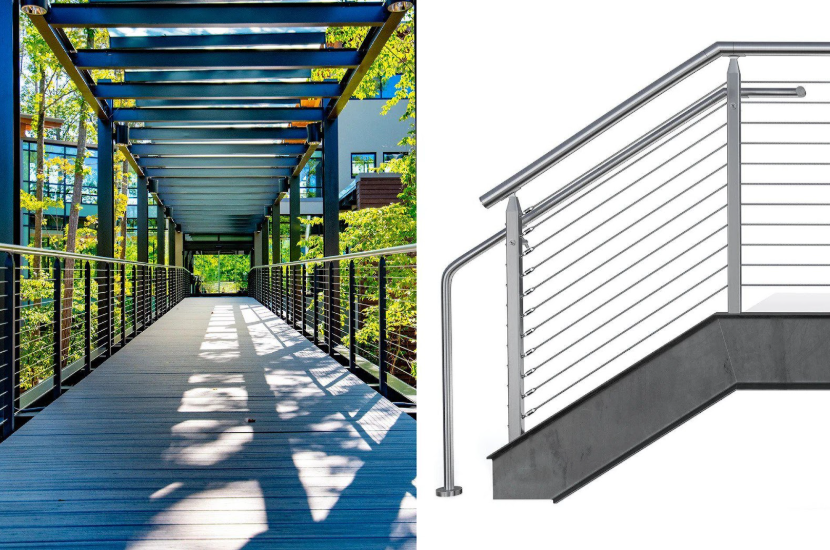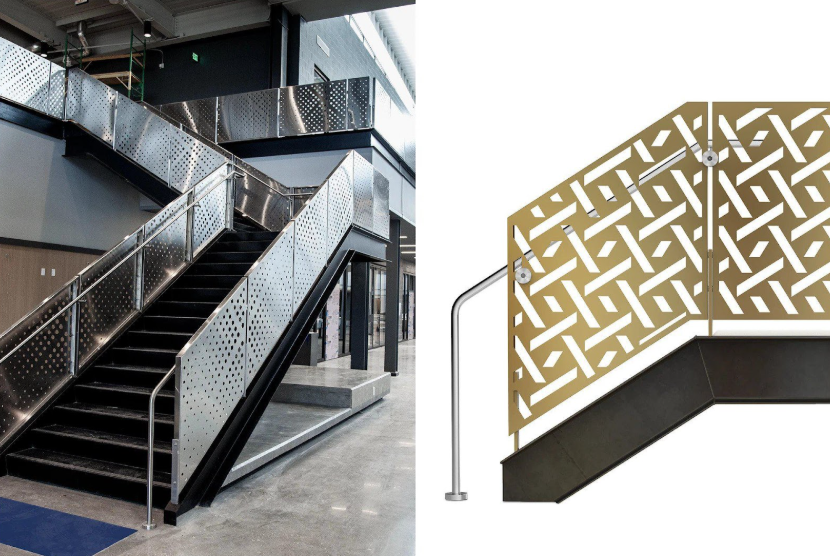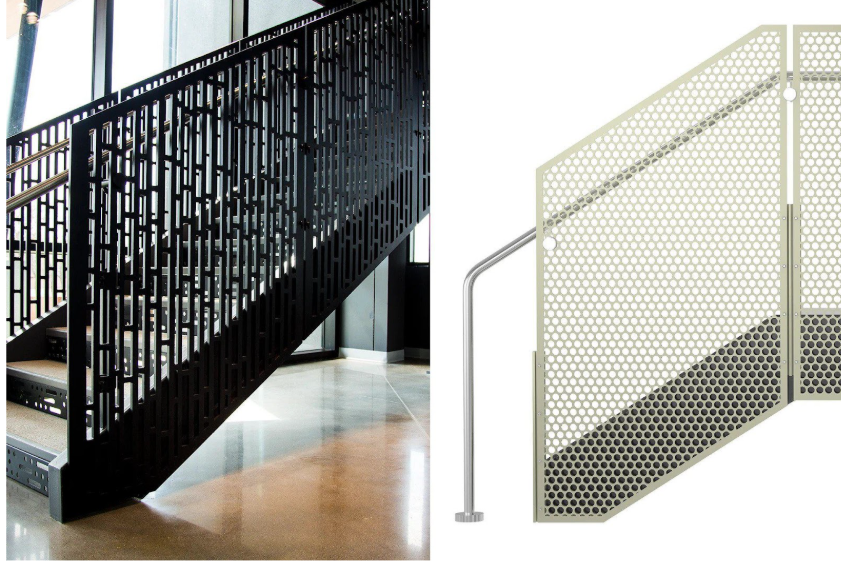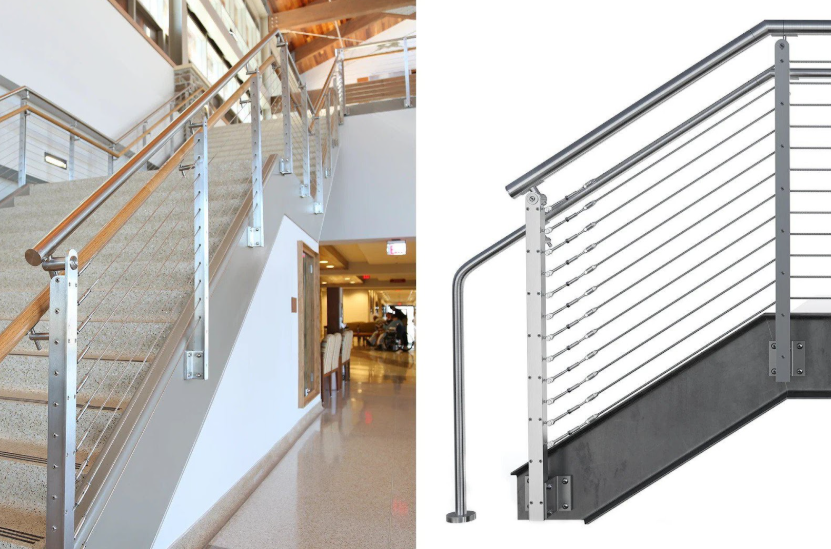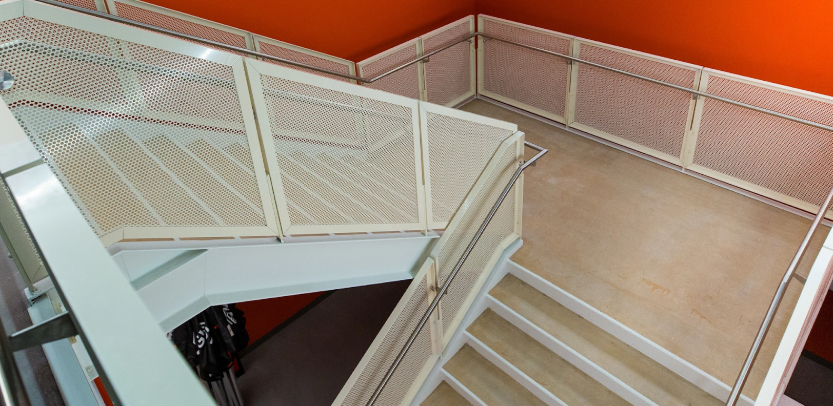
The wide frame of the FRAME Metal Panel Railing System allows the supporting base to nearly disappear, which creates the illusion that the metal panels are floating above the walkway. Its bold perimeter framing adds definition and architectural structure while keeping the overall look streamlined. Designed for strength and durability, FRAME performs well in commercial environments that require a balance of visual impact and long term performance.
Commercial Handrails and Railing Code Compliance
Commercial handrails follow local building codes that are largely modeled on the International Building Code (IBC) commercial handrail code. The following is a partial list of commercial handrail requirements:
- Handrails are required on both sides of most stairways and on ramps with a rise greater than 6”.
- The handrail must be continuous for the run of the stairs or ramp.
- Handrails must be between 34” and 38” as measured from the stair nosing or walking surface of the ramp or walkway.
- Handrails cannot rotate within their fittings.
- Clearance between the handrail and adjacent surface must be at least 1 ½” and free of sharp or abrasive elements.
- Extensions of at least 12” beyond the top stair riser and for the depth of one tread beyond the bottom rise are required.
- A handrail extension must return to itself, a wall, guard, or walking surface or be continuous to another handrail run.
Glass handrails come with additional requirements, including, but not limited, to:
- The use of laminated glass constructed of fully tempered or heat-strengthened glass.
- Minimum thickness of ¼”
- Installed with a top rail or handrail supported by at least three glass balusters or supports that allow the handrails to remain in place if one glass baluster fails.
Elevated walking surfaces, including aisles, stairs, ramps, and landings more than 30” above the floor are required to have guards that measure at least 42” high, measured vertically from the walking surface.
In addition to local building codes, commercial handrails must also adhere to the ADA standards for accessibility as the minimum accessibility standard.
Infill Options
Within metal railings systems, there are a number of infill options that allow you to customize the railing to meet the design specs. These include:
- Cable railings
- Glass
- Perforated metal panels
- Laser cut panels
- Post laser cut panels
- Picket panels
- Multiline
- Wire mesh
- CableNet
Finish Options
Commercial metal railings and glass railing systems offer a range of finishing options to fit the design. Finish options include:
- Stainless steel satin
- Stainless steel mirror
- Powder coated finish
- PVDF finish
- CeraShield
Whether you choose a commercial aluminum railing or stainless steel railing, these options allow you to customize the look to meet the needs of the space.
Performance Expectations and Architectural Trends
Commercial spaces are often high traffic areas, so the materials chosen must be able to stand up to constant use and the wear and tear that comes with it. Choosing high-quality railing materials, like stainless steel, aluminum, and glass, help to create an environment that can stand the test of time.
Modern architectural trends are focused on the use of high-quality materials to create adaptable human-centric spaces. There is also a focus on materials that are low-maintenance such as antimicrobial metals to reduce upkeep while looking great. This fits in perfectly with railing design trends that lean towards sustainability, low-maintenance materials, and modern aesthetics.
Explore VIVA Railings’ Extensive Range of Commercial Railing and Handrail Options
The days of boring, standard commercial railings and handrails are long gone, and VIVA’s extensive range of commercial glass, perforated metal, and cable metal railings systems are all the proof you need!
Contact the experts at VIVA today to discover our wide selection of products and customization options.