


In architectural railing specs, "modular" and "custom" get talked about like two different worlds. One is the off-the-shelf kit that ships fast and installs predictably. The other is the one-of-a-kind fabrication that gets exactly the look you drew. Pick a lane.
The problem with that framing is that it's not how the best railing projects actually get built.
On almost every commercial project VIVA touches, the railing is both modular and custom. It starts with a pre-engineered platform, then gets configured through mounting, infill, finish, glass, lighting, and curvature until the finished run looks like nothing else on the manufacturer's website. That's not a compromise between the two approaches. That's how pre-engineered systems are supposed to work.
Here's a clearer way to think about the decision, and when a fully bespoke fabrication is actually the right call.
What Modular Really Means in Commercial Railings
Modular, in this context, does not mean "kit of parts with four color choices and no flexibility." That's a trade-only hardware interpretation.
In architectural railings, a modular system is a pre-engineered platform: the load paths, anchoring hardware, code compliance, and structural engineering are already solved. What gets configured per project is everything the platform is designed to let you change. Mounting method (top, fascia, core, base shoe). Infill (glass, cable, wire mesh, perforated, laser-cut panel, multiline). Finish (stainless satin, mirror, powder coat in nearly any color). Top rail and handrail profile. Materials (stainless steel, aluminum, powder-coated). LED integration. Straight, curved, or angled runs.
A VIVA SHOE Structural Glass Railing at an airport concourse, a hospital stairway, and a trophy corporate lobby can use the same pre-engineered system and look completely different because of how it's configured. That's the value.
The 5 Benefits of Pre-Engineered Railings walks through why this approach wins on schedule, cost, code, and quality control. The short version: the heavy engineering work is already done, and the project-specific expression happens through configuration, not from-scratch fabrication.
What Custom Really Means
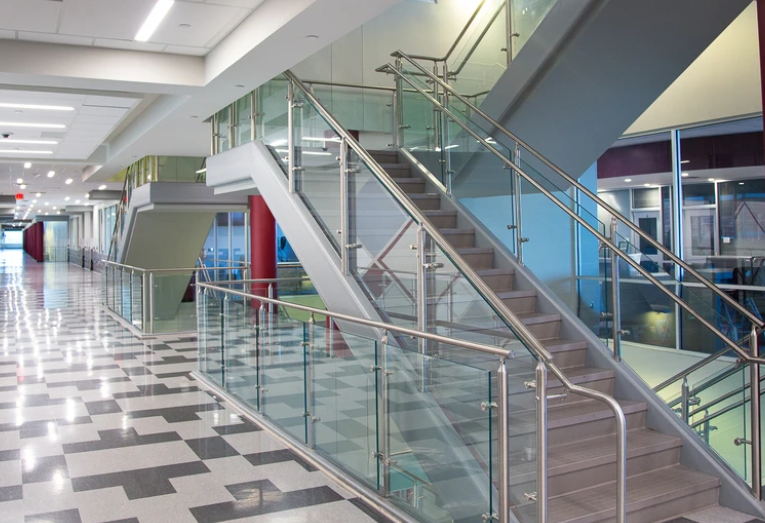
Custom, in its true form, is a railing designed and fabricated from zero for a single project. No pre-engineered platform underneath. No reusable load paths. The engineering calculations, structural testing, hardware design, and code justification all have to be done for this one installation.
That's a real category and a real need. Some projects call for geometry or material combinations that no pre-engineered system supports. Curved historic restorations with very specific profile requirements. Installations with unusual load paths (cantilevered glass guards at an open atrium edge, say). Brand-expression work in hospitality or retail where the railing itself is a sculpted feature. Smoke baffle assemblies or windwall integrations with site-specific geometry. Art pieces that happen to also meet guard code.
VIVA does this work. Their Custom category exists precisely for projects that push past what any platform handles cleanly. But it's a real commitment. Custom fabrication means shop drawings from scratch, engineering review, sometimes physical mockups, extended lead times, and higher cost per linear foot. On the right project, it's worth every bit of that. On the wrong project, it's a value-engineered casualty by 60% CDs.
Where the Confusion Comes From
Most "modular vs. custom" content conflates two different axes:
Axis one: is the engineering pre-solved? (Pre-engineered vs. from-scratch.)
Axis two: is the finished look standardized? (Catalog configuration vs. unique expression.)
The mistake is assuming those two axes always move together. They don't.
A pre-engineered system can deliver a completely unique finished expression through configuration. A from-scratch fabrication can produce something that looks indistinguishable from a catalog product. The right question isn't "modular or custom" in the abstract. It's "does this project need from-scratch engineering, or does it need thoughtful configuration of a platform that's already engineered?"
Most of the time, the answer is the second one.
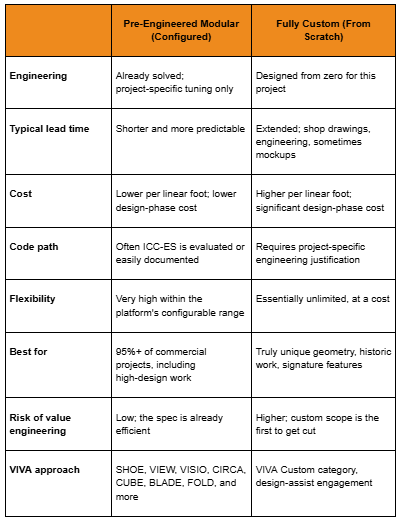
Modular vs. Custom Railing Comparison
Before breaking down how much real flexibility sits inside a pre-engineered system, here's what actually separates the two paths on the variables that matter during specification.
How Much Customization Is Actually Available in a "Modular" System?
This is where the modular-vs-custom conversation usually breaks down. People hear "modular" and picture a system with a locked aesthetic. VIVA's pre-engineered platforms are closer to the opposite.
A single system like CIRCA or VISIO can be specified with:
Clear, frosted, tinted, colored interlayer, digitally printed, or ceramic frit glass infills. Metal, wood, or LED-integrated handrails in multiple profiles. Powder coat in standard colors or custom color match in metallic and matte options, stainless satin or mirror finishes. Straight, angled, or curved configurations across stair, ramp, balcony, and walkway applications. Top, fascia, or core mounting depending on substrate and design intent. Integrated iRAIL Linear, Pods, or Sconce LED lighting. Custom fabrication details layered on top of the platform when a project needs them.
Two VIVA installations using the same pre-engineered system can look nothing alike. The Modular Railing System article walks through examples from Lubbock Cooper High School, Andretti Fort Worth, and SMU Frances Anne Moody Hall that all start from pre-engineered platforms and end up reading as bespoke installations.
That's the point. Modular is the foundation. Custom expression is what it's built for.
When Fully Custom Is Actually the Right Call
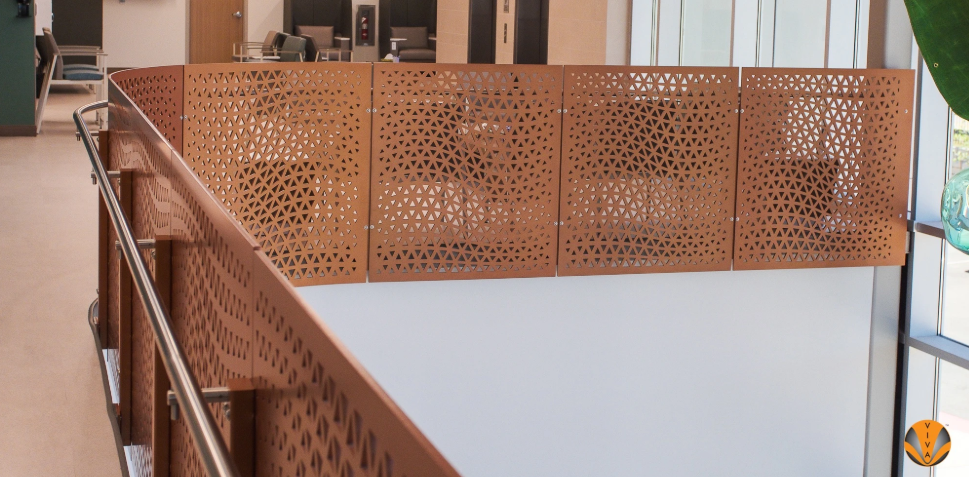
There are real projects where from-scratch fabrication is the correct answer. A few examples:
Historic restoration work with very specific profile, material, or joinery requirements that don't match any modern platform. Signature architectural features where the railing itself is the design moment, not a supporting element. Unusual structural conditions where no pre-engineered load path fits cleanly, like a cantilevered glass edge with no base shoe or fascia anchor, or a perforated metal guard doubling as a facade element. Integrated assemblies where the railing, smoke baffle, windscreen, and lighting all need to resolve into one custom-detailed condition. Art-level brand expression in hospitality, retail, or cultural projects where the client is buying a piece of work, not a guard.
On those projects, the cost and schedule of custom fabrication aren't a premium to resent. They're the cost of doing the project correctly.
What you want to avoid is committing to custom fabrication because the design team thinks pre-engineered systems are too limiting, when in reality the platform would have handled the intent at half the cost and a third of the schedule. That's a common and expensive mistake, and it's usually caught by getting a manufacturer's pre-construction team involved early.
How to Decide on Your Project
Three questions clarify the call quickly:
1. Can a pre-engineered platform meet the design intent through configuration? If the intent is frameless glass, a post-and-glass infill, a cable run, a laser-cut panel, or any variation of those, the answer is almost always yes. VIVA's pre-engineered catalog covers nearly every commercial aesthetic at this point. If the answer is yes, go modular-configured and spend the creative energy on finish, glass, and detailing rather than re-engineering from scratch.
2. Is there a specific condition the platform can't handle? Unusual geometry, a historic match, a custom integrated assembly, or a signature sculptural moment. If yes, that condition is a candidate for custom fabrication, but often only that condition. A project can run pre-engineered systems for 90% of the work and custom fabrication on the 10% that needs it.
3. Is the budget protecting custom scope, or is it aspirational? Custom fabrication that isn't protected in the project budget tends to get value-engineered out late. If the custom intent is real and funded, commit. If it's a wish, commit to pre-engineered-configured up front and get a better result than a half-custom compromise.
The Top 4 Considerations in Choosing a Railing System walks through the broader selection factors (occupancy, budget, aesthetics, schedule) that feed into this decision too.
Talking Through the Decision
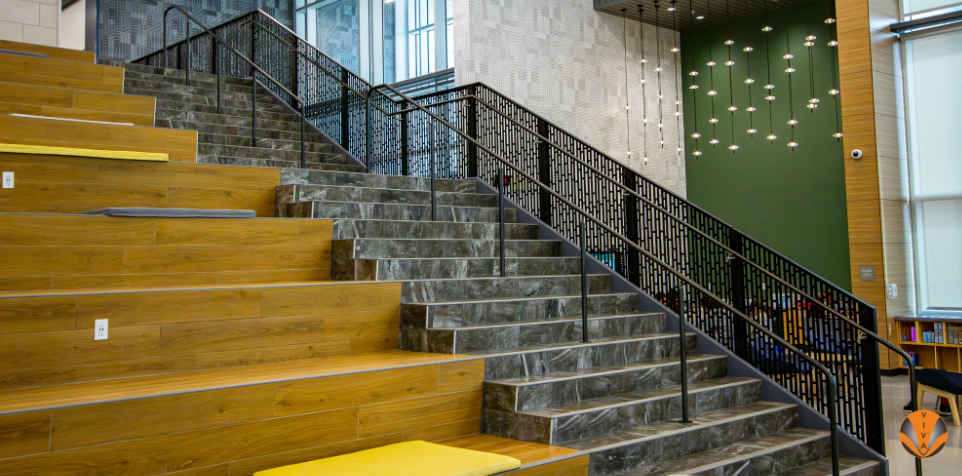
The cleanest path on any commercial project is to involve a manufacturer's pre-construction team before the spec is locked. VIVA’s Design Assist Services exist specifically to help architects and GCs sort modular-configurable work from genuinely custom scope before the budget decisions get made.
That conversation usually saves more than it costs. And the end result is a railing system that hits the design intent, the schedule, and the budget at the same time.
Request a Quote or Talk to our Sales Team to work through your project.
Frequently Asked Questions
Is modular always cheaper than custom? In nearly every case, yes. Pre-engineered systems spread the engineering cost across many projects, and configuration is a fraction of the cost of from-scratch design and fabrication. The delta is usually significant enough that it shows up in the first budget review.
Can a modular system actually look custom? Yes, and that's the entire premise of VIVA's pre-engineered catalog. Two projects using the same system can look completely different because of infill, finish, mounting, and lighting choices. The platform is the foundation; the configuration is the expression.
When should I not use a modular system? When the project genuinely requires geometry, materials, or integrated assemblies that no pre-engineered platform supports. Historic restoration, signature architectural features, unusual load conditions, or fully sculpted brand-expression work are the honest use cases. Everything else is usually better served by a configured pre-engineered system.
Do VIVA's pre-engineered systems come with engineering and code documentation? Yes. Systems like SHOE carry ICC-ES evaluation reports (ESR-4405 for SHOE), and all systems come with in-house engineering, shop drawings, and coordination through fabrication and installation. That's part of why pre-engineered is faster through plan review.