Office Railing Design Ideas for Modern Workspaces | VIVA Railings

 21 Years of VIVA Railings | 2005 – 2026  Learn More

Office railing design 01

The 9 Best Office Railing Designs and Ideas You Should Know

Office railing design plays a larger role in workplace architecture than ever before. What was once treated as a purely functional building requirement is now a defining design feature that influences how a space looks, feels, and functions.

Modern offices prioritize openness, collaboration, natural light, and brand expression. Staircases, atriums, mezzanines, and elevated walkways are no longer hidden utility spaces. They are focal points. The railing systems that surround them must deliver structural performance, meet building codes, and support ADA accessibility, all while enhancing the overall aesthetic.

Glass, stainless steel, cable, and wood-accented systems now allow architects and designers to integrate safety effortlessly into contemporary interiors. With customizable infills, mounting configurations, and handrail materials, today’s office railing design solutions create work environments that are secure, inviting, and visually striking.

Before exploring specific aesthetic approaches, it is important to recognize that every successful office railing design begins with safety, engineering, and compliance.

Safety Standards and Compliance in Office Railing Design

Safety remains the foundation of every installation, no matter how bold the architectural vision.

Code Compliance 

All railing systems must meet or exceed national and local building codes for structural integrity, load requirements, and barrier height. Engineered systems provide confidence for architects, contractors, and building owners.

ADA Accessibility

Handrails and guardrails must support accessible routes and usability for all occupants. Proper height, graspability, and continuity are essential for compliance.

Quality Assurance

Fabrication precision and documented testing help ensure every system performs as intended.

Expert Guidance

From design development through installation, clear documentation and engineering support simplify regulatory coordination.

With safety and compliance established, design possibilities can take center stage.

Office Railing Design Ideas for Modern Workspaces

The following concepts demonstrate how office railing design can balance performance, visual impact, and architectural cohesion.
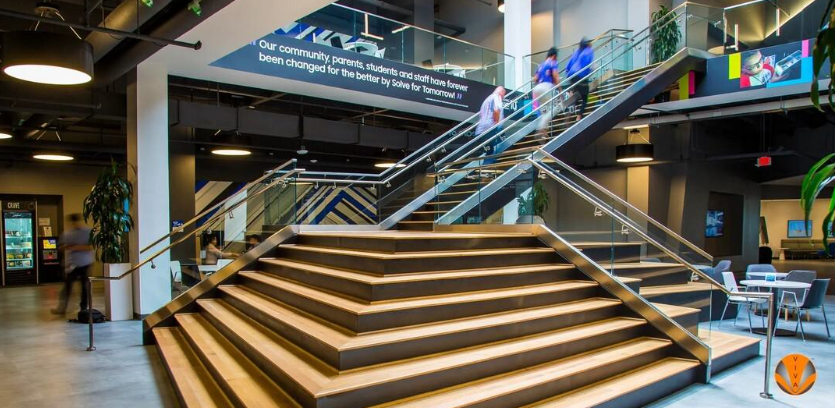
1. Opt for Unobstructed Lines of Sight

1

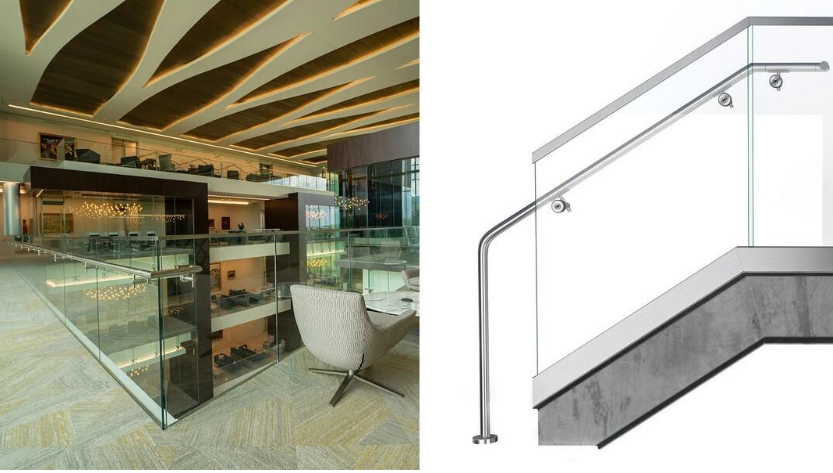
Open office layouts often feature atriums and multi-level collaboration zones. Glass railing systems with tempered or laminated infill panels maintain required fall protection while preserving visual connectivity.

Transparency enhances natural light distribution and creates a welcoming atmosphere. In large corporate environments, this approach reinforces openness and communication across departments.

2. Incorporate Dynamic Angles and Architectural Geometry

2

Modern office railing design does not need to follow straight lines. Custom-fabricated systems can accommodate sharp turns, dramatic slopes, and unconventional stair layouts.

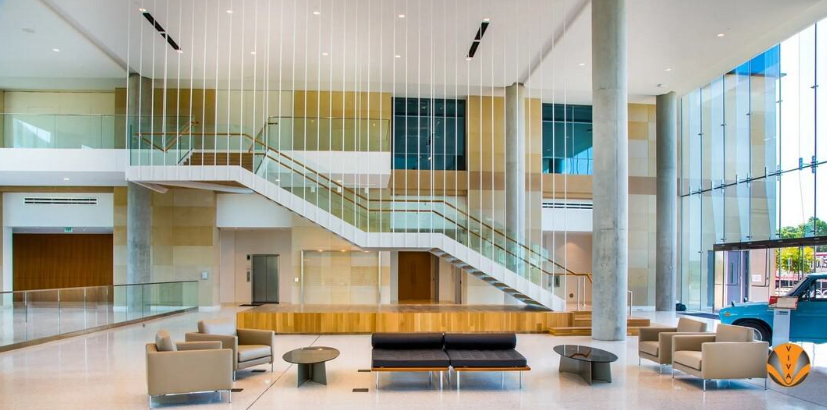
At large corporate headquarters such as American Airlines in Texas, angled glass systems were used to mirror the building’s bold exterior geometry. These design decisions transform railings into architectural statements rather than background elements.

3. Customize the Glass for Branding and Function

3

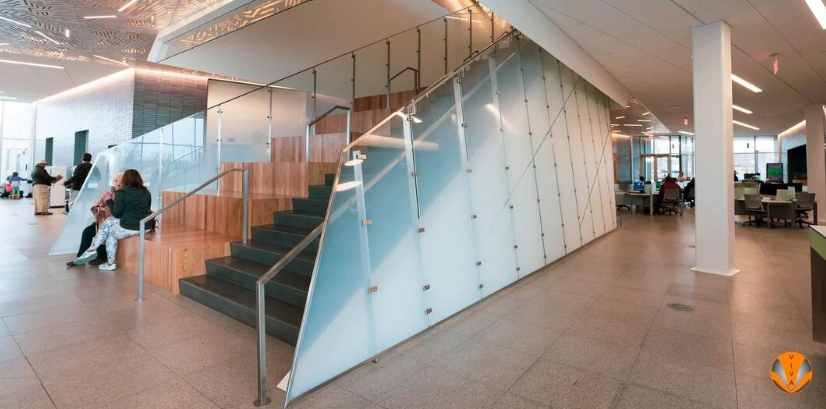
Glass infill panels can be clear, frosted, patterned, tinted, or colored to align with a company’s identity. Custom finishes offer both aesthetic and practical advantages.

In sunlit environments, frosted or patterned glass can diffuse glare while still allowing daylight to filter through. Branded graphics or subtle etching can further reinforce corporate identity without overwhelming the space.

4. Let Architectural Features Take Center Stage

1

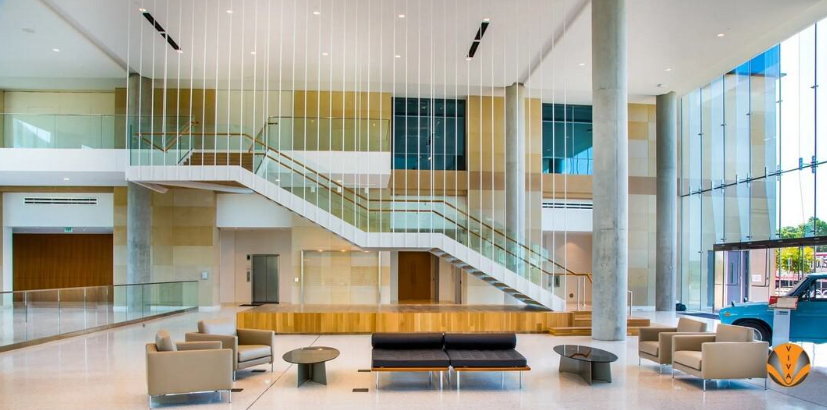
At Toyota’s Plano headquarters, the SOLO Glass Railing System integrates a wood handrail with a clean white staircase. Vertical elements extend upward, emphasizing height and openness. The railing frames the staircase without obstructing it, allowing the architectural design to remain the focal point.

Floating staircases especially benefit from minimalist glass systems that preserve sightlines and highlight structural craftsmanship.

5. Select the Right Mounting Configuration

1

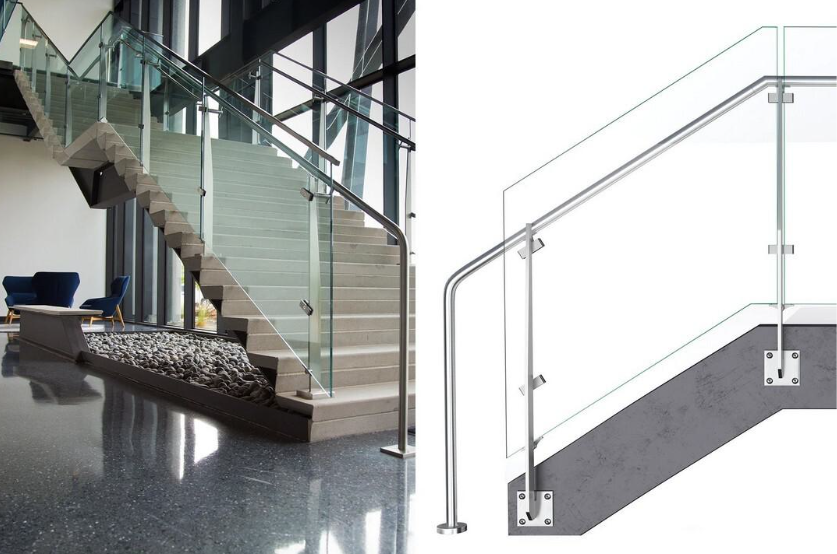
Mounting style significantly influences both aesthetics and usable floor space.

  • Top Mounted Systems: Provide strong structural support and allow the full glass panel to remain visible.
  • Fascia Mounted Systems: Create a sleek appearance by minimizing visible hardware from the walking surface and maximizing floor width.
  • Core Mounted Systems: Offer additional flexibility in structural integration.

Balancing spatial efficiency with visual impact is key to a cohesive office railing design.

6. Design Railings for Learning and Social Stairs

1

Collaborative staircases have become gathering hubs in corporate offices, universities, and K–12 facilities. Wide stair platforms are used for presentations, informal meetings, and team discussions.

To integrate these safely, guardrails, wall rails, and free-standing rails must provide support without disrupting circulation. Properly designed handrails ensure accessibility while maintaining the open, communal atmosphere that defines modern learning stairs.

7. Blend Modern Materials with Natural Elements

1

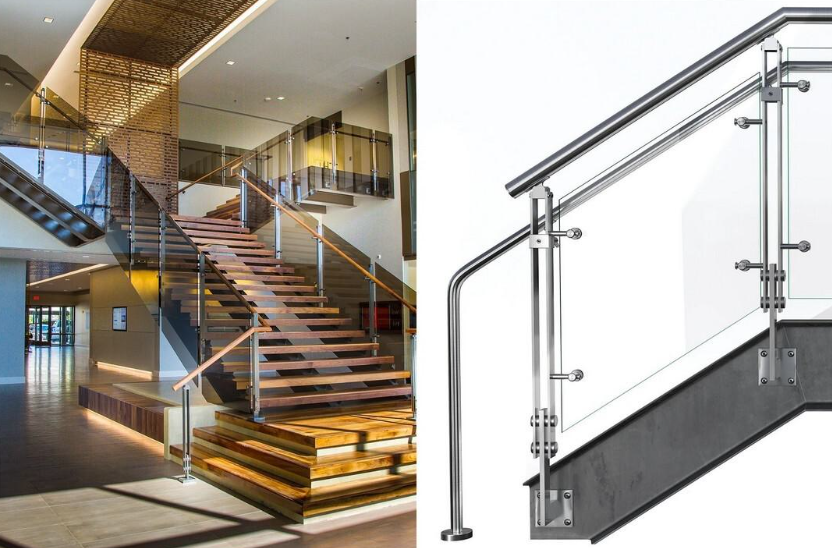
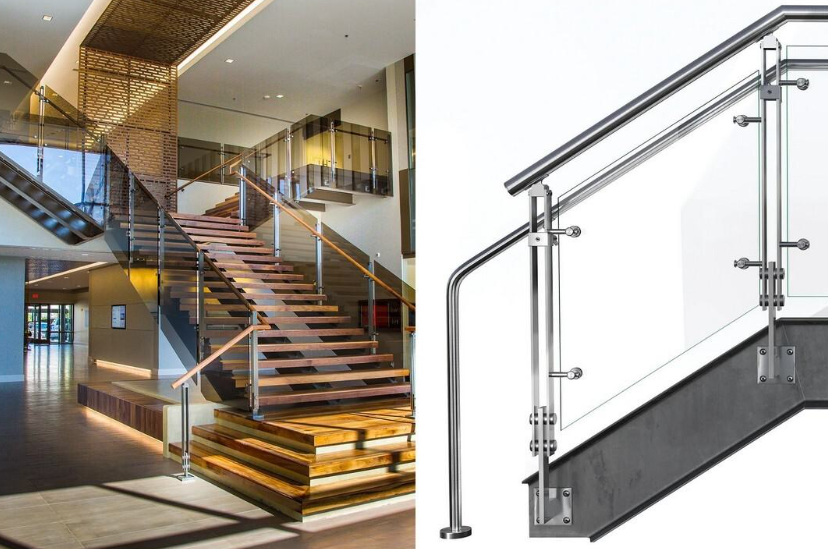
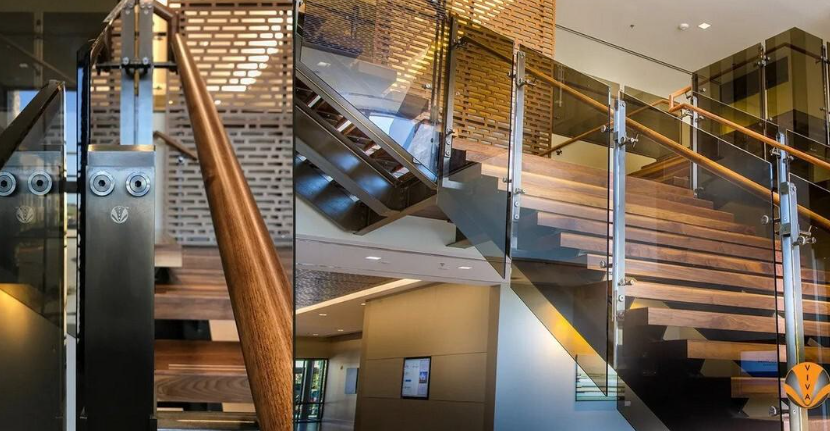
The BLADE® Stainless Steel Glass Railing System pairs contemporary lines with wood stair treads and wood handrails. Dark tinted glass introduces contrast while preserving transparency.

Glass allows natural light to move through the space, wood introduces warmth, and stainless steel offers durability and recyclability. Together, these materials create a sustainable and visually cohesive solution.

8. Use Fascia Mounting for Maximum Visual Impact

1

Fascia-mounted systems such as the VIEW Glass Railing System create clean edges and uninterrupted views. This configuration is especially effective in atriums and mezzanines where maintaining openness is a priority.

For enhanced safety and visual appeal, integrated solutions such as iRAIL LED Illuminated Railings add visibility and subtle architectural lighting. In high-traffic environments, durability and strength remain essential components of successful office railing design.

9. Incorporate Wood Handrails for Warmth and Contrast

1

Wood handrails introduce texture and warmth to glass and metal systems. Available in Red Oak, Cherry, or Maple, they can be stained to complement interior finishes and brand palettes.

Wood elements soften contemporary environments while maintaining code compliance. They can also be integrated with illuminated railing systems to improve visibility in stairwells and gathering areas.

Even a simple material choice can subtly reflect a company’s values and culture.

Create a Custom Office Railing Design with VIVA Railings

Modern office railing design demands more than standard solutions. It requires engineering precision, code compliance, aesthetic flexibility, and long-term durability.

VIVA Railings offers both prefabricated and fully custom systems designed to support architects and building professionals at every stage of a project. With extensive customization options across glass types, handrail materials, finishes, and mounting methods, each installation can be tailored to the specific goals of the workspace.

If you are planning a new office build or renovation, our team can help you design a railing system that enhances safety while elevating the architectural experience.

Contact VIVA Railings to explore solutions for your next office railing design project.

Searching....