


Stainless steel is an excellent material for balcony railing design. It's rust and corrosion resistant, making it a strong choice for both indoor and outdoor applications. It's also versatile: from glass railings supported by metal posts to cable railing systems and perforated panels, stainless steel offers a modern aesthetic that holds up under continuous use and hostile weather.
Modern stainless steel balcony railings also offer nearly unlimited customization options. They complement modern and contemporary designs and can add a modern touch in traditional spaces. Add in the different grades of stainless (304 for most interior and general exterior applications, 316 for coastal and industrial-atmosphere environments), the range of powder coat finishes, and the option to combine metal with glass or wood, and the design flexibility becomes substantial.
For a safe, aesthetically integrated, and durable balcony, look no further than stainless steel. Here's a look at what makes a good balcony railing, plus six real commercial projects showing how VIVA has delivered modern stainless steel balcony railings across different applications.
What Makes a Good Balcony Railing?
A good balcony railing has to do three things well: meet code, complement the design, and hold up over time. Balconies almost always trigger International Building Code (IBC) guard requirements: guards must be at least 42 inches high on commercial applications (36 inches residential), and the infill must not allow a 4-inch sphere to pass through.
Beyond the code baseline, the specification also has to fit the space. Balconies overlooking events or scenic views call for railings that preserve sightlines. Balconies in high-traffic public spaces call for railings that handle continuous contact. Balconies in coastal or exterior environments call for material grades and finishes engineered for the exposure. Balconies in signature architectural moments call for railings that read as design language.
Stainless steel balcony railings deliver on all of these when specified correctly. The material grade, the infill type, and the finish are what separate a code-compliant baseline from a genuinely well-specified balcony railing.
A Great View without Compromising Safety
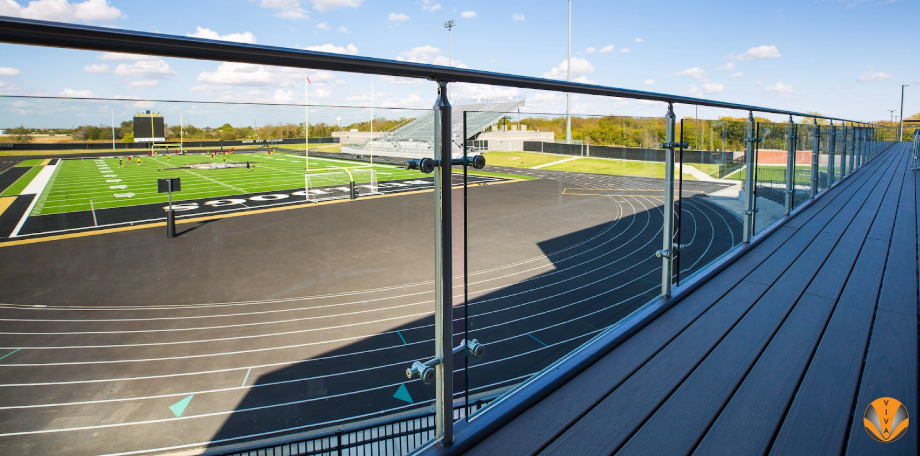
The best steel railing design for a balcony meets the specific needs of the space. In the case of the Royse City ISD Events Center, the balcony needed to provide exceptional safety on the elevated viewing area without obstructing the view of the events below. The CIRCA Glass Railing System did just that. The simple design doesn't detract from the action out on the field and track. Spectators can see what's happening whether they're sitting or standing, which creates more opportunities for everyone to participate.
Durable and Long-Lasting in Every Environment
In moist and exterior environments, choosing the right materials directly determines long-lasting performance. Outdoor applications expose balcony railings to wind, water, sun, snow, and ice, but stainless steel balcony railings stand up to weather events and everyday exposure when the correct grade is specified. For most exterior applications, 316 stainless steel is the appropriate specification because it handles chloride exposure that would corrode 304 stainless over time.
The CIRCA Multiline Railing System at the Hickory Riverwalk - Rosales Bridge provides a stable barrier between the bridge and the water while allowing views to take center stage. This system is ideal for commercial and residential applications where the railing can be installed on a deck, balcony, or bridge span with equal confidence.
Ideal for Public and High-Traffic Spaces
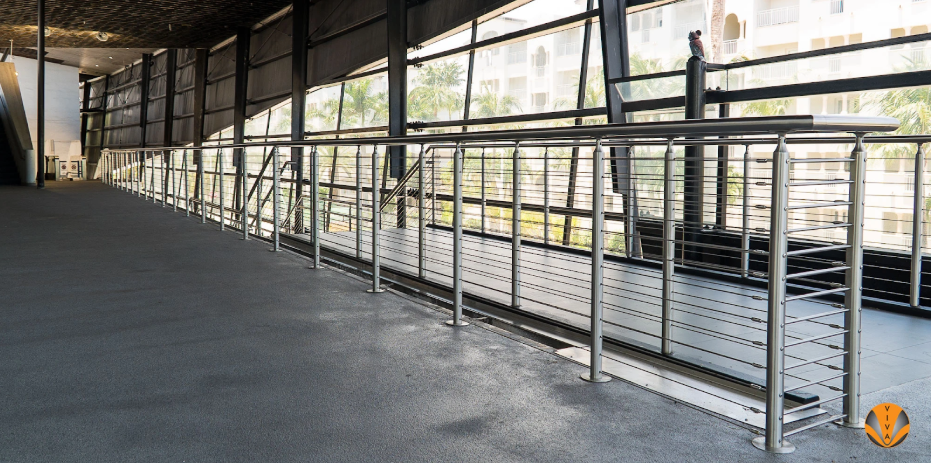
Public spaces come with a range of considerations for railing specification. High foot traffic, continuous contact, cleaning cycles, and the need for materials that don't require constant maintenance all shape the decision. Steel railing designs for balconies blend safety and style while offering the durability to stand up to constant use.
At Publix #0621, the CIRCA Stainless Steel Cable Railing System extends from the staircase and wraps around to protect the edge of the balcony. It offers a low-maintenance solution to a high-traffic area, and the near-transparent cable infill preserves visibility across the retail environment.
Safety Where It's Needed Most
If you've ever been around teenagers, you know they can be hard on things. That's why Spring Branch ISD Memorial High School chose the BLADE Perforated Metal Panel Railing System with perforated infill panels along with the FSR Free Standing Rail System. These durable railing systems create a contemporary design while offering the strength and impact resistance needed in a K-12 environment.
A Range of Material Options

Metal is a beautiful and modern material, but sometimes designs need a touch of the traditional. Integrating wood into a metal railing design creates warmth and offers the feel of a natural material as people use the railing. VIVA offers Red Oak, Cherry, or Maple wood railing options.
The Benbrook Municipal Complex is an example of how the modern CIRCA Multiline Railing System can be complemented by a tile floor and wood railings to create a cohesive and interesting design. The combination reads as intentional design rather than compromise, and it demonstrates how metal and wood can work together in the same specification.
Fully Customizable
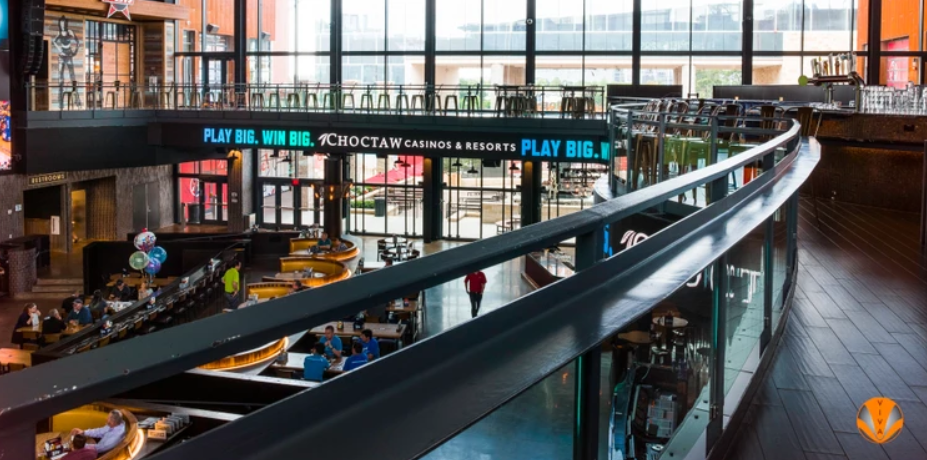
VIVA offers a wide range of ways to customize its prefabricated systems, but some designs call for more customization to fully meet the needs of the space. That was the case with Texas Live!, a facility that includes restaurants, a concert arena, an interior food court, and an outdoor event pavilion.
Almost 2,000 linear feet of custom-designed railing system was needed to bring the vision to reality. Rectangular top rails, an integrated drink ledge, and a curved configuration created a railing system that allows for interaction and protection at the same time. This is what a true custom balcony railing engagement looks like: a manufacturer working with the architect and GC from design through installation to deliver something the standard catalog doesn't offer.
Beautiful Balconies, Built to Last
Modern stainless steel balcony railings offer the rare combination of code-compliant safety, design flexibility, and multi-decade durability. From glass and cable to perforated metal, multiline horizontal bars, or fully custom fabrication, stainless steel delivers the performance needed for the application while staying within the aesthetic language the space calls for.
VIVA's balcony railing systems have been delivered across commercial and civic projects from K-12 schools to riverwalks to entertainment venues to municipal buildings. Each engagement includes design collaboration, fabrication in VIVA's facilities, and coordinated installation to ensure the finished railing meets both the design intent and the code requirements. The Design Assist Services page covers what early-stage manufacturer engagement looks like on balcony railing projects.
Request a Quote or Talk to our Sales Team to work through your project.
Frequently Asked Questions About Stainless Steel Balcony Railings
What type of stainless steel is best for balcony railings?
For most interior and general exterior applications, 304 stainless steel is the standard specification. For coastal environments, industrial atmospheres, and any application with chloride exposure (pool decks, salt-air locations, high-humidity environments), 316 stainless steel is the appropriate upgrade. 316 contains molybdenum, which significantly improves chloride corrosion resistance over 304.
What are the code requirements for balcony railings?
Commercial balcony railings must meet International Building Code (IBC) guard requirements: at least 42 inches high, with infill that does not allow a 4-inch sphere to pass through. Residential balconies fall under the IRC and require guards at least 36 inches high with the same infill limitation. Where handrails are also part of the balcony railing system, ADA requirements apply for handrail height (34 to 38 inches), diameter (1¼ to 2 inches for circular), and extensions.
Can stainless steel balcony railings be used outdoors?
Yes. Stainless steel is a common outdoor balcony railing material because of its inherent corrosion resistance. For exterior applications, 316 stainless steel is the recommended grade, especially in coastal environments or areas with high humidity. Powder-coated finishes and PVDF coatings can further enhance both durability and design flexibility.
How do I choose the right infill for a balcony railing?
Match the infill to the design intent and the environment. Glass infill preserves sightlines and reads as premium, ideal for events centers, hospitality, and view-first balconies. Cable infill delivers near-transparent sightlines at a lower cost, ideal for retail, decks, and public spaces. Perforated metal or laser-cut panels bring pattern and brand expression into the railing, ideal for signature K-12, hospitality, or civic projects. Multiline horizontal bars offer a clean modern look at a mid-range price point, ideal for commercial balconies where budget and design flexibility both matter.