


The cost of a commercial railing is almost never what shows up on the proposal. The proposal covers fabrication, delivery, and installation. The real cost is what the building owner pays over the next 20 or 30 years to keep that railing performing, looking right, and meeting code.
That math doesn't usually get done at specification. Architects spec to design intent and budget. GCs price the spec. Owners sign the GMP. Nobody at that table is calculating year-15 finish replacement cost or year-20 cable retensioning labor. By the time someone is, the system is installed and the lifecycle is what it is.
It doesn't have to work that way. The decisions made at design and specification dictate the lifecycle cost more than anything that happens after. Here's a real look at what drives commercial railing lifecycle cost, what maintenance actually looks like by system type, and how to think about a railing as a multi-decade asset instead of a line item.
Why Lifecycle Cost Belongs in the Specification Conversation
A commercial railing isn't a consumable. Specified correctly, fabricated to quality standards, and installed in an appropriate environment, a stainless steel or aluminum railing system delivers decades of service. Glass infill panels last for decades. The structural posts and rails will outlast the carpet, the paint, the lighting fixtures, and most of the finishes in the building around them.
That makes the railing one of the longest-lived assets in the project. Which means the lifecycle math is genuinely consequential, not theoretical.
Three things drive long-term cost:
Material Grade and Finish
The single biggest determinant. The wrong material in the wrong environment fails early. The right material in any environment delivers a generation of service with routine maintenance. This is the decision that should never be value-engineered.
Replaceability of Components
Modular pre-engineered systems let you replace individual components (a glass panel, a cable run, a damaged section of handrail, an LED driver) without demoing the surrounding system. A fully welded site-fabricated railing requires you to rebuild a section to repair one part of it. Over 20 years, that difference compounds.
Maintenance Discipline
Even the best spec needs cleaning and inspection. Whether the building owner actually does it is the other variable. The spec can include a maintenance protocol, but the operations side has to execute it.
The architects, engineers, and manufacturers in the room at the design phase have direct control over the first two. The third is the owner's responsibility, but the documentation and protocol handed off at closeout are what make it possible.
What Service Life Actually Looks Like
The industry standard one-year material warranty for railing systems is a legal floor, not an expected service life. The actual service life of a well-specified commercial railing is measured in decades, not years. Specifically:
Stainless steel structural components (posts, top rails, handrails, brackets) in properly specified grades for the environment deliver multi-decade service. Interior 304 stainless in clean commercial environments performs essentially indefinitely with minimal maintenance. Exterior 316 stainless in coastal applications still delivers a generation of service when cleaned and inspected on the recommended schedule.
Aluminum components with proper anodizing, PVDF powder coat, or proprietary finishes like CeraShield deliver comparable lifespans in most environments. The finish carries more of the duty cycle than it does on stainless, so finish damage gets touched up rather than left.
Laminated and tempered glass infill panels typically perform for the life of the building when properly specified with SGP or PVB interlayers. VIVA's exterior laminated glass carries a 5-year de-lamination warranty, but the actual service life is decades. Glass is replaced for damage, not wear.
Stainless steel cable in commercial cable railing systems holds tension and appearance for decades with periodic retensioning (typically once every several years depending on use).
LED illuminated railings have a slightly different lifecycle profile. The LEDs themselves often run 50,000+ hours, which translates to 10-15+ years at commercial duty cycles. The drivers, controls, and connection points have shorter service lives and are component-replaceable rather than system-replaceable.
The takeaway: a well-specified commercial railing is a multi-decade asset. The lifecycle conversation isn't about whether it lasts. It's about what the spec, the environment, and the maintenance discipline together do to that service life.
Maintenance by System Type
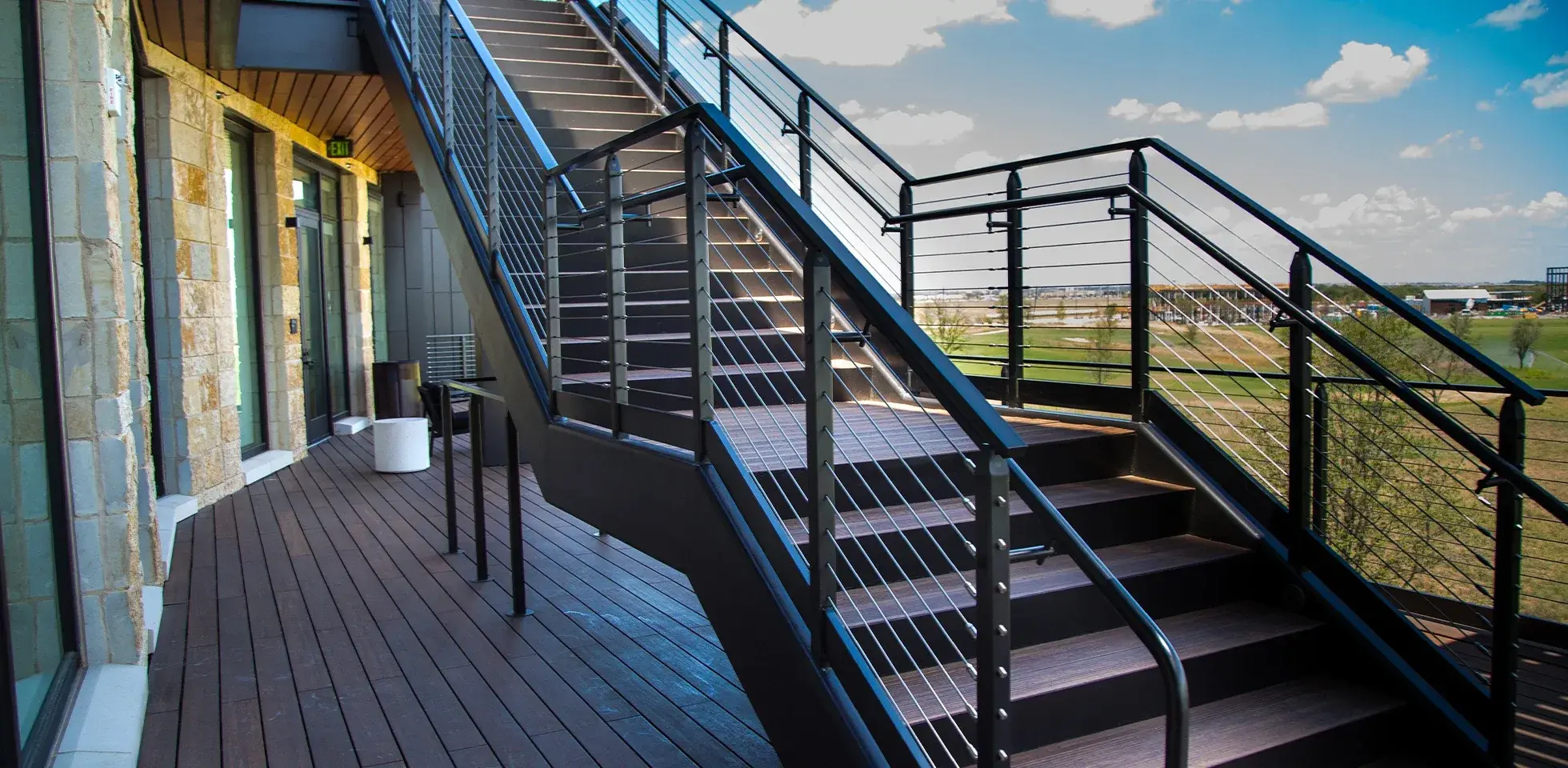
Here's what maintenance actually looks like for the major railing system categories. None of this is exotic. All of it is the kind of thing that gets skipped on the assumption that "stainless doesn't need maintenance."
Stainless Steel Systems
Stainless is the lowest-maintenance railing material in commercial use, but "low" is not "none." Routine maintenance protects the chromium oxide layer that gives stainless its corrosion resistance.
Interior applications: Wipe-down with a mild detergent and water as part of standard cleaning cycles. No special protocol required. Inspect hardware connections annually.
Exterior applications: Periodic cleaning with fresh water and mild detergent removes airborne contaminants before they can concentrate. Inspect for early-stage pitting at fastener heads, weld zones, and crevices on an annual cycle. Passivation treatment (citric or nitric acid wash) can restore the chromium oxide layer if pitting initiates and is caught early.
Coastal applications: Quarterly cleaning is the standard. The chloride film from salt-laden air will accumulate and accelerate corrosion if not removed. This is the highest-maintenance commercial environment, and skipping the cycle is the single biggest reason coastal installations fail.
Aluminum Systems
Aluminum's natural oxide layer plus finish (anodizing, powder coat, or CeraShield) provides the corrosion protection. Maintenance is primarily about preserving the finish.
Inspect finish condition annually. Touch up any chips, scratches, or coating damage within weeks rather than months, before corrosion can initiate at the breach. Standard cleaning with mild detergent. PVDF powder coats (AAMA 2605) and CeraShield finishes outperform standard powder coats over a 20-year cycle, which is the main argument for specifying them up front rather than the cheaper alternative.
Glass Infill (Structural and Post-Supported)
Glass is essentially zero-maintenance from a structural standpoint. The lifecycle questions are about cleaning, hardware, and damage replacement.
Clean glass routinely with standard commercial glass cleaner. Avoid abrasive cleaners that can scratch the surface or damage edge seals on laminated glass. Inspect glass clamps, button hardware, and base shoe components annually for fastener tightness and any visible corrosion. Replace damaged glass panels as needed; modular pre-engineered systems make single-panel replacement straightforward without disturbing adjacent panels.
This last point matters more than it sounds. A glass panel that needs replacement in a fully welded custom railing is a major repair. The same panel in a modular pre-engineered system like VIVA’s SHOE or post-supported glass platforms is roughly a 30-minute swap with standard tools.
Cable and Multiline Systems
Stainless steel cable holds tension for years but does require periodic retensioning. Loose cables read as a defect and reduce the system's safety performance.
Visual inspection on an annual cycle. Retension as needed (typically once every several years depending on use and thermal cycling). Inspect cable terminations and fittings for any signs of corrosion or wear. Stainless cable in coastal environments needs the same cleaning protocol as other stainless components.
LED Illuminated Railings
LEDs themselves are essentially maintenance-free for their service life. The systems around them are not.
Document driver locations at closeout. Maintain access to drivers for replacement (drivers have shorter service lives than the LEDs they power). Spare-parts package for drivers and modular LED components should be part of the closeout deliverable. Confirm that the maintenance protocol is handed to the owner, not just stuffed in a job binder.
This is where integrated lighting projects most commonly fail at lifecycle. The LEDs are still working at year 12. The driver fails at year 8. Nobody can find the driver, identify the replacement part, or access it without removing trim. The maintenance protocol should prevent this; it usually doesn't because nobody documents it.
The Replaceability Question
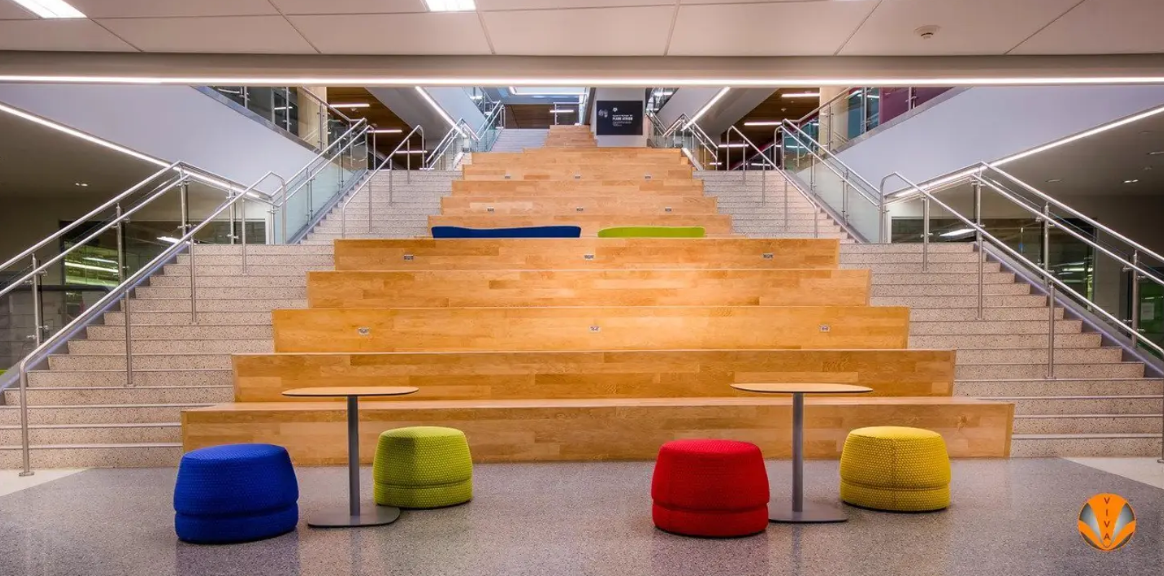
Lifecycle cost on commercial railings is dominated by what happens when something needs fixing or replacing. That's where the modular pre-engineered story has real teeth.
Modular pre-engineered systems are designed for component-level replaceability:
A damaged glass panel swaps out without affecting adjacent panels or load paths. A scratched section of handrail can be replaced as a unit. A failed LED driver can be accessed and swapped. A cable run can be retensioned or replaced individually. A post can be removed and replaced without disrupting the connecting runs.
Fully welded site-fabricated railings don't work that way. Damage to one section means cutting out and re-welding a portion of the system, which usually means refinishing the section after the repair to blend it with the rest. That's labor, downtime, and visual disruption every time something needs attention. Over a 20-year cycle, those events accumulate.
This is one of the underappreciated reasons commercial owners and facility teams should be pushing for modular pre-engineered systems even when the initial cost looks comparable to custom fabrication. The lifecycle math favors modular significantly. The previous article on modular vs. custom railing systems covers this decision in more detail.
The Hidden Lifecycle Costs
Three lifecycle cost drivers don't usually show up in the comparison spreadsheet and probably should:
Galvanic Corrosion at Connection Points
A railing that's specified correctly at the visible components but assembled with the wrong-grade fasteners or anchors will fail at the connections first. The base material can be 316 stainless and the connection can still corrode through within years. This isn't a maintenance issue; it's a specification issue, but it shows up as a lifecycle problem when the railing has to be partially rebuilt to address it.
Finish Failure on Coated Systems
Powder coats degrade. PVDF lasts longer than polyester. CeraShield lasts longer than standard powder coat. The cheap finish that saved a few percent at install becomes a refinishing line item in year 10-12 that costs far more than the original delta. Specifying the better finish up front is one of the highest-return lifecycle decisions on a railing project.
Controls and Electronics Obsolescence on LED Systems
The drivers, lighting controls, and any building management system integration on illuminated railings will go through obsolescence cycles faster than the railing itself. Plan for it in the spec by selecting drivers with documented replacement paths and avoiding proprietary controls that lock the project into a single vendor.
What "Maintenance-Ready" Specification Actually Looks Like
A commercial railing specified with lifecycle in mind includes:
The right material grade for the environment (interior, exterior, coastal). The right finish for the substrate and exposure level, with PVDF, CeraShield, or anodizing prioritized over basic powder coats. Modular pre-engineered systems with documented component-level replaceability. Fastener and anchor grades that match the structural components, with isolation at any dissimilar-metal connections. A maintenance protocol included in the project closeout, not assumed. Spare-parts packages for any consumable components (LED drivers, isolation hardware, replaceable cable terminations). Documentation handed off to the owner including the material schedule, finish specifications, manufacturer contacts, and warranty terms.
That documentation matters as much as the spec itself. A well-specified railing whose maintenance protocol is buried in a job binder nobody opens is functionally the same as a poorly specified one when something goes wrong at year 8.
Specifying for the Long Run
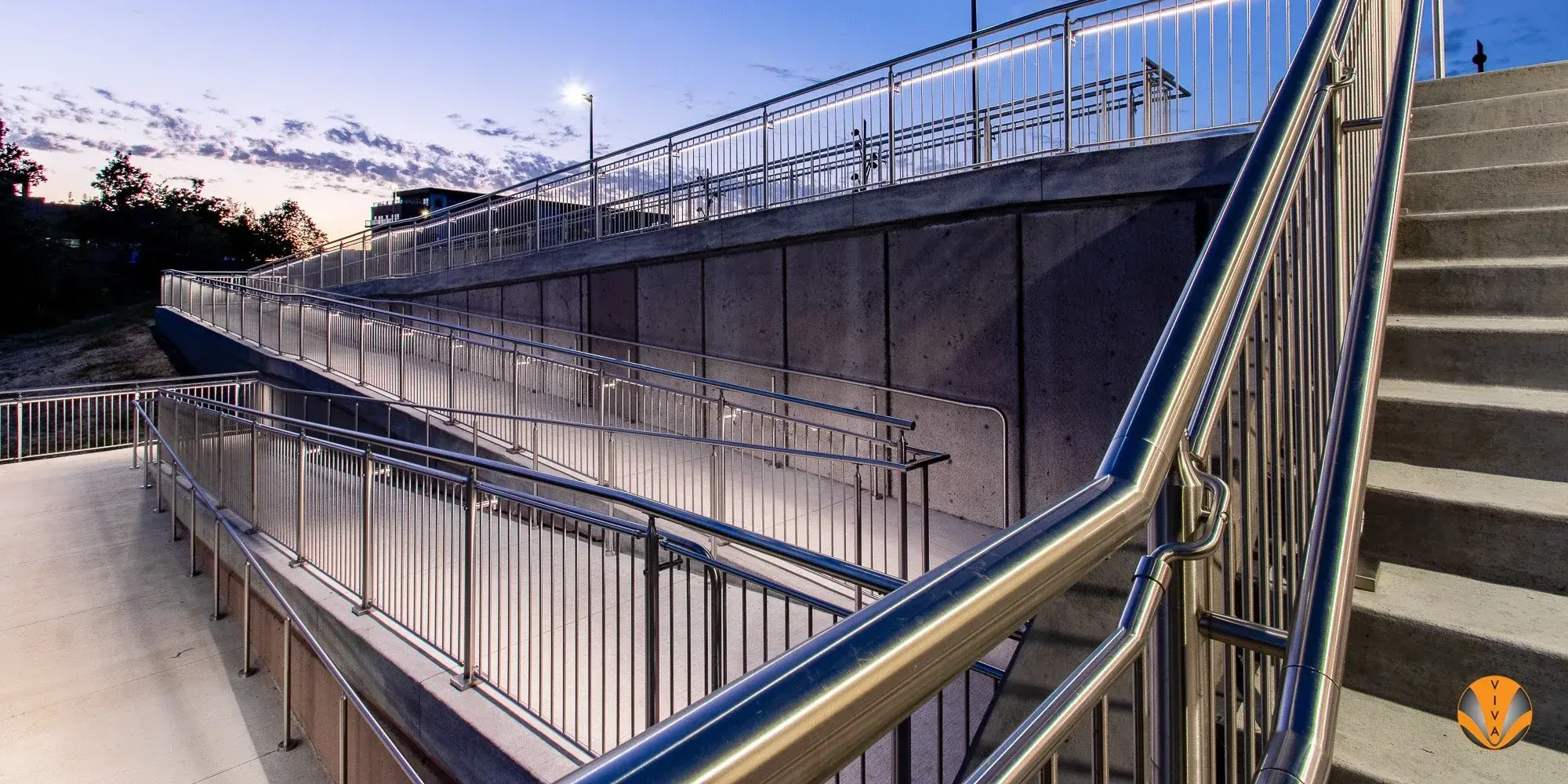
A commercial railing is one of the few specification decisions on a project where doing it right at design and specification pays back over decades. The wrong spec is cheap at install and expensive over the building's life. The right spec is more expensive at install and dramatically cheaper over the same period.
That's the conversation VIVA has with architects, GCs, and owners on every project. Material grade, finish selection, modular component design, and closeout documentation aren't separate decisions; they're a single coordinated approach to specifying a railing that performs for the life of the building it lives in.
If you're working through a commercial project and want to factor lifecycle thinking into the railing specification, the Design Assist Services page covers what early-stage manufacturer engagement looks like.
Request a Quote or Talk to our Sales Team to work through a project.
Frequently Asked Questions
How long does a commercial railing actually last?
Properly specified stainless or aluminum commercial railing systems deliver multi-decade service in their intended environments. The structural components typically outlive most other building finishes. The shorter-cycle items (LED drivers, coated finishes in coastal environments, cable retensioning) are component-level maintenance issues, not full-system replacement.
What's a realistic maintenance budget for a commercial railing?
Maintenance cost varies by environment and system type. Interior stainless railings are essentially free to maintain beyond standard janitorial cleaning. Exterior coastal railings require quarterly cleaning labor. LED systems require driver replacement on multi-year cycles. The right way to think about it is a small annual line item, not an unbudgeted year-15 surprise.
Does the manufacturer's warranty reflect the actual service life?
No. The standard one-year material warranty in the industry is a legal floor that covers manufacturing defects. The actual service life of a well-specified system is decades. Don't conflate the warranty period with expected lifespan.
Is custom fabrication or modular pre-engineered better for lifecycle cost?
Modular pre-engineered systems are typically better for lifecycle cost because of component-level replaceability. Custom fabrication can be the right call for unique design requirements, but the lifecycle math usually favors modular when both can meet the design intent.
Who is responsible for the maintenance protocol?
The project team should include the maintenance protocol in the closeout package. The building owner or facility manager is responsible for executing it. The most common failure mode is that the protocol is never documented or never delivered to the operations team that needs it.