
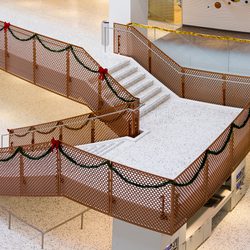



Commercial Handrail for Washington DC's Federal Government and Institutional Market
Washington DC is unique among American cities in the degree to which a single institutional presence, the federal government, shapes the commercial construction market. The federal government owns or leases the largest building portfolio in the world, with the National Capital Region representing the greatest concentration of that portfolio. The General Services Administration alone manages tens of millions of square feet of federal building space in the DC metro area, and the federal agency construction and renovation pipeline that flows from this portfolio generates consistent, sustained demand for commercial handrail in corridors, stairwells, accessible routes, and egress paths across the National Capital Region.
The federal procurement documentation requirement is what distinguishes DC commercial handrail work from equivalent institutional scopes in Sacramento, Charlotte, or San Antonio. Federal construction projects in Washington DC are governed by the Federal Acquisition Regulation (FAR) and the GSA's Facilities Standards for the Public Buildings Service (PBS-P100). These standards supplement standard IBC requirements with federal-specific performance criteria, handrail grasp ability, mounting bracket requirements, finish durability standards, and documentation requirements that are not present in standard commercial construction. VIVA provides handrail specifications and submittal packages structured for federal procurement documentation, including the material certifications and compliance documentation that GSA-managed facility projects require.
The DC Historic Preservation Review Board is the second distinctive dimension of commercial handrail work in the District. Washington DC has one of the most extensive historic preservation programs in the country, with HPRB oversight extending to changes in hundreds of historically designated properties throughout the District. Many of the federal buildings, embassy properties, and commercial buildings in DC's historic neighborhoods, Georgetown, Capitol Hill, Dupont Circle, Adams Morgan, and the Monumental Core, are subject to HPRB review for changes to their character-defining features, which can include stair halls, corridor finishes, and handrail assemblies in significant interior spaces.
The NoMA corridor, Navy Yard, Capitol Riverfront, and the Union Market zone represent DC's most active new commercial development markets, and they generate commercial handrail demand at the other end of the spectrum from federal renovation: new construction mixed-use buildings where the handrail specification follows the DC Building Code without the additional layers of GSA procurement documentation or historic preservation review. VIVA supports both markets with the same design-assist workflow and documentation discipline.