Twenty years of fabricating architectural railings teaches a manufacturer something most product literature doesn't capture: the best projects share a profile. Not because one client looks like another, but because the conditions that produce a railing system worth doing well tend to come from the same place.
VIVA has worked on the floating staircases at Bank of the Ozarks Headquarters. The concourses at Denver International Airport. The PGA of America headquarters. American Airlines headquarters. Toyota North America headquarters. The Omni Frisco at The Star. UTD. Texas A&M. SMU Frances Anne Moody Hall. Andretti Indoor Karting in Fort Worth. Choctaw Casino. McGrath Amphitheatre. Lubbock Cooper High School. The list goes longer than that, across hospitality, corporate, healthcare, K-12 and higher education, transportation, civic, and high-end multi-family.
Different building types. Different design intents. Different geographies. What ties them together isn't the product specification. It's the way the projects were approached. This is what defines a VIVA project, and why understanding that helps architects, GCs, and owners know whether their project is the right fit.
The Common Thread: Design Intent Meets Engineered Precision
Every VIVA project starts from a real design intent. Someone, somewhere in the project, cares about how the railing reads in the finished space. The architect's drawings show specific profiles. The interior designer has finish preferences. The owner has a vision for how the space feels. The railing isn't being treated as a generic guard; it's being treated as an architectural element that contributes to the project's expression.
That's the first qualifier. VIVA is the right fit when the railing matters to the design. When the project team is willing to engage on profile selection, finish coordination, infill choices, mounting details, and lighting integration, the depth of VIVA's pre-engineered platforms and customization range delivers results that commodity systems cannot.
The second qualifier is engineered precision. VIVA projects routinely involve code documentation, ICC-ES evaluation reports, coordination with structural and electrical engineers, and shop drawing review against the project's specific conditions. The work isn't about hitting a price point and shipping standard parts. It's about delivering a railing system that satisfies code, structural loads, fabrication tolerances, and field-measured hold-to dimensions while still expressing the design intent.
When both of those things are true on a project, the engagement model works. When neither is true, VIVA probably isn't the leanest path.
Project Types Where VIVA Consistently Delivers
The portfolio across two decades points to consistent strengths. These aren't the only project types VIVA does, but they're the categories where the engagement model produces results that justify the investment.
Hospitality
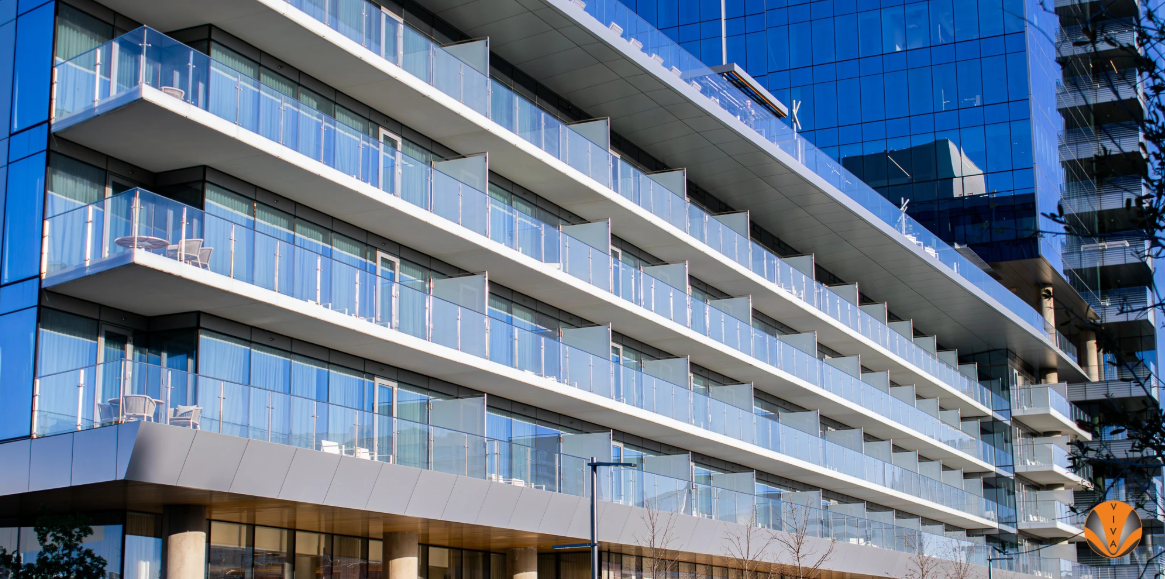
Hotels, casinos, resorts, and entertainment venues are projects where the railing is part of the guest experience. The Omni Frisco, Choctaw Casino in Durant, Andretti Indoor Karting in Fort Worth, and similar work demonstrate the kind of design coordination these projects demand. Finishes have to land exactly right. LED integration often plays a major role. Schedules are aggressive. Quality has to read on camera and in person.
Corporate headquarters and trophy commercial
Bank of the Ozarks, PGA of America, American Airlines, Toyota North America. These projects are signature work. The railing is part of how the building represents the brand. Mistakes are visible. Design integrity through fabrication and installation matters more than it does on commodity commercial work.
Civic, government, and cultural
Government buildings, libraries, museums, performance venues like the McGrath Amphitheatre. These projects often involve unique architectural conditions, ADA-compliant path-of-travel work, and integrated lighting. They're rarely commodity installs.
Airports and transportation
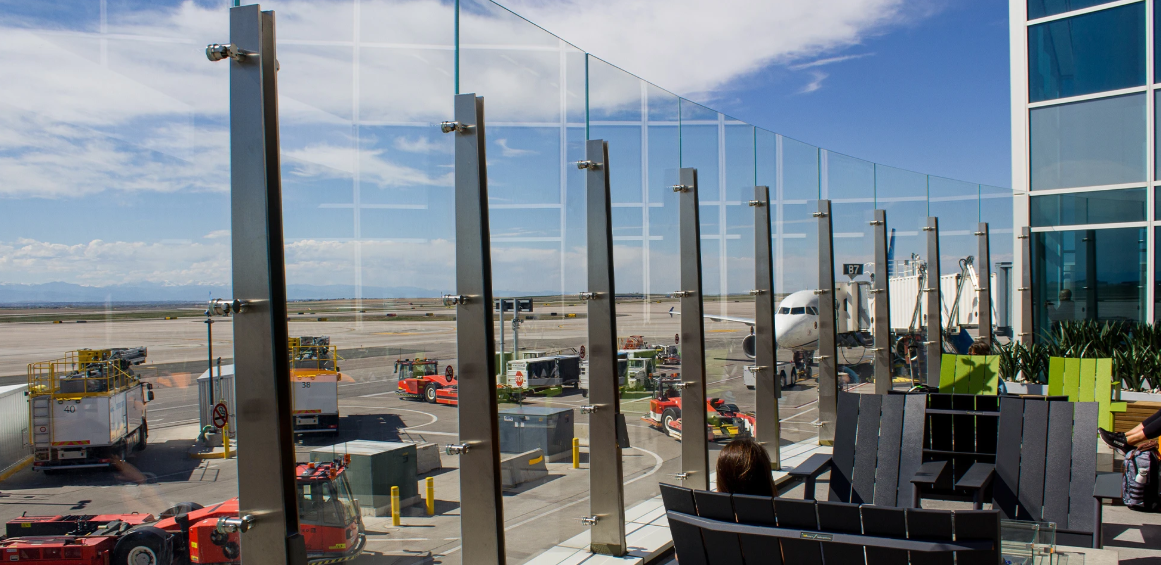
Denver International Airport concourse work, transit-adjacent projects, and similar high-traffic public infrastructure. Code compliance, ADA path-of-travel requirements, and durability under heavy use are all elevated. The wrong manufacturer on this kind of work creates persistent problems. The right manufacturer delivers a system that performs for decades.
Healthcare and life sciences
Hospitals, medical office buildings, and research facilities. Cleanability, antimicrobial finishes when applicable, and ADA compliance combine with elevated design expectations on newer healthcare projects.
Premium multi-family
High-end residential towers, mixed-use developments, and apartment buildings where the railing is part of the marketing pitch as much as the building program. Balcony glass, stair railings, amenity-deck installations.
If the project sits inside one of these categories with real design intent and a willingness to engage on coordination, the answer is usually yes. VIVA is the right fit.
Higher education and K-12
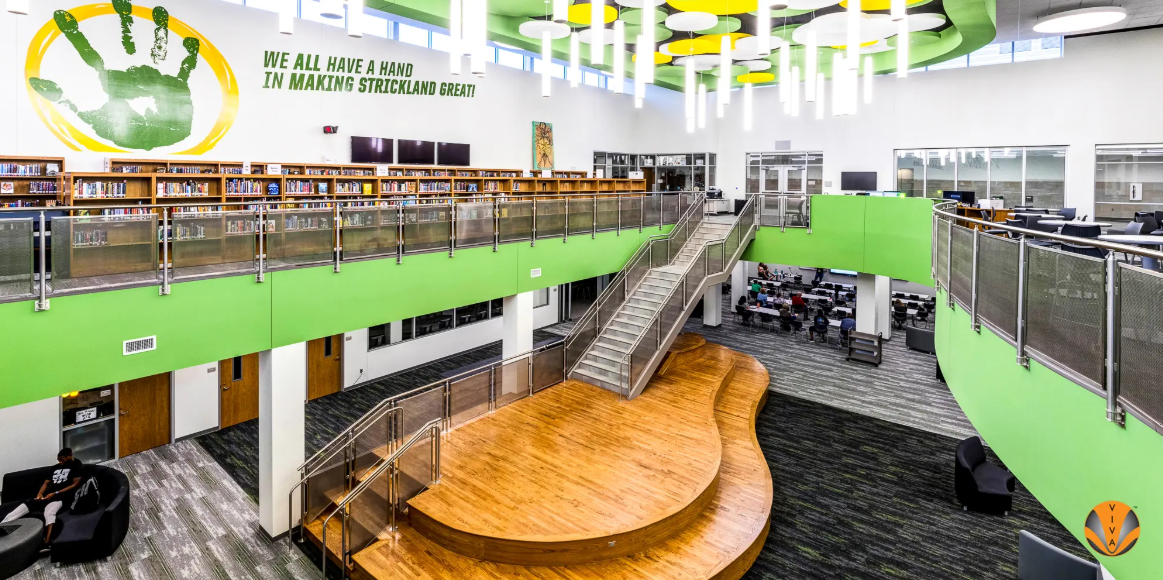
Texas A&M, UTD, SMU Frances Anne Moody Hall, Lubbock Cooper High School, and a long roster of academic projects. Educational facilities combine design intent with serious durability requirements. Stairs, balconies, mezzanines, and exterior walkways all see continuous use by students. The railing has to perform aesthetically and structurally for decades.
What Working With VIVA Actually Looks Like
The engagement model matters as much as the product. Three things define how VIVA works on a project, and each of them is a deliberate choice that distinguishes the company from commodity vendors.
Early Pre-Construction Engagement
VIVA's design assist services exist specifically to bring the manufacturer into the conversation at schematic or design development, not at construction documents. That timing lets the railing system be coordinated with the design rather than retrofitted to accommodate it. It also catches the issues that show up as field problems on projects where the manufacturer was brought in late: substrate conflicts, anchor incompatibilities, field measurement issues, finish coordination gaps, electrical integration mismatches.
In-house Engineering and Shop Drawing Review
VIVA fabricates with in-house structural engineering and shop drawing development for every project. The engineering team reviews each project against code requirements, structural loads, and the specific conditions on site. Shop drawings are coordinated against architectural drawings, structural drawings, and electrical drawings before fabrication releases. That's the work that prevents the field problems that show up on projects where the manufacturer's process treats every project as a catalog order.
Coordination Through Fabrication and Installation
Most railing problems on commercial projects happen at the seams between design, fabrication, and field installation. VIVA handles all three with its own teams or directly managed installation partners. The handoff between shop drawing approval and fabrication is internal. The handoff between fabrication and installation is internal. That continuity is what allows tight tolerances, complex geometries, and aggressive schedules to actually be hit.
The previous article on shop drawings to install walks through this process from a GC's perspective. The short version: the engagement model is designed for projects that need this level of coordination, and it's why the manufacturer's quoted price reflects more than fabricated material.
The Decision Framework: Three Questions for Your Project
If you're trying to figure out whether VIVA is the right fit for your project, three questions get to a useful answer fast.
1. Does the railing matter to the design?
If the architect's drawings show specific profiles, the interior designer has finish preferences, or the owner cares about how the railing reads in the finished space, the answer is yes. The railing isn't being treated as a generic guard, and a manufacturer with depth on design coordination and finish customization delivers something a commodity vendor cannot. If the railing is genuinely being treated as a back-of-house guard with no design intent, a commodity vendor is probably the right answer.
2. Does the project need real coordination?
If the project involves ICC-ES documentation requirements, field-measured hold-to dimensions, integration with electrical or lighting trades, structural engineering review, or any other condition that requires the manufacturer to function as a real coordination partner, the answer is yes. VIVA's engagement model is built for this. If the project is simple linear runs with no coordination complexity, a simpler vendor is probably leaner.
3. Is the owner committed to lifecycle value over lowest first cost?
A VIVA railing is more expensive at install than commodity alternatives. It's also dramatically less expensive over the 20-30 year service life because of material grade, finish quality, code documentation, modular replaceability, and the in-house engineering that prevented the problems that show up later. If the project budget protects that lifecycle value, the math works. If the railing is being bought as a line item to value-engineer to the lowest acceptable cost, VIVA is probably not where that conversation lands.
When all three answers are yes, the fit is obvious. When two of three are yes, the engagement usually still works. When only one is yes, there are probably better-aligned options.
What This Looks Like in Practice
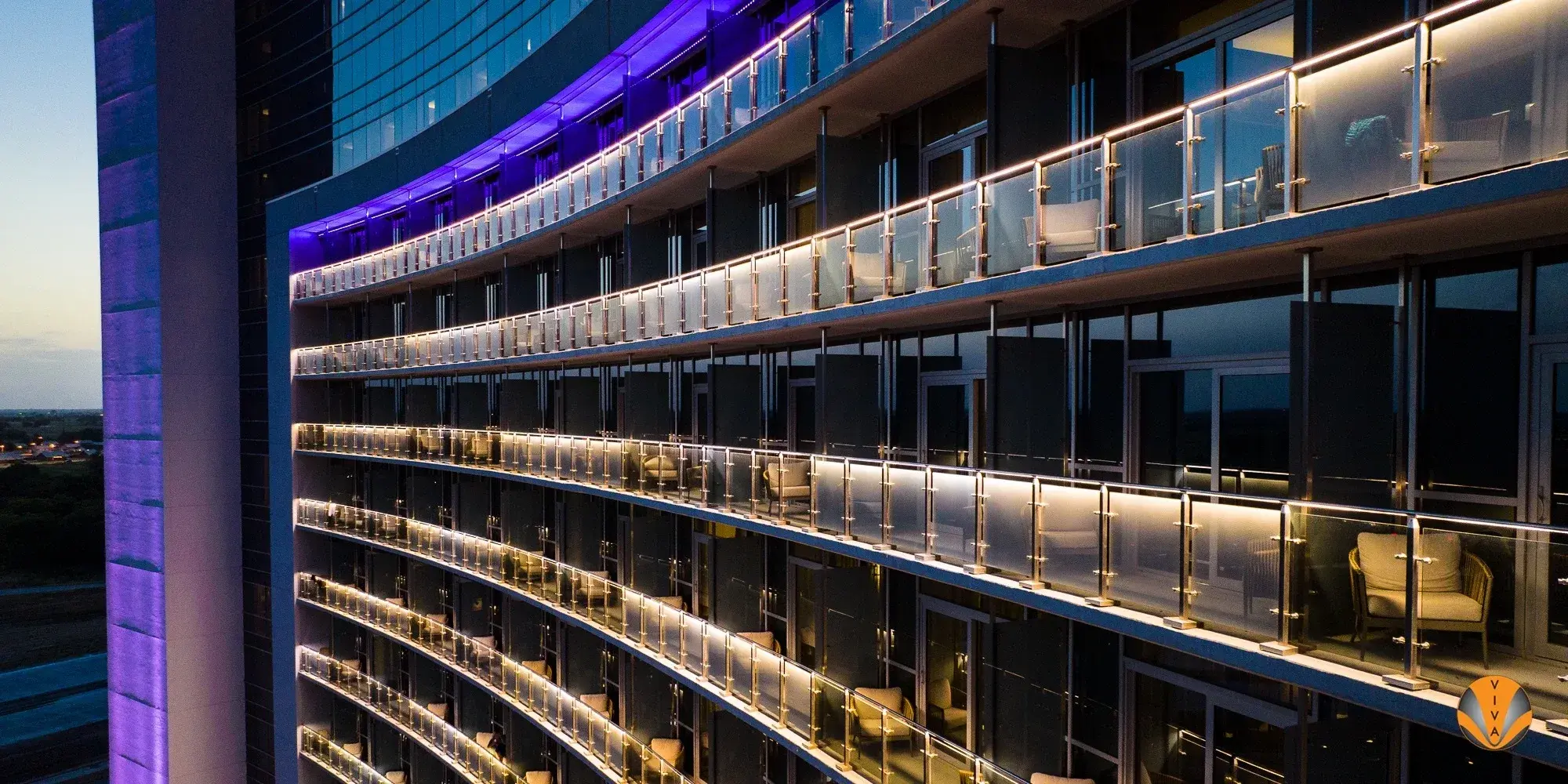
The projects that produce the best work share a pattern. The architect engages VIVA during design development. Material grade, finish, and mounting are coordinated against the substrate and the environment. Shop drawings are reviewed against architectural, structural, and electrical drawings. Pre-construction meetings happen with the GC to lock down hold-to dimensions and field measurement protocols. Fabrication runs to those drawings. Installation is sequenced with the broader project schedule. The railing arrives ready to install, fits the field conditions, and reads in the finished space the way the design intended.
The projects that don't work that way are the ones where the manufacturer was brought in late, the design intent was vague, or the coordination was assumed rather than scheduled. Those are the projects where field problems show up, schedules slip, and the railing reads as a compromise rather than a deliberate design element.
The pattern is clear enough that it's worth using as a checklist before procurement, not after.
Talk Through Your Project
The honest answer to "is VIVA right for your project?" is almost always available in a 30-minute conversation. The project type, the design intent, the coordination complexity, and the budget commitment surface fast when an experienced manufacturer is asking the right questions.
VIVA's pre-construction team has those conversations with architects, GCs, and owners every day. The output isn't a hard sell; it's an honest read on whether the engagement model is the right fit and what working together would look like.
If you have a project on the boards or in early procurement, the Design Assist Services page covers how that engagement typically starts.
Request a Quote or Talk to our Sales Team to start that conversation.