

 Cable Railing Systems in Portland, OR | VIVA Railings
 Talk to a Specialist








Cable Railing for Portland's Commercial Markets — From the Pearl to the Central Eastside
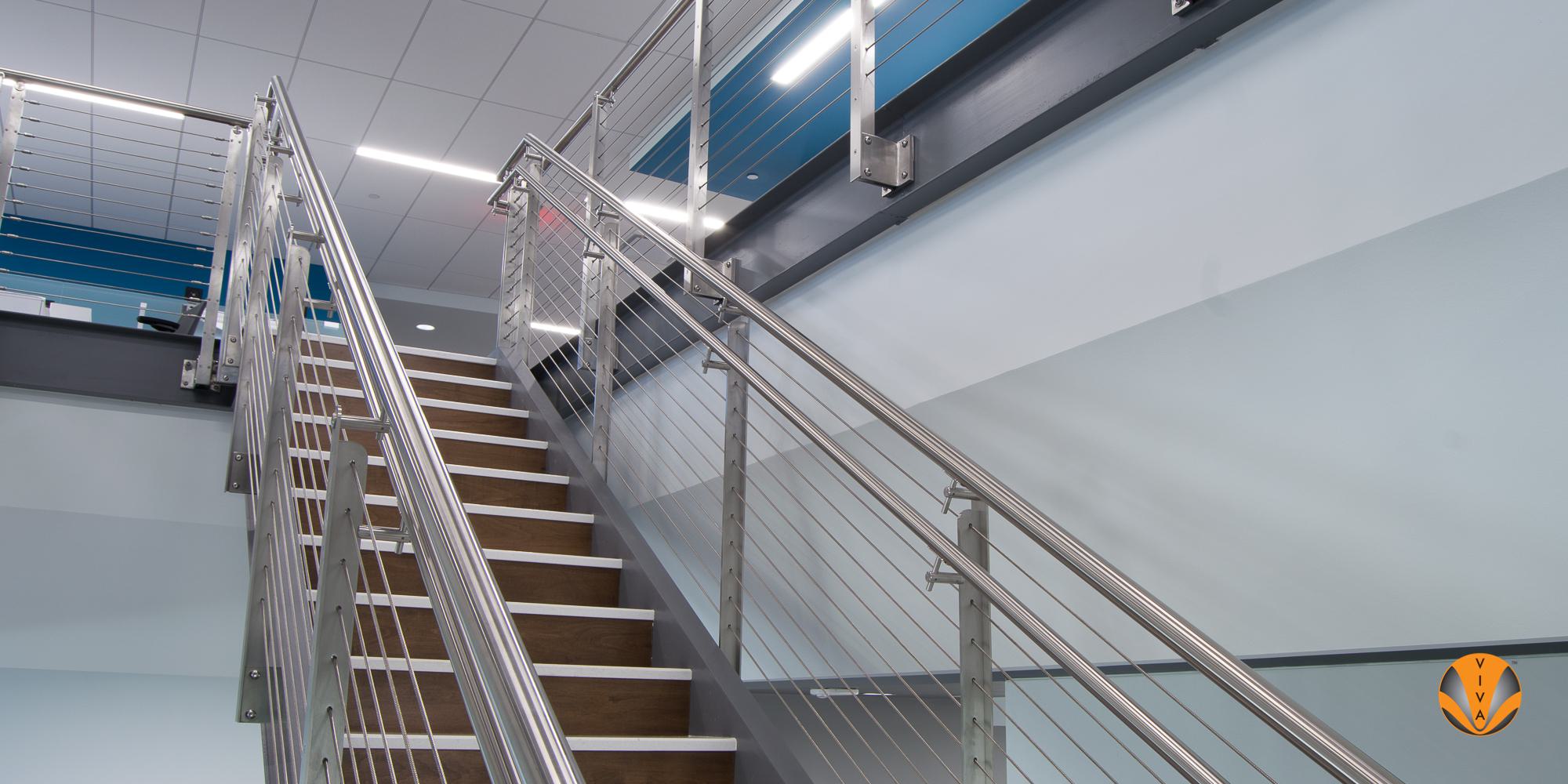
Portland's commercial construction market is defined by neighborhoods that have evolved distinct identities — and each neighborhood creates a different context for cable railing specification. The Pearl District, built largely on former rail yards north of Burnside, is home to a density of mixed-use residential, gallery, restaurant, and creative office space that has made it one of the most architecturally documented urban neighborhoods in the Pacific Northwest. Cable railing in the Pearl appears on mezzanine edges in converted loft buildings, on the rooftop decks of newer mixed-use towers, and as stair feature railings in the lobby spaces of boutique commercial buildings. The aesthetic expectation here is refined and considered — cable railing that integrates with the material palette of the building rather than being a specification afterthought.
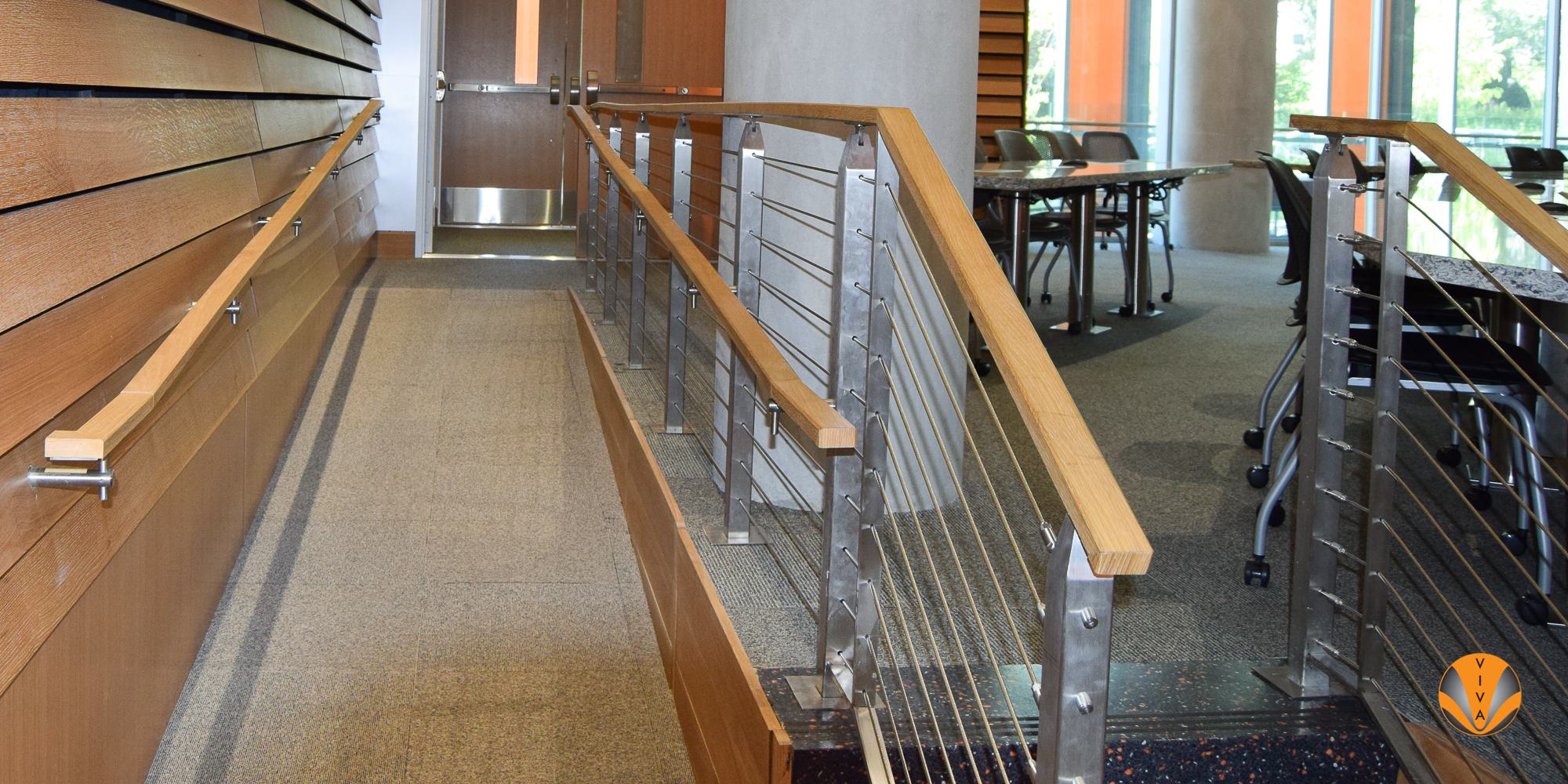
The Central Eastside Industrial District, across the Willamette from downtown, is Portland's most active adaptive reuse market — warehouses, cold storage buildings, and industrial structures being converted to breweries, food halls, creative offices, and event venues at a pace that has accelerated significantly over the past decade. Cable railing in the Central Eastside has a different character: the aesthetic is intentionally industrial, and the structural conditions are frequently non-standard. Existing concrete slab floors may not be level; timber framing may dictate post locations; and the ceiling heights and mezzanine configurations of industrial buildings create railing conditions that don't appear in new construction. VIVA supports these projects with connection details and layout guidance tailored to the specific structural reality of each building.
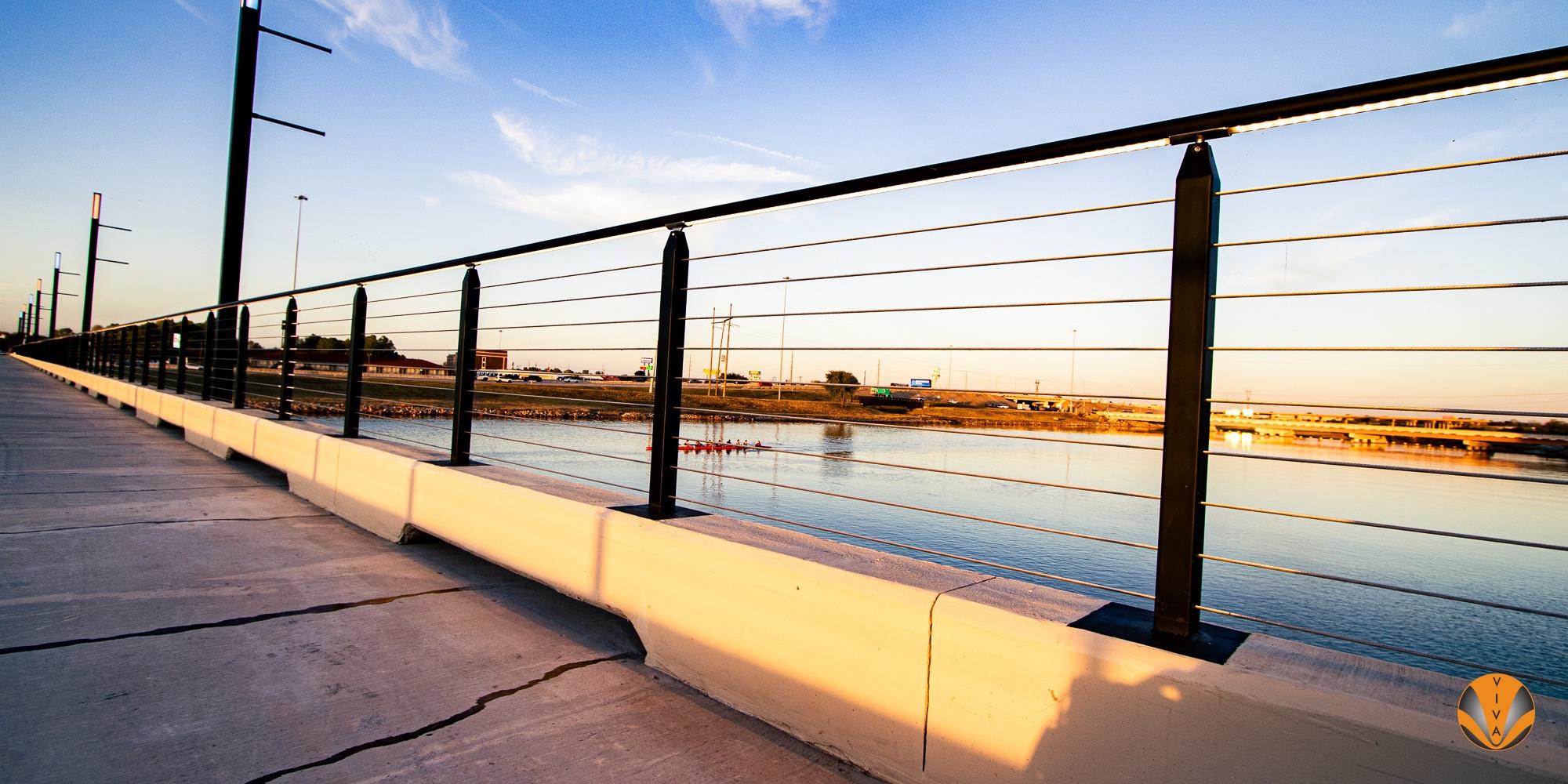
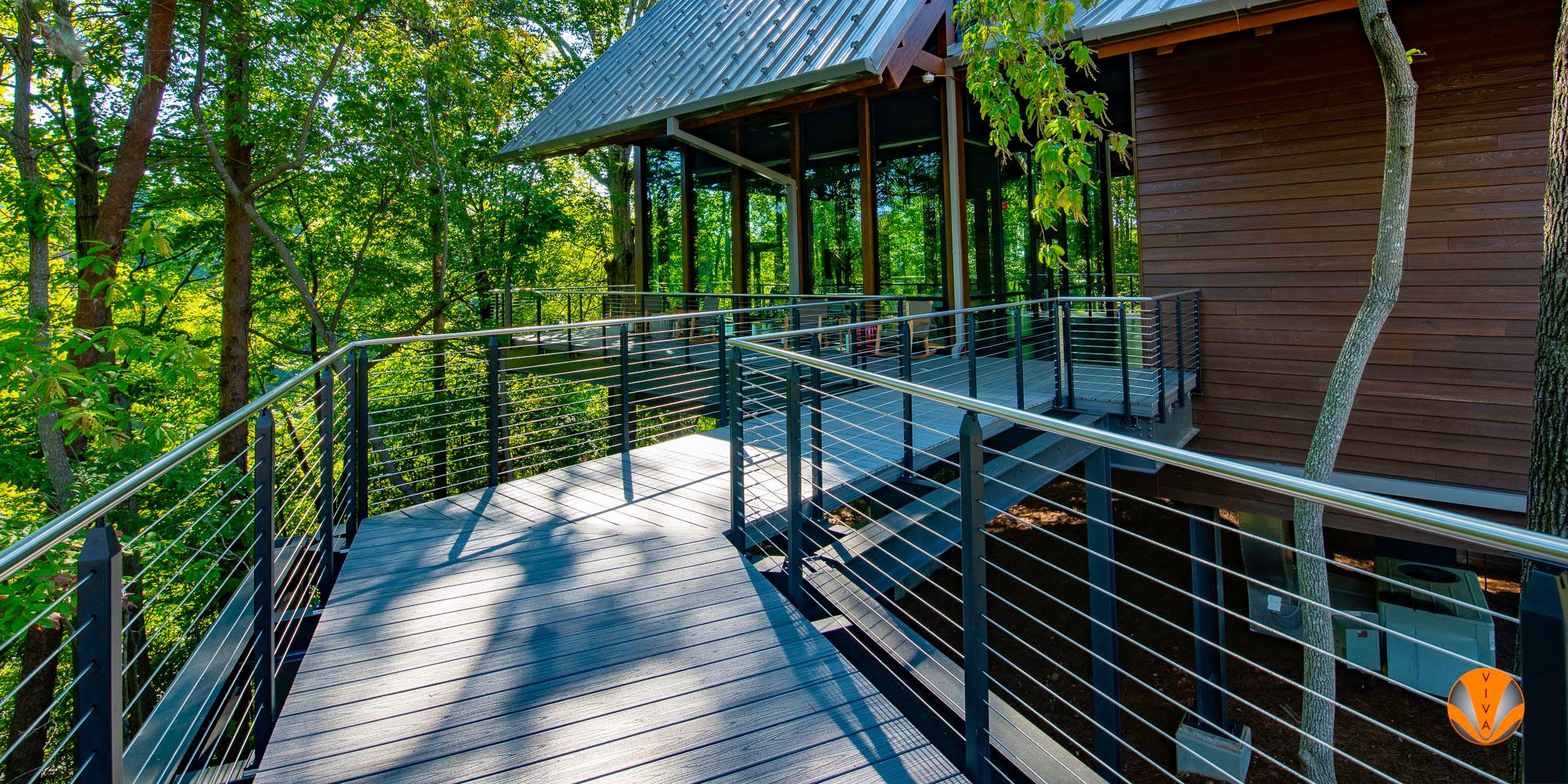
Portland's climate is the specification factor that distinguishes PNW cable railing from every other market in this library. The city's persistent moisture — not dramatic rain events, but the sustained low-level wetness of a marine climate that rarely fully dries out between October and June — creates a corrosion environment for outdoor metal hardware that requires genuine attention. Post base drainage needs to be designed to prevent standing water at the anchor point. Cable fittings need to be sealed with flexible sealants that don't crack through the PNW's temperature cycling. And powder-coat finishes need to be applied over proper primer on cleaned substrate — otherwise the moisture finds the edge and the coating fails from beneath. VIVA builds these details into every Portland exterior cable railing specification.
The South Waterfront, Portland's newest urban district rising on former industrial land along the west bank of the Willamette south of downtown, represents the next wave of Portland commercial construction — higher-density mixed-use, medical and life science buildings connected to OHSU above, and the emerging commercial development that follows transit investment. Cable railing in the South Waterfront needs to perform in a waterfront-adjacent environment with river-valley wind exposure and the full range of PNW moisture conditions.



 Schedule Meeting
 Connect on LinkedIn