Laser Cut Panels for Architectural and Commercial Applications |…
Laser Cut Panels for Architectural and Commercial Applications | MetalSpaces

Laser Cut Panels

Subhead / Intro: 

The precision of CNC laser cutting enables pattern complexity and geometric control that no other fabrication method can match at commercial scale. Laser cut panels from Metal Spaces go from architectural concept to fabrication-ready file to installed panel, with design-to-fabrication support that handles kerf width validation, structural integrity review, and open area calculation before any material is cut. Custom patterns or standard catalog, mild steel or aluminum or Cor-Ten, interior or exterior.

CNC Laser Precision from Design File to Installed Panel

Metalspaces joey rodriguezMetalspaces webb elementaryMetalspaces georgetown isd elemMetalspaces sterling park safety center
Laser Cut Panels That Deliver the Pattern You Designed

Built for Specification-Level Projects

The risk in custom laser cut panel fabrication is the gap between what the design team drew and what gets cut. MetalSpaces closes that gap with design review before fabrication, fabrication tolerance that holds across large panel runs, and a design-to-delivery workflow built for architectural project schedules.

Design-to-Fabrication File Support

Pattern development from concept sketch, architectural drawing, or brand file to fabrication-ready DXF, including kerf width validation and structural integrity review before any material is cut.

±0.1mm Cutting Tolerance

CNC laser cutting precision that holds panel-to-panel across large installation runs, every panel cut from the same digital file, with consistent geometry and pattern registration throughout.

LEED and Sustainability Documentation

Recycled content data, regional materials qualification, and material certifications structured for LEED submittal requirements, supporting the sustainability documentation process without creating additional coordination burden.

Laser Cut Panel Applications

Available MetalSpaces

View All Systems
 Facade and Screen Panels

Facade and Screen Panels

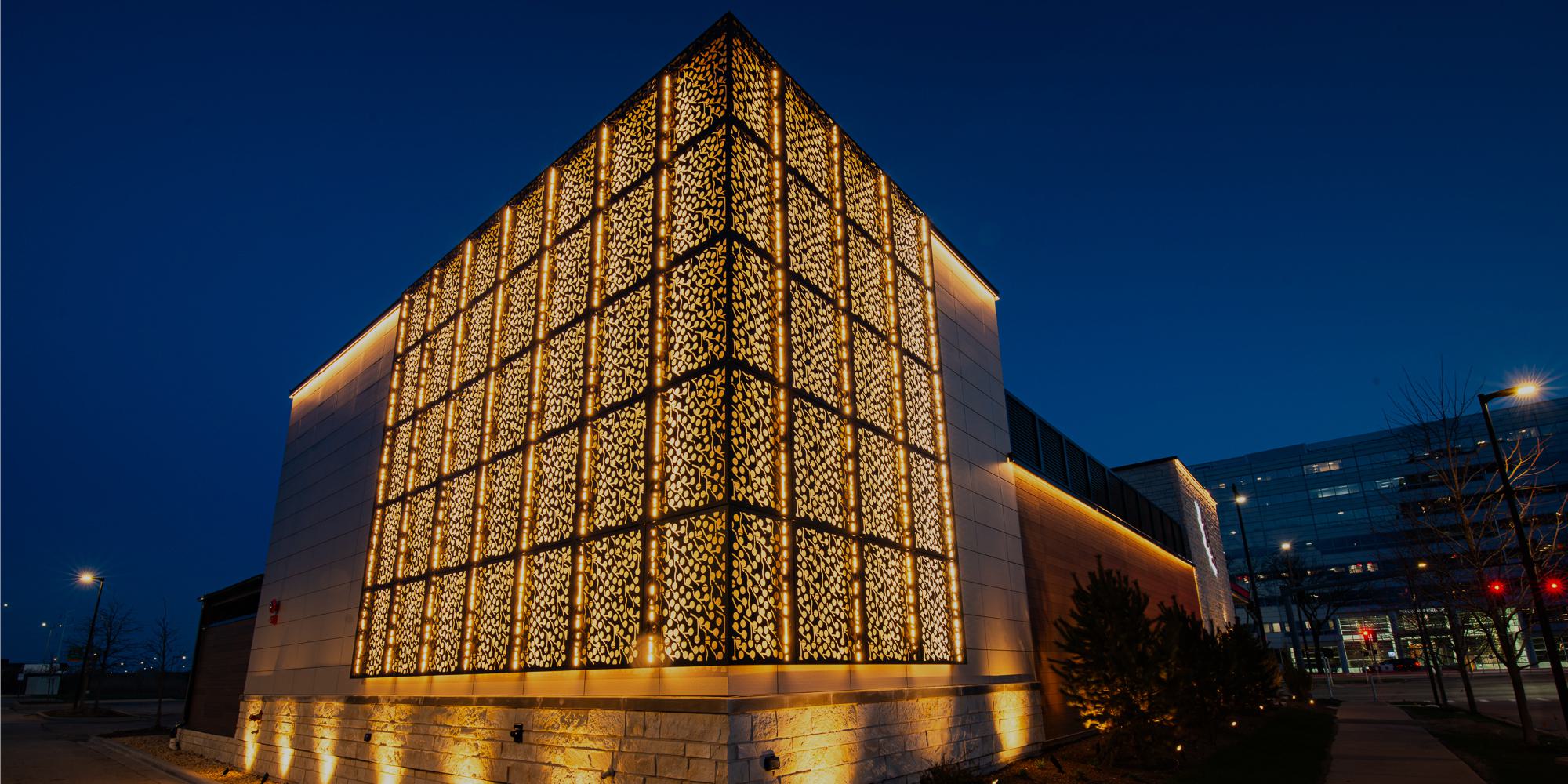
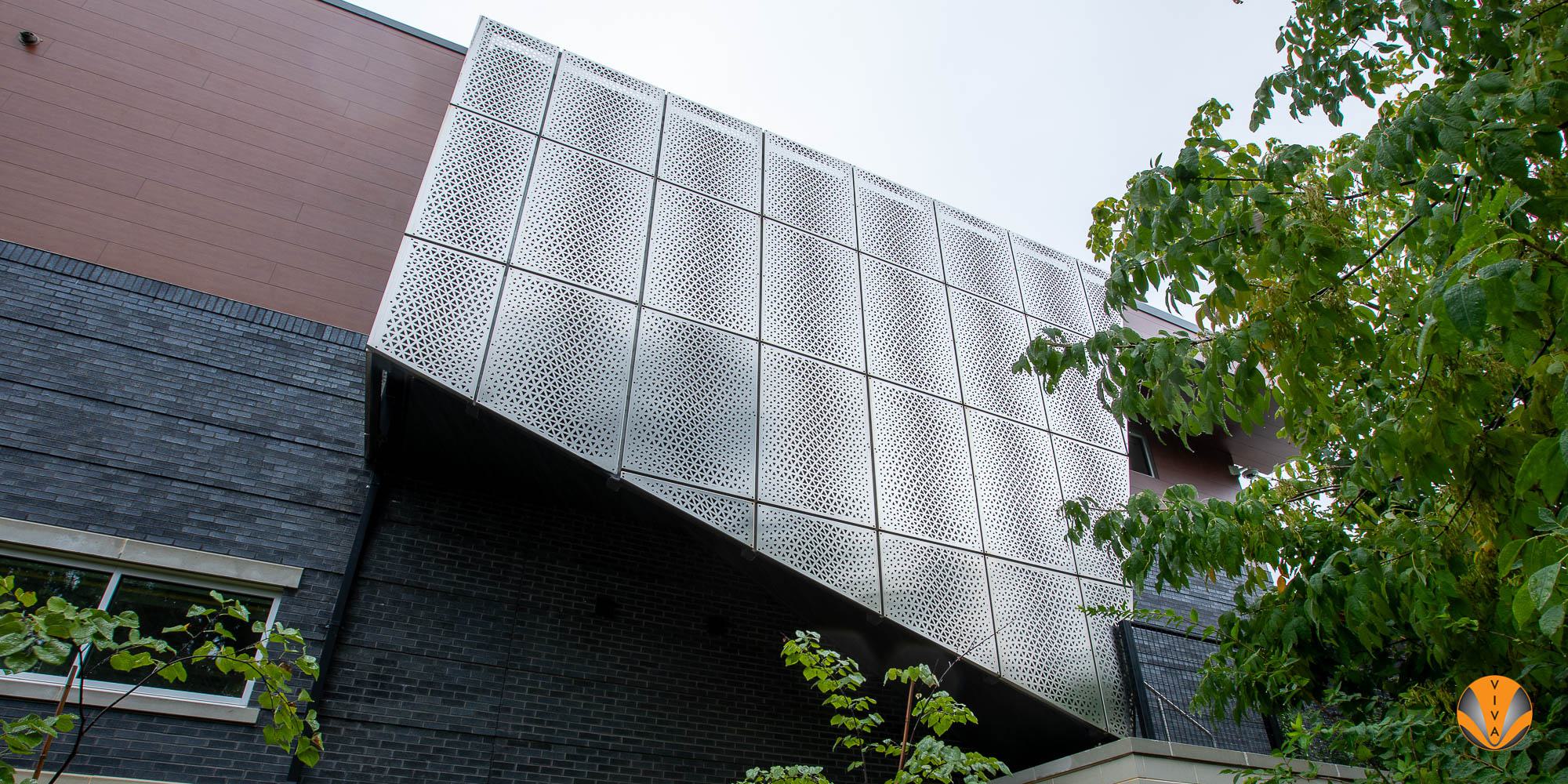
Laser cut facade screen panels for commercial and institutional building envelopes, custom geometric or organic patterns in aluminum or Cor-Ten for solar shading, privacy, and architectural character.

 Railing Infill Panels

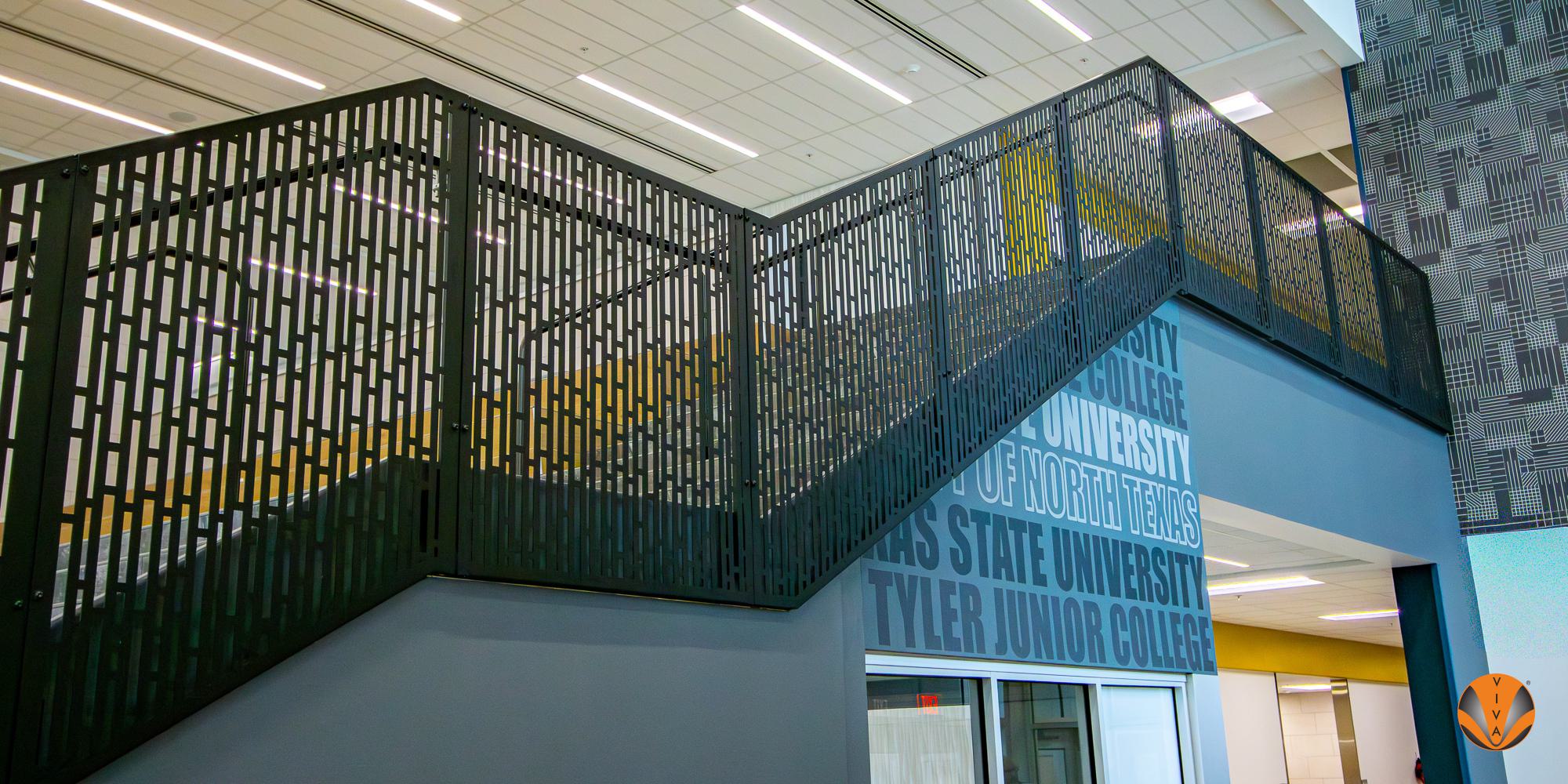
Railing Infill Panels

Pressure-equalized rain screen facade panels with engineered air gap and drainage, architectural metal panel systems that meet building envelope performance requirements while delivering custom material expression.

 Interior Feature Walls and Partitions

Interior Feature Walls and Partitions

Laser cut metal panels for interior hospitality, corporate, and retail feature walls, precision pattern in mild steel or aluminum, illuminated or solid, with designed joint systems for large-format applications.

 Landscape and Privacy Screens

Landscape and Privacy Screens

Laser cut panels for outdoor landscape privacy screens, garden dividers, and architectural site elements, Cor-Ten and powder-coated aluminum options rated for outdoor exposure conditions.

Regional Focus

Laser Cut Panels: Precision Fabrication from Concept to Installation

The appeal of laser cut panels in architectural and commercial applications is precision, the ability to translate a pattern from a digital file into a physical metal panel with the same geometric accuracy across every panel in a run of hundreds. That precision is what makes laser cut panels the right choice when the design intent is a specific pattern expression, when the pattern has cultural or institutional significance, or when the geometric complexity of the design exceeds what stamping or punching can reliably produce at commercial project scale.

The design-to-fabrication process for custom laser cut panels is where the most important technical decisions are made. Kerf width, the material removed along the cut line by the laser beam, is typically 0.1mm to 0.3mm in mild steel and aluminum. For most architectural patterns this is negligible, but for very fine patterns with line widths under 3mm, kerf width becomes a design consideration: the finished cut line may be narrower or wider than the design file intended, particularly in thicker gauge materials where the laser beam has more material to traverse. Metal Spaces reviews every custom pattern file against the selected material gauge before fabrication, flagging any line widths that may not survive cutting as designed, and recommending adjustments before the material is committed.

Structural integrity of the cut panel is the second design review dimension. A heavily perforated panel, one where the open area approaches or exceeds 50% of the sheet area, loses structural rigidity at the panel edges and may require additional framing or reduced panel module size to avoid visible flex or distortion under wind load or handling. Metal Spaces design review process identifies these conditions early, before the pattern is approved and fabrication begins, and recommends structural solutions, thicker gauge, reduced panel size, or edge reinforcement, that preserve the visual intent without compromising the installation's performance.

For outdoor laser cut panel applications, the cut edge is a specific durability consideration. Laser cutting generates a heat-affected zone along the cut line that, on mild steel, creates a slightly different corrosion susceptibility than the parent metal. For exterior applications, powder-coat finish must seal the cut edge completely, Metal Spaces specifies edge seal confirmation as part of the finishing quality control for any exterior laser cut panel scope. Cor-Ten panels develop their patina at the cut edge as well as the face, creating a consistent self-patinating surface that requires no additional edge treatment once the patination process is complete.

Local Support

Talk to a MetalSpaces Laser Cut Panel Specialist

Kevin Zalewski

Kevin Zalewski

Northeast

Pattern development support, kerf and structural integrity review, material and gauge recommendations, and fast fabrication quotes for laser cut panel scopes across facade, railing infill, interior, and landscape applications.

Phone

917.915.0892

Email

kzalewski@vivarailings.com

Frequently Asked Questions

Laser cut panels are metal, acrylic, or composite panels fabricated using CNC laser cutting technology to create precise patterns, perforations, custom designs, or geometric cutouts. In architectural and commercial applications, laser cut panels most commonly refer to laser cut metal panels — steel, aluminum, or stainless steel sheets cut to a custom pattern and used for facade screens, decorative wall elements, railing infill, privacy screens, landscape dividers, and feature ceiling elements.
Metal Spaces laser cuts architectural panels in mild steel (typically 10 to 14 gauge for most applications), aluminum (3mm to 6mm for structural rigidity in screen applications), Cor-Ten weathering steel, and stainless steel. Thicker gauges are available for applications requiring structural rigidity; thinner gauges are used for intricate patterns where cut kerf width relative to pattern line width is a design consideration.
The laser cut panel design process starts with a concept, an architectural drawing, a sketch, a pattern reference, or a brand identity element, which Metal Spaces converts to a fabrication-ready DXF or DWG file. The design review includes kerf width validation (the laser removes material along the cut line, and very fine pattern lines may not survive cutting in thicker gauges), structural integrity review (ensuring cut patterns don't compromise the panel's rigidity), and open area calculation if ventilation compliance is required. Metal Spaces provides design review feedback during this process before any material is cut.
CNC laser cutting achieves cutting tolerances of ±0.1mm to ±0.3mm depending on material thickness and laser type, sufficient for any architectural panel application. Panel-to-panel pattern registration across a large installation run is consistent because every panel is cut from the same digital file by the same machine. This consistency is the primary advantage of laser cutting over stamping or punching for custom pattern applications.
Yes, with appropriate material and finish selection. Outdoor laser cut panels in mild steel require powder-coat or paint finish for corrosion protection; the cut edges must be sealed as part of the finishing process. Cor-Ten weathering steel is an excellent outdoor laser cut panel material because it does not require ongoing paint maintenance once the patina stabilizes. Aluminum laser cut panels with powder-coat or anodized finish are suitable for all outdoor exposure conditions including coastal environments.
Laser cut panel sizes are limited by the laser cutting bed dimensions, which for most commercial fabricators accommodate panels up to approximately 5 feet by 10 feet as a single sheet. Larger pattern areas are achieved by modular panel arrangements with designed joints between panels. Metal Spaces works with the design team to establish a panel module and joint system that accommodates the installation area dimensions while maintaining pattern continuity across joints.
Standard catalog patterns typically fabricate in two to three weeks from order confirmation. Custom pattern development, from design brief to fabrication-ready file, adds one to two weeks depending on pattern complexity. After file approval, fabrication of custom panels runs two to four weeks for typical commercial project quantities. Early engagement at design development allows the pattern development timeline to be absorbed before the project schedule requires the panels.

Ready to Fabricate Custom Laser Cut Panels?

Searching
Searching....