

 Decorative Metal Wall Panels for Interior & Exterior Applications | MetalSpaces
 View Wall Panel Gallery








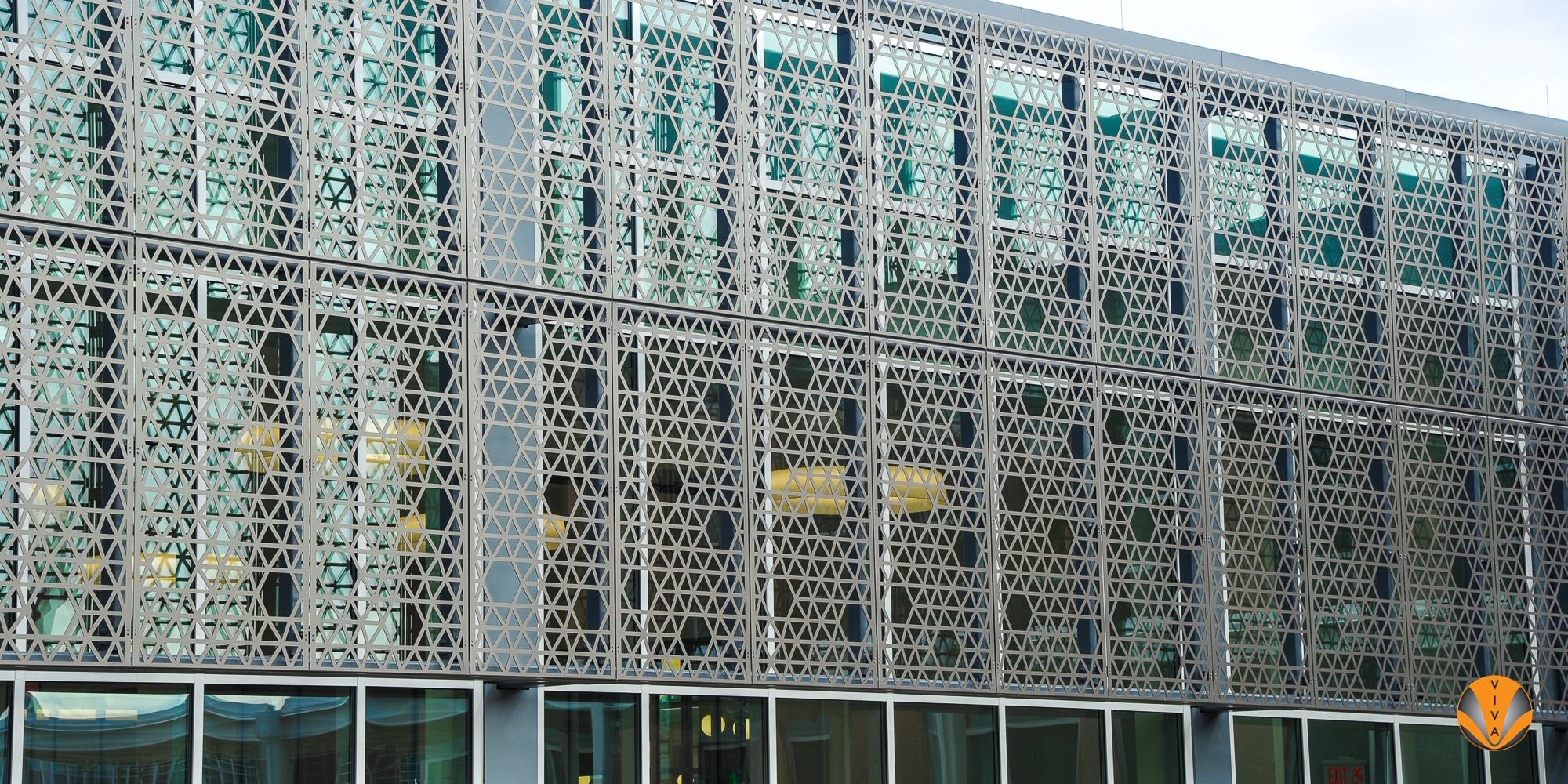


Decorative Metal Wall Panels: Material, Pattern, and the Conditions That Make Them Work
The specification decision for decorative metal wall panels starts with the environment, not the pattern. Interior and exterior applications have fundamentally different specification requirements, and conflating them is the most common source of decorative metal wall panel problems in commercial projects. Metal Spaces makes the environment question the first conversation in any panel scope, and the material and finish recommendation follows from the honest assessment of what the panel will face in service.
For interior applications in hospitality, corporate, and retail environments, the dominant specification concerns are cleanability, finish durability under contact cleaning, and the aesthetic quality of the panel surface under controlled interior lighting. Brushed stainless steel provides the highest cleanability and the most refined surface character. Powder-coated mild steel offers the widest color range and the most cost-effective path to custom-color panels in any interior palette. Anodized aluminum provides a durable, color-stable surface that reads differently from powder-coat, more transparent, more material-honest, and is particularly suited to contemporary commercial interiors where material authenticity is part of the design language.
For exterior applications, the specification calculus shifts entirely. UV exposure, moisture, and temperature cycling are the governing factors, and finish selection needs to account for decades of exposure rather than years. PVDF-coated aluminum is the standard for high-performance exterior metal wall panels, the coating chemistry provides fade and chalk resistance that powder-coat cannot match in direct UV exposure. Cor-Ten weathering steel is the appropriate choice for exterior applications where the controlled patina finish is the design intent, provided drainage conditions are managed correctly during the patination period. Metal Spaces provides finish specification guidance specific to the project's climate zone and building orientation.
Transition conditions, how the metal panel system meets corners, columns, windows, floor lines, and adjacent wall finishes, are the installation details that separate a resolved panel specification from a field problem. Metal Spaces includes transition condition coordination as part of every wall panel scope: panel sizing recommendations that align with the structural grid, reveal and trim details that resolve transitions cleanly, and sample section details that give the design team a visual reference for how the connections will look before shop drawings are issued and fabrication begins.



 Schedule Meeting
 Connect on LinkedIn