

 Glass Stair Railing Systems in Austin, TX | VIVA Railings
 Talk to a Specialist

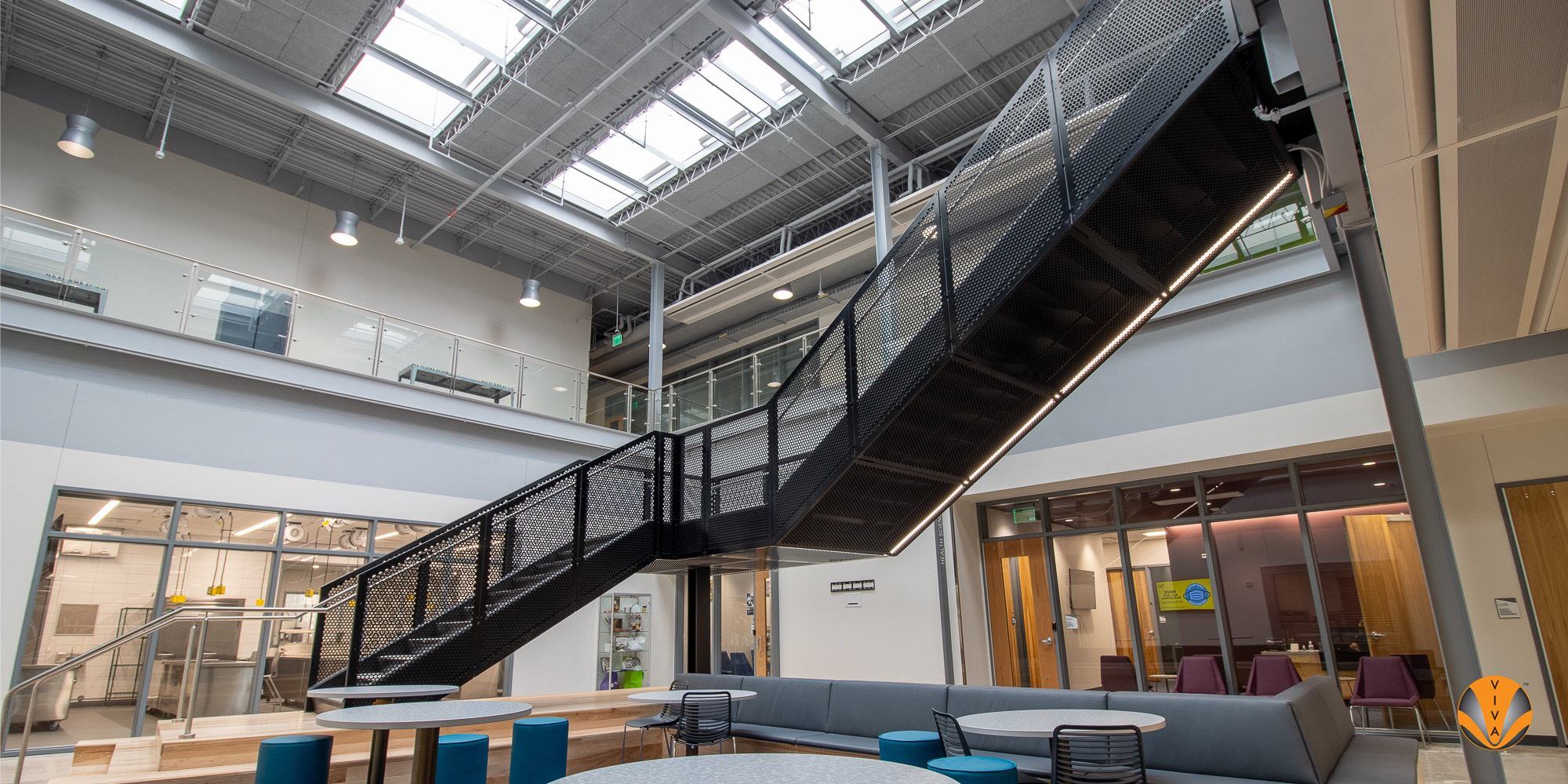







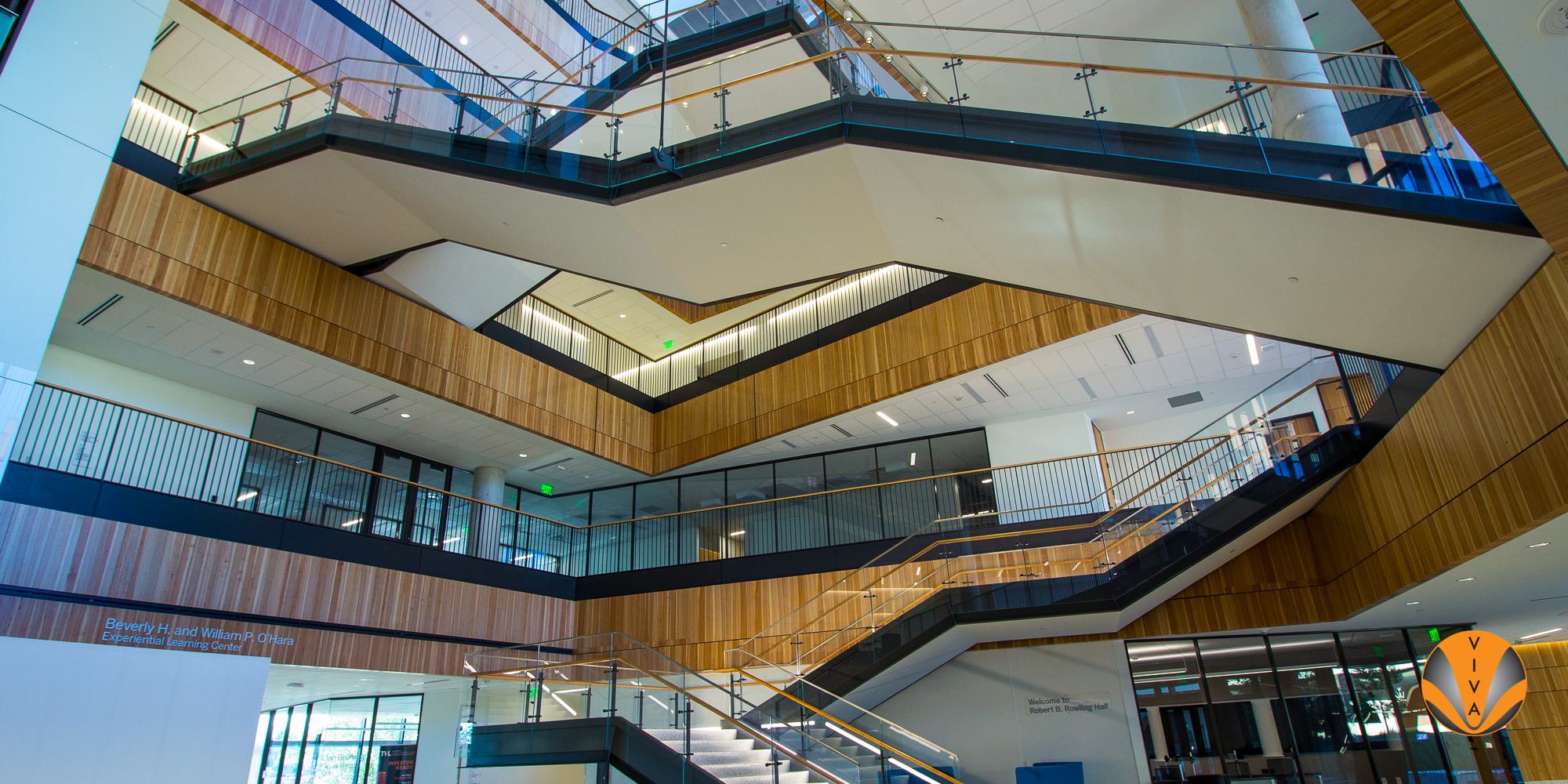
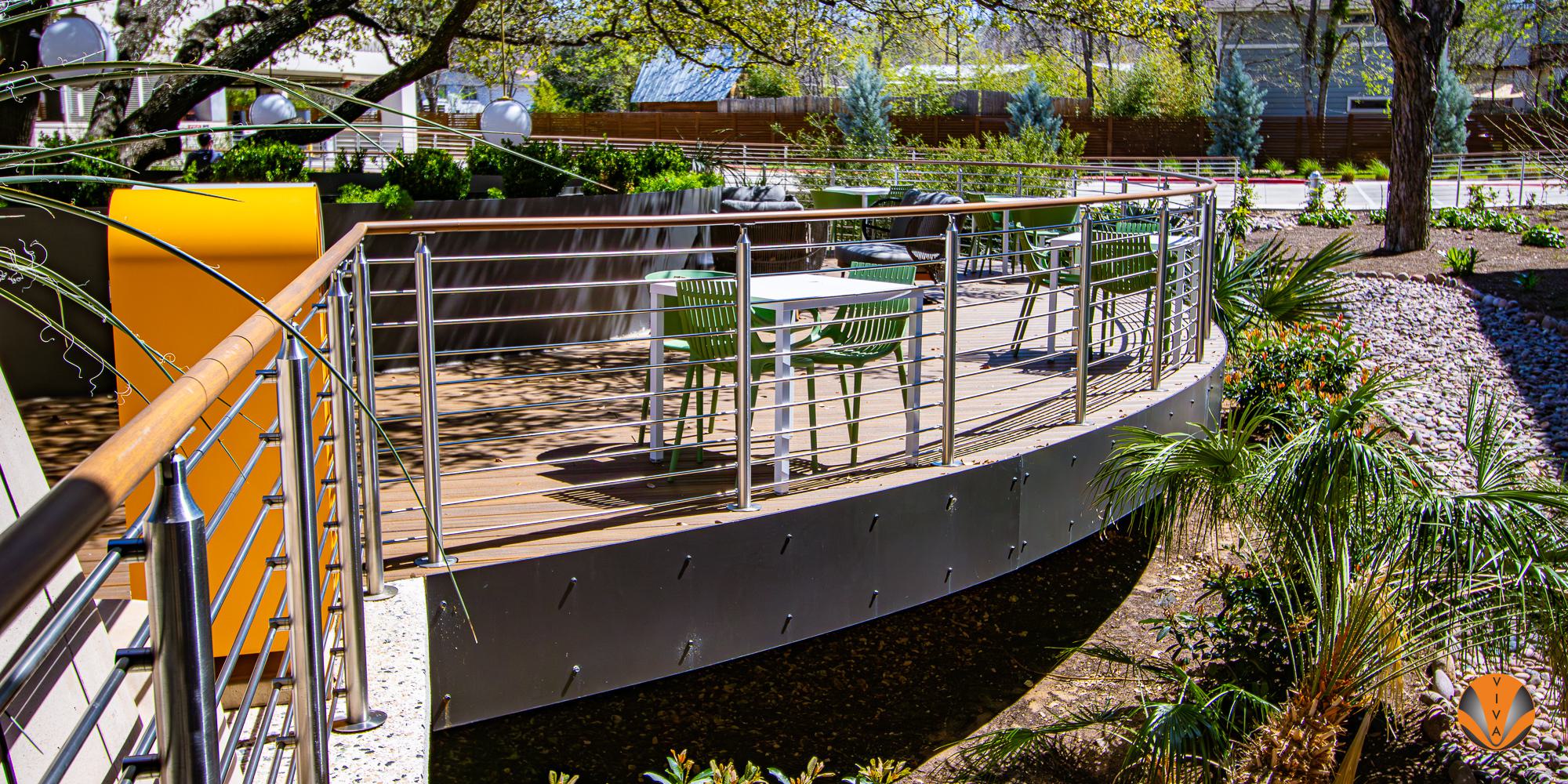
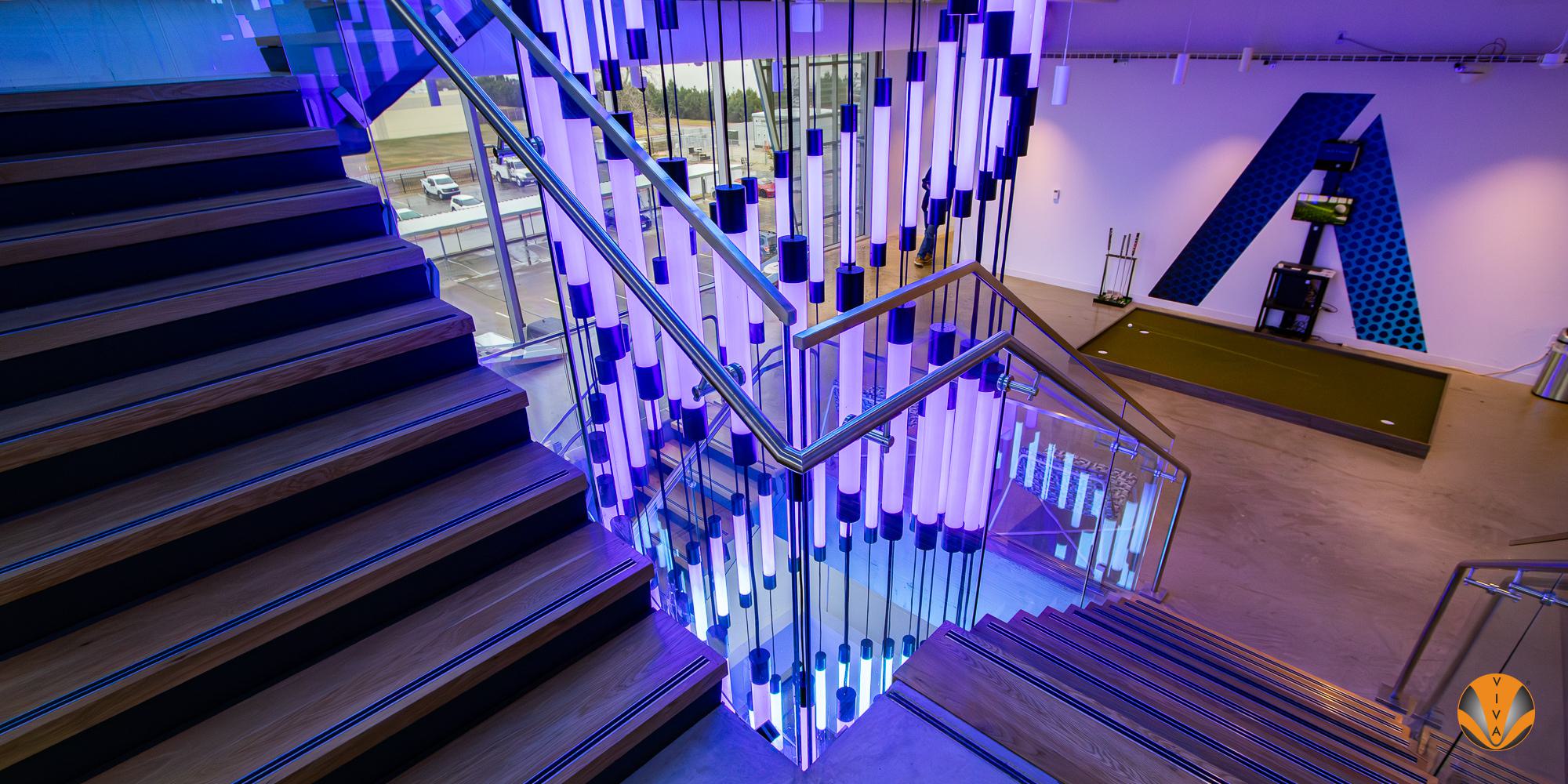
Glass Stair Railing for Austin's Tech, Hospitality, and Design-Forward Commercial Market
Austin has become one of the most competitive commercial interior design markets in the country — driven by a technology industry that treats workplace design as a talent retention tool, a hospitality sector that keeps raising the experiential bar, and a mixed-use development community that increasingly expects interiors to match the ambition of the architecture. In this environment, glass stair railing has moved from a premium option to a standard expectation on any project where the stair is a visible part of the space. The companies moving into new Austin campuses and the developers opening new hospitality and mixed-use projects all expect it — and so do their employees, guests, and tenants.
The technical complexity of glass stair railing is what makes early engagement so important. Unlike flat-run glass guardrail, stair railing requires coordinating the glass panel geometry with the stair's specific rake angle — and that angle is determined by the stair design, which is often still evolving in schematic design. A base shoe channel mounted to a stringer has to be fabricated for the exact pitch of that stair; a post-and-glass system has to have posts positioned relative to the stringer and landing conditions; a floating stair integration has to account for the structural steel design of the tread supports. VIVA engages Austin design teams early — at schematic design or early design development — to make sure the glass stair railing specification is developed with the stair, not after it.
Austin's tech campus market — from Apple's North Austin campus to the tech density along the MoPac corridor and in The Domain — creates consistent demand for feature stairs that connect open-plan floors and are designed to be seen. Glass stair railing is the consistent specification in these environments: frameless, minimal, and subordinate to the architectural composition of the space. The stringer connection strategy — side-mount versus top-mount, recessed versus surface — is the key early coordination decision, and VIVA helps teams make the right call for each project's structural and aesthetic conditions.
Austin's hospitality corridor — the 2nd Street and Rainey Street clusters, the South Congress boutique hotel market, and the growing convention hotel presence near the Austin Convention Center — generates equally strong demand for glass stair railing in lobbies, rooftop bar access stairs, and mezzanine stair features. These applications add a durability and traffic-tolerance dimension: hospitality stairs get used heavily, and the glass panel-to-base-shoe connection needs to be specified for that load over time.



 Schedule Meeting
 Connect on LinkedIn